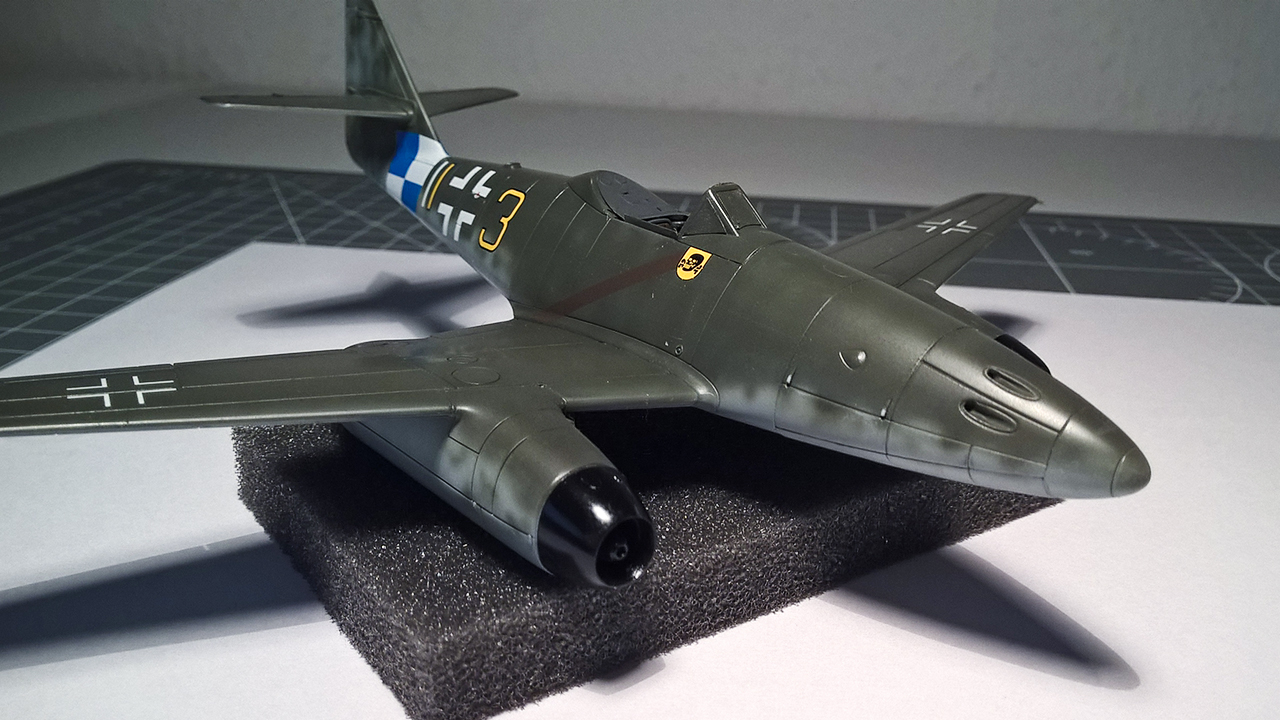
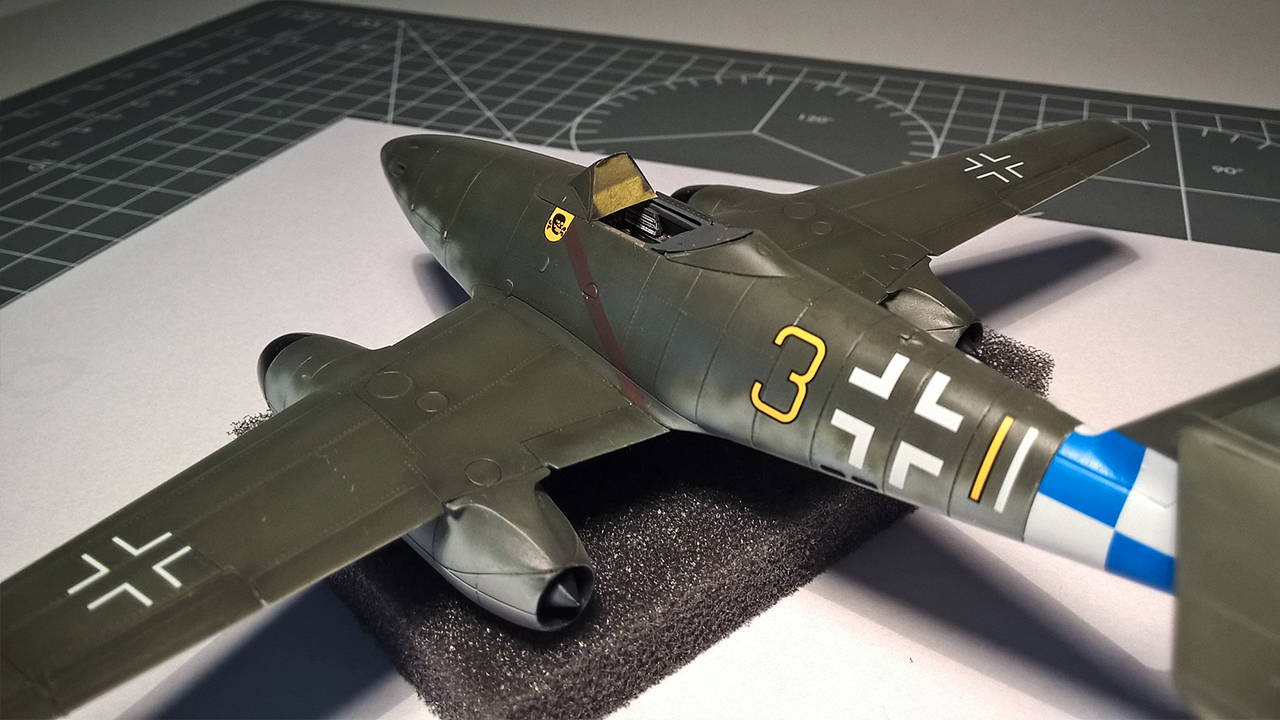
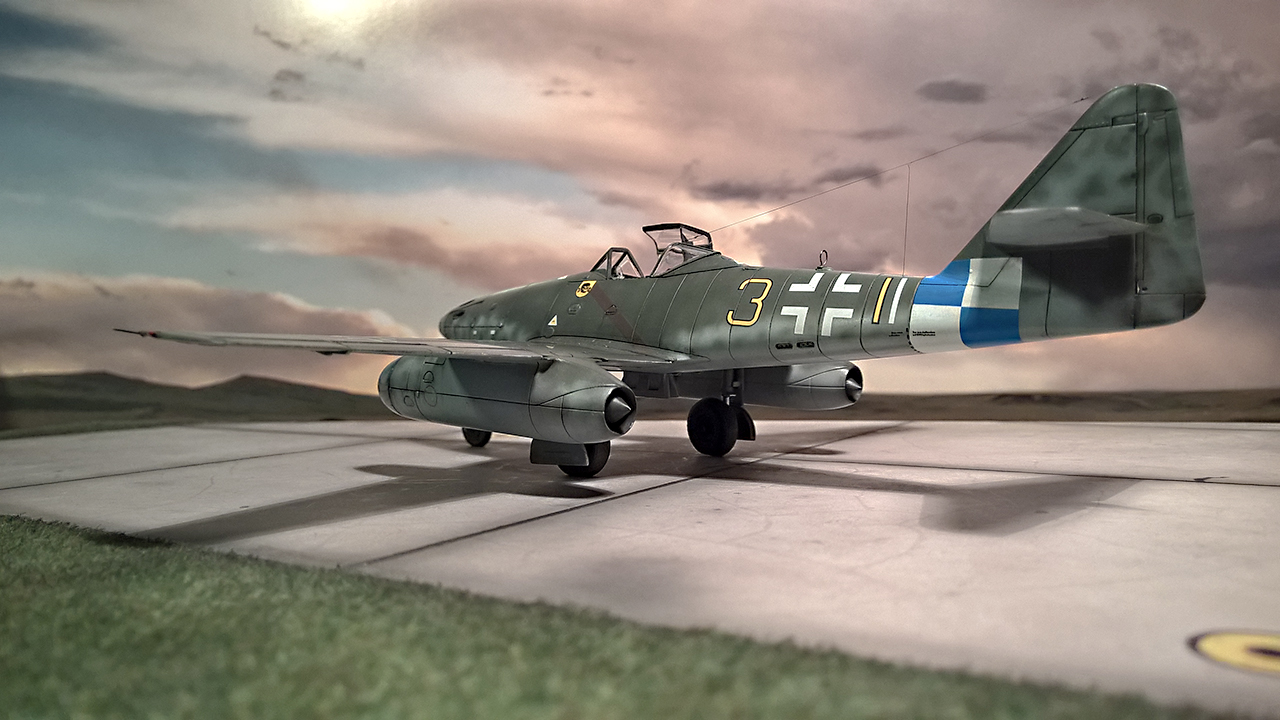
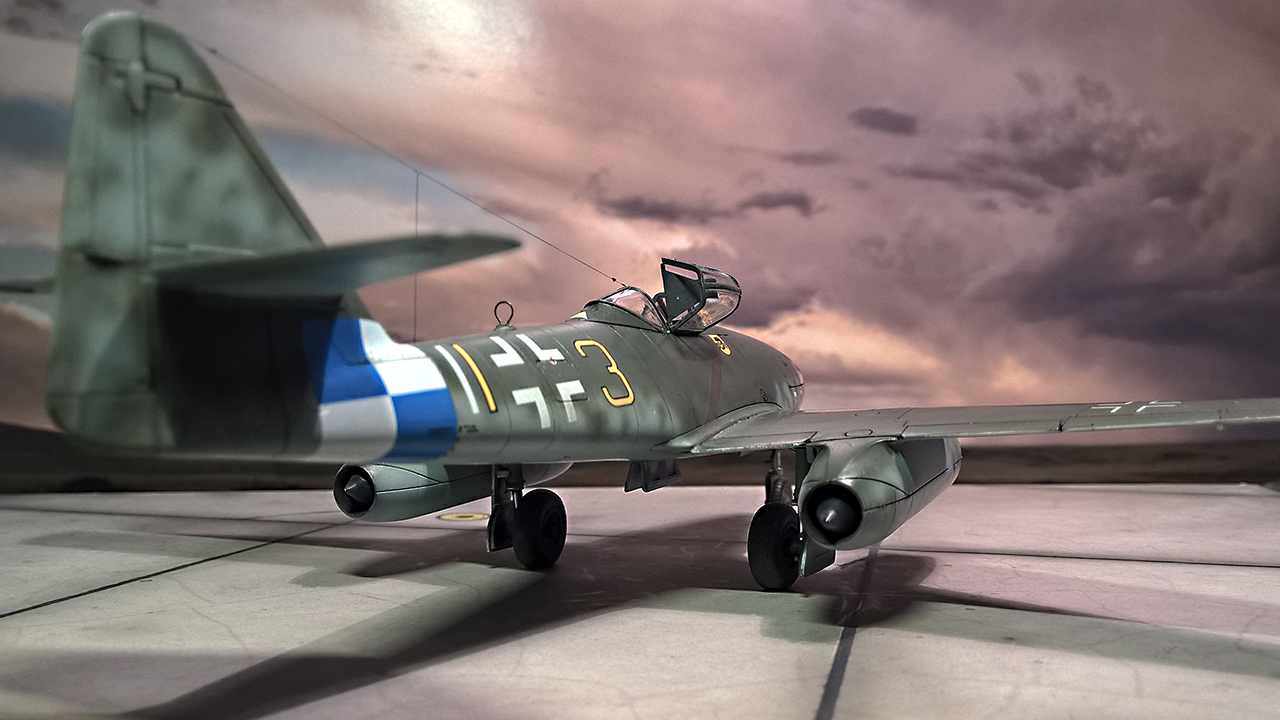
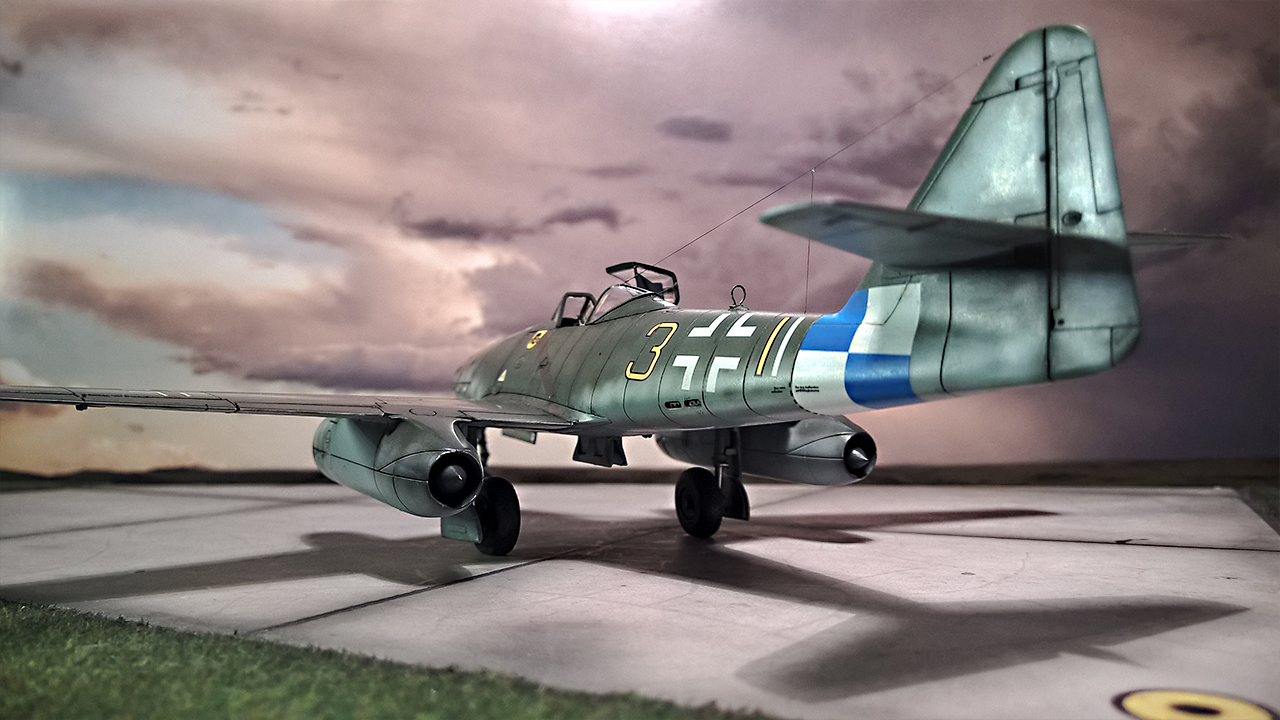
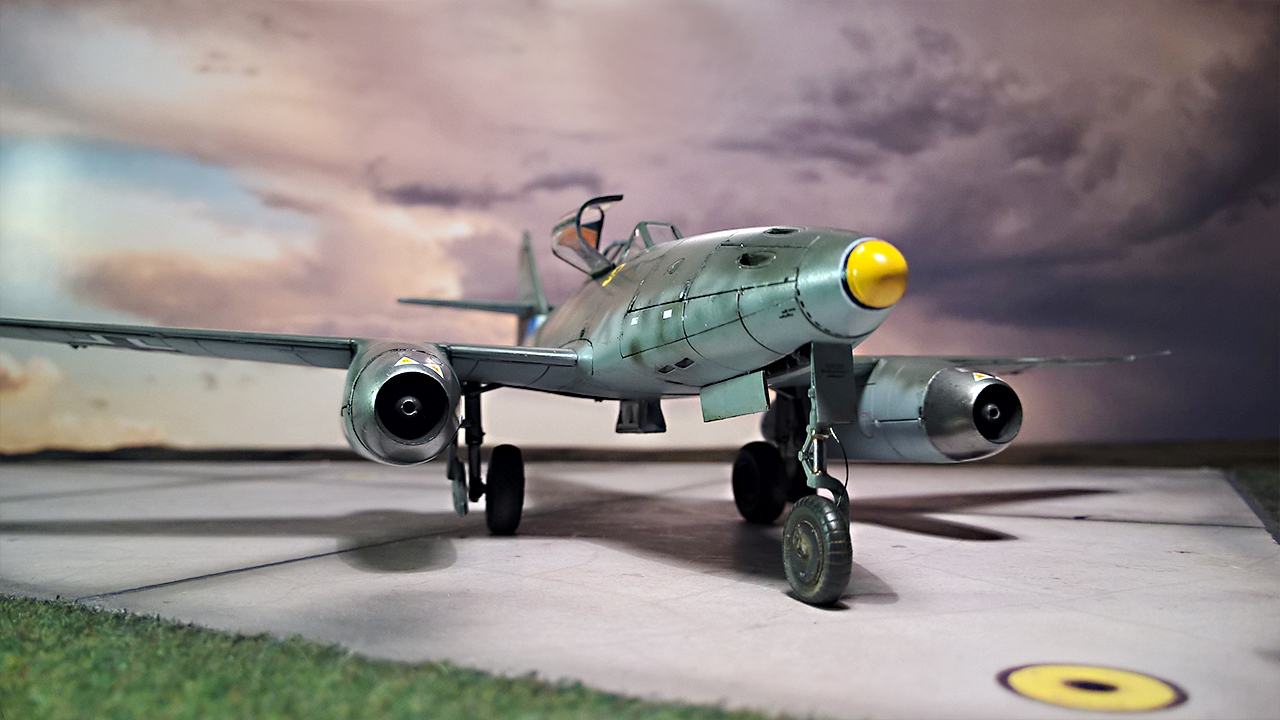
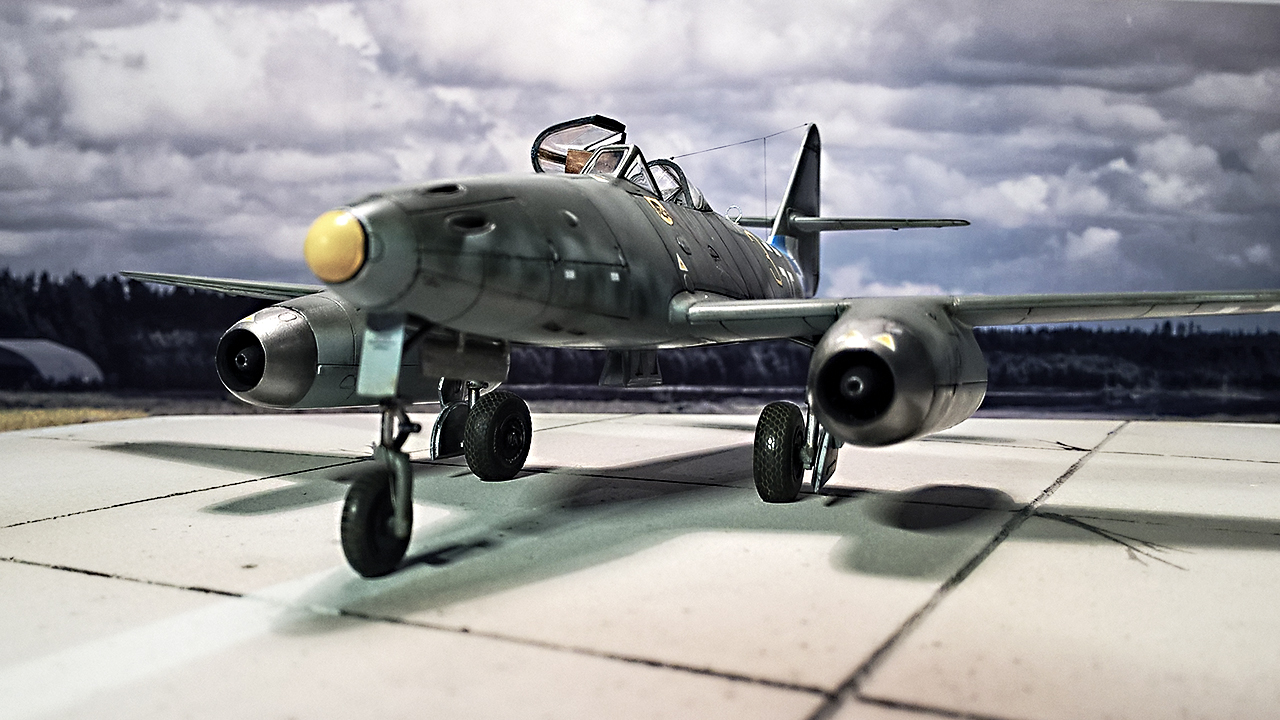
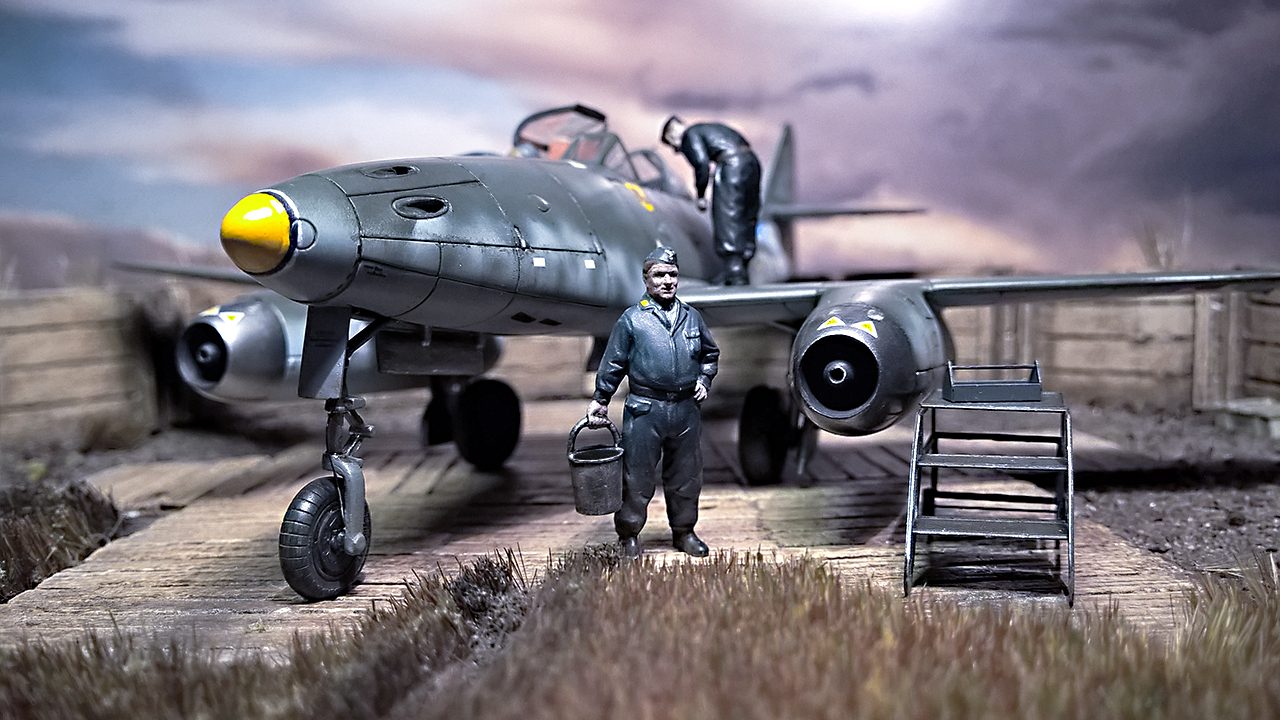
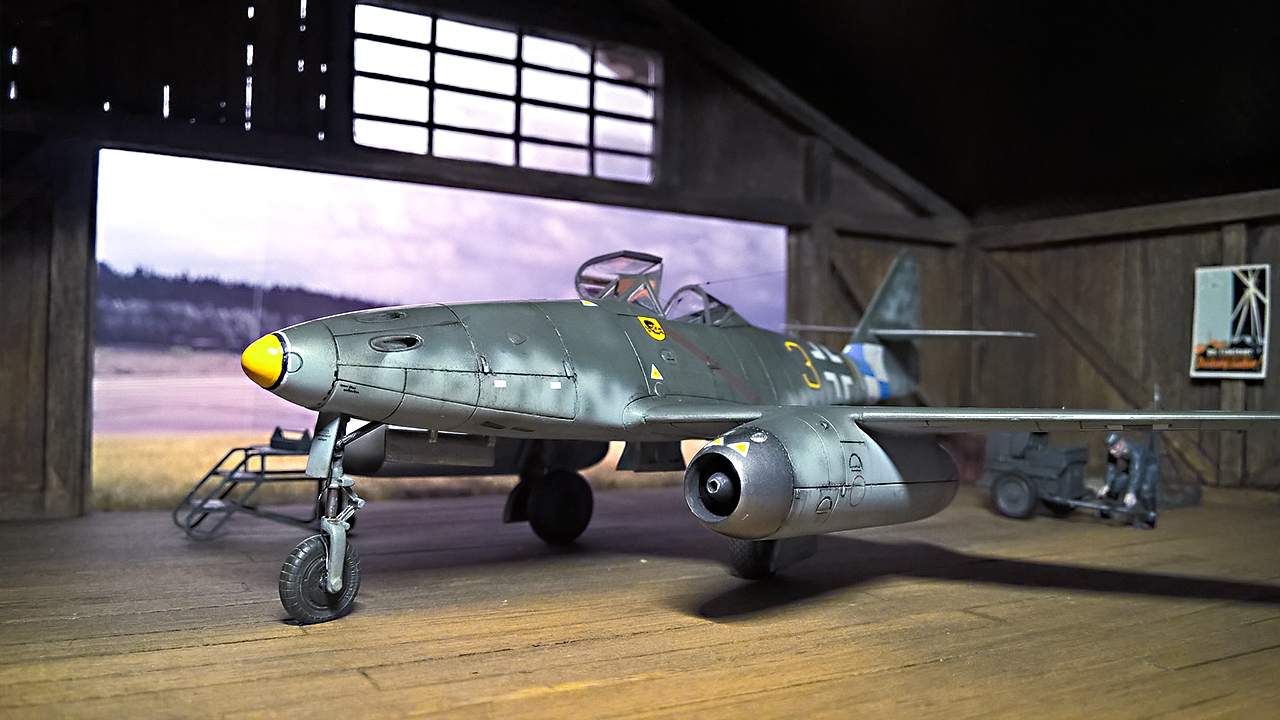
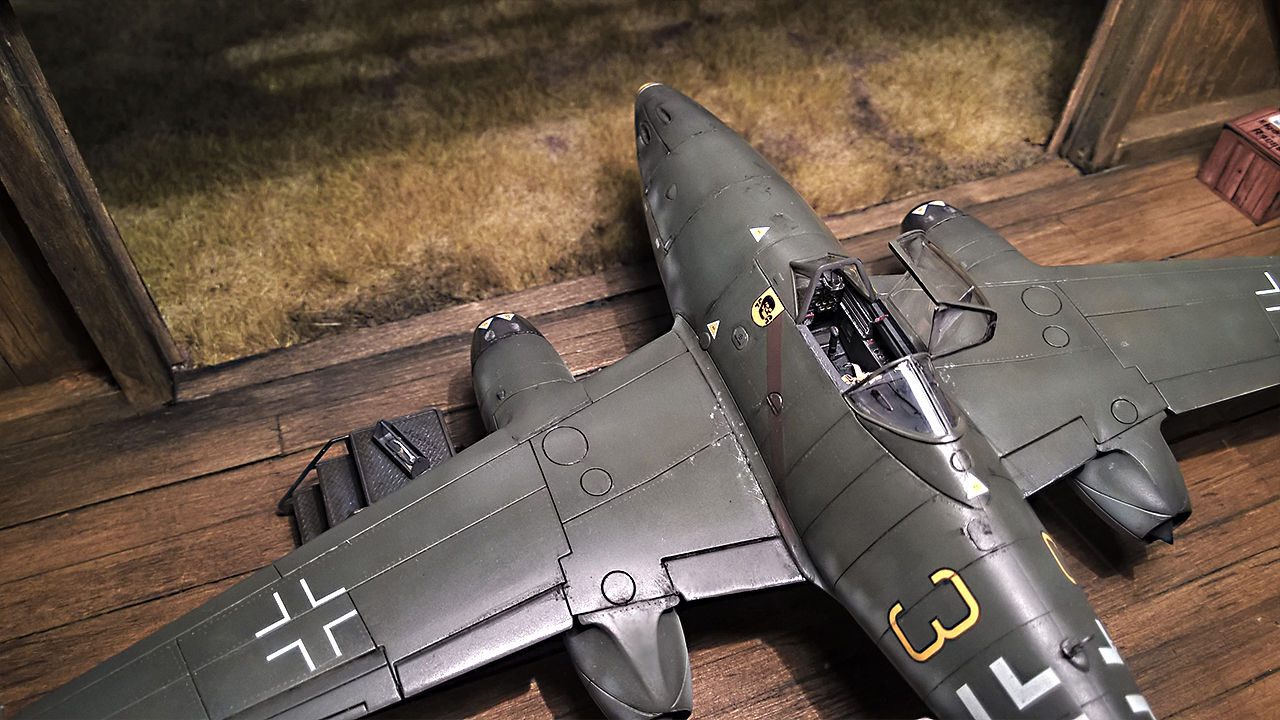
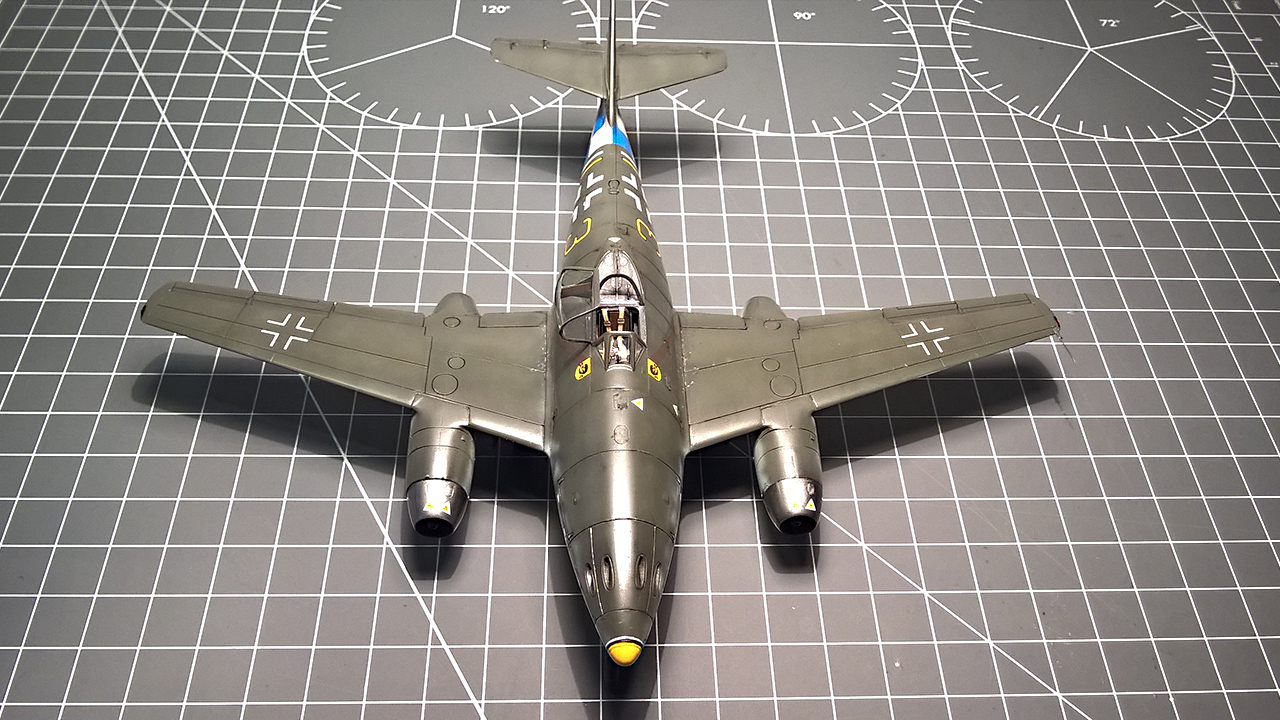
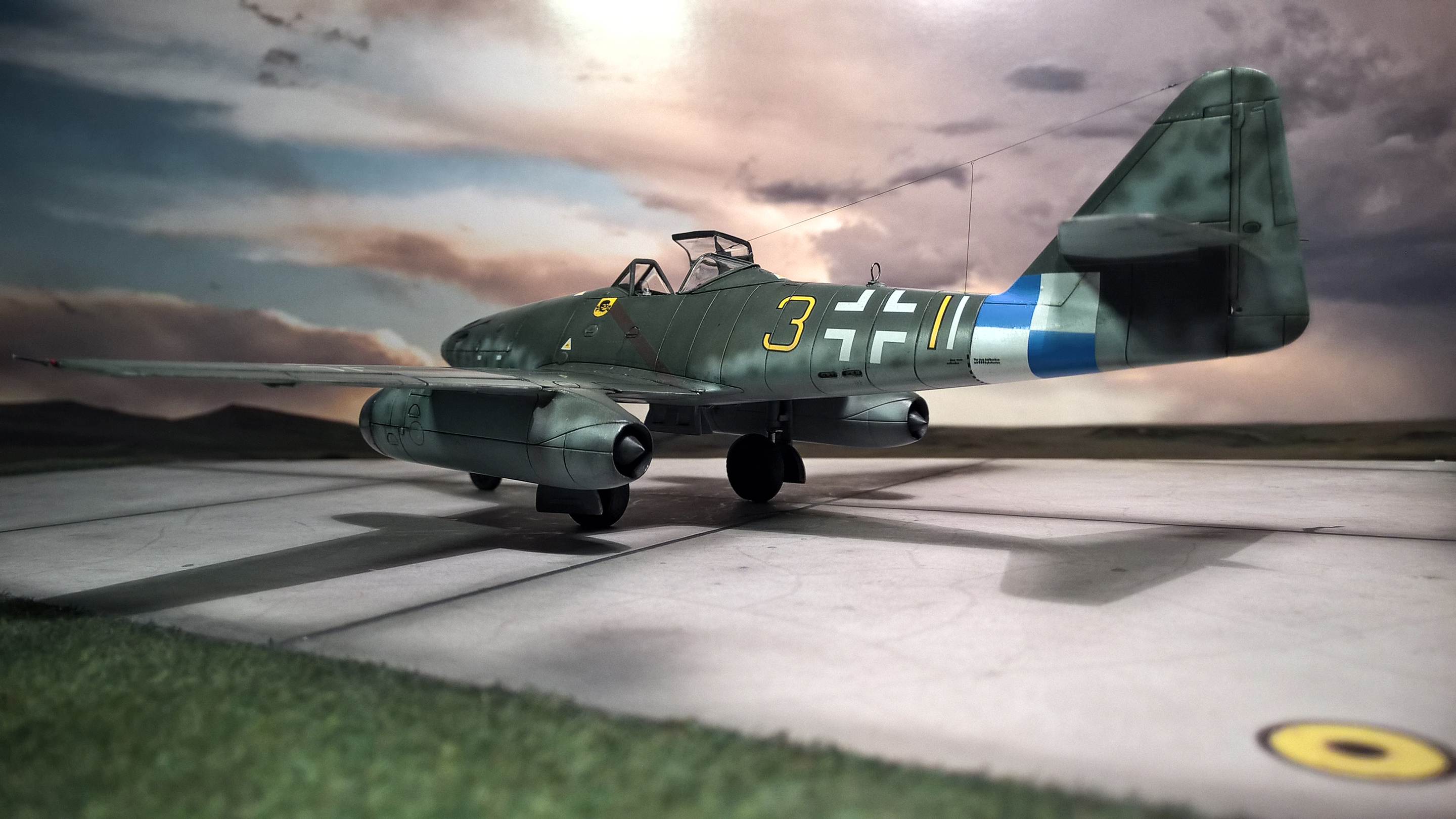
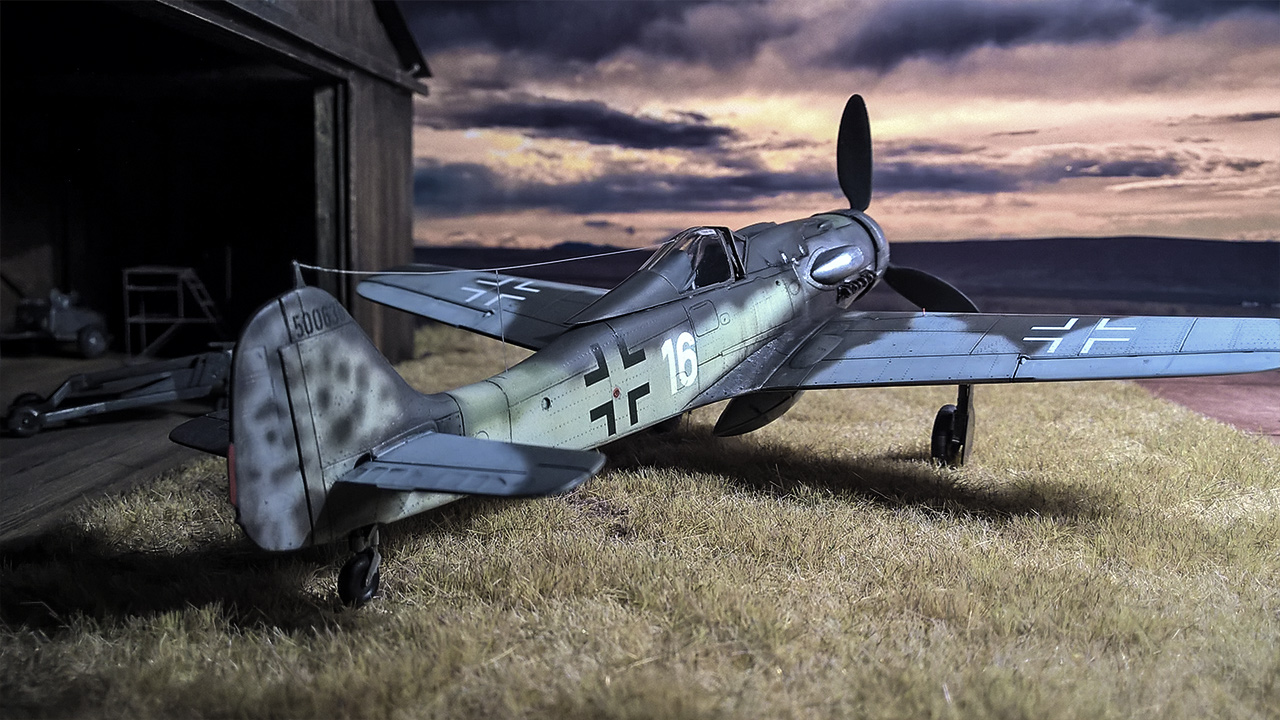
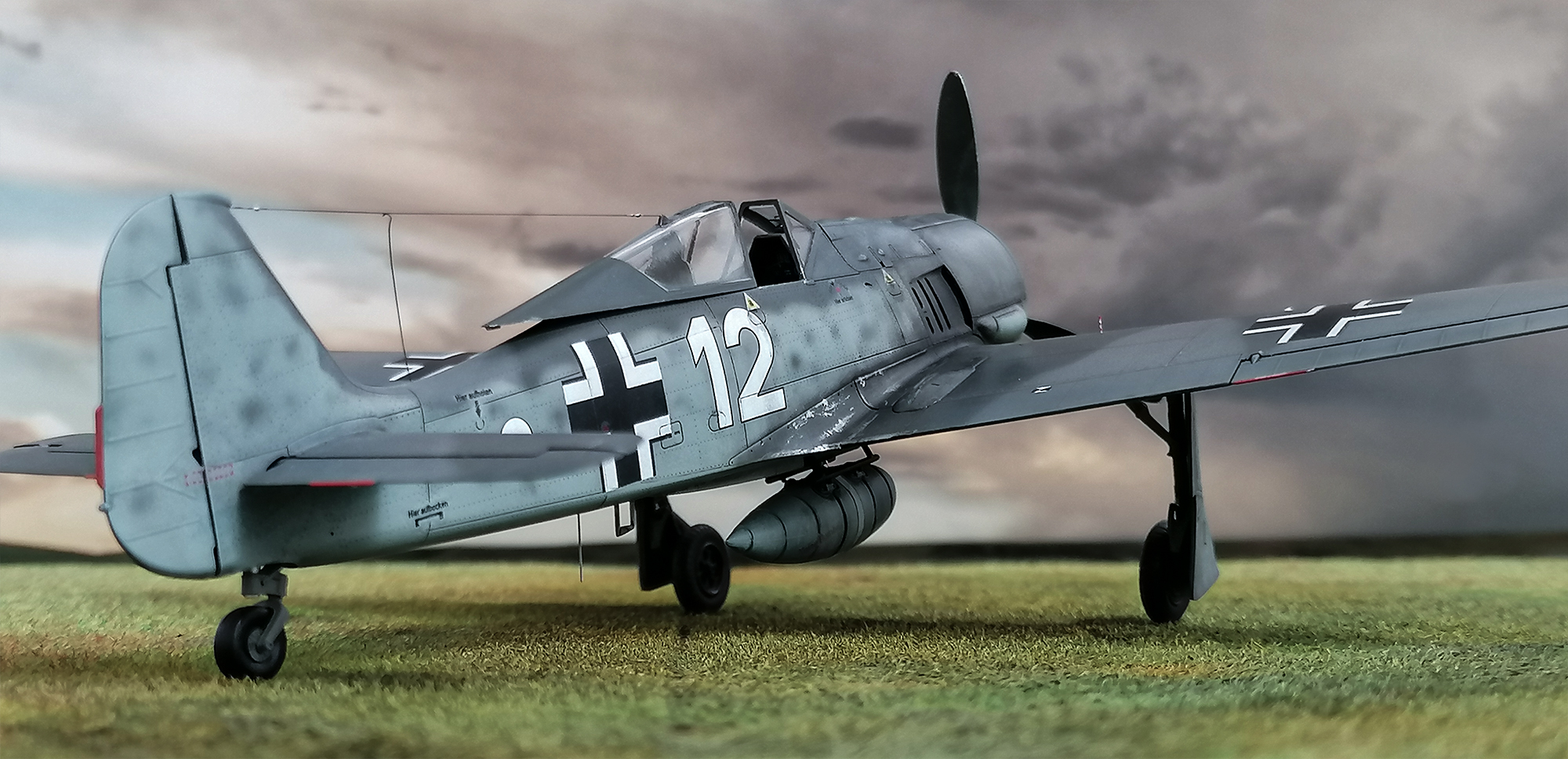
The Messerschmitt Me-262 was the world's first operational jet-powered fighter aircraft, entering Luftwaffe service in 1944. Capable of nearly 870 km/h, it outpaced every Allied aircraft it encountered — yet arrived too late and in too few numbers to alter the course of the war. The aircraft represented a technological leap that left its era behind, and its swept wings and twin Junkers Jumo 004 turbojets gave it a silhouette unlike anything that had come before. Produced under increasingly difficult wartime conditions, the Me-262 A-1a "Schwalbe" wore generic Luftwaffe markings that spoke not of a named pilot or celebrated unit, but of the desperate industrial momentum that drove it into the sky regardless.
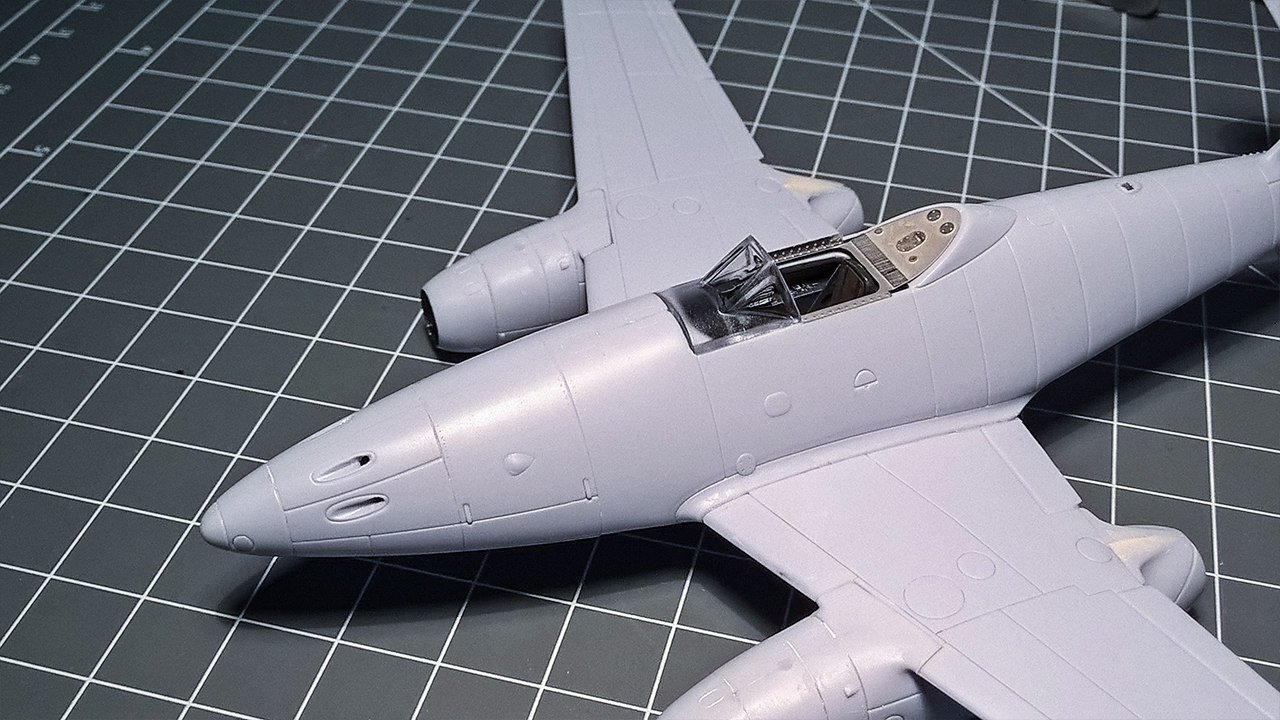
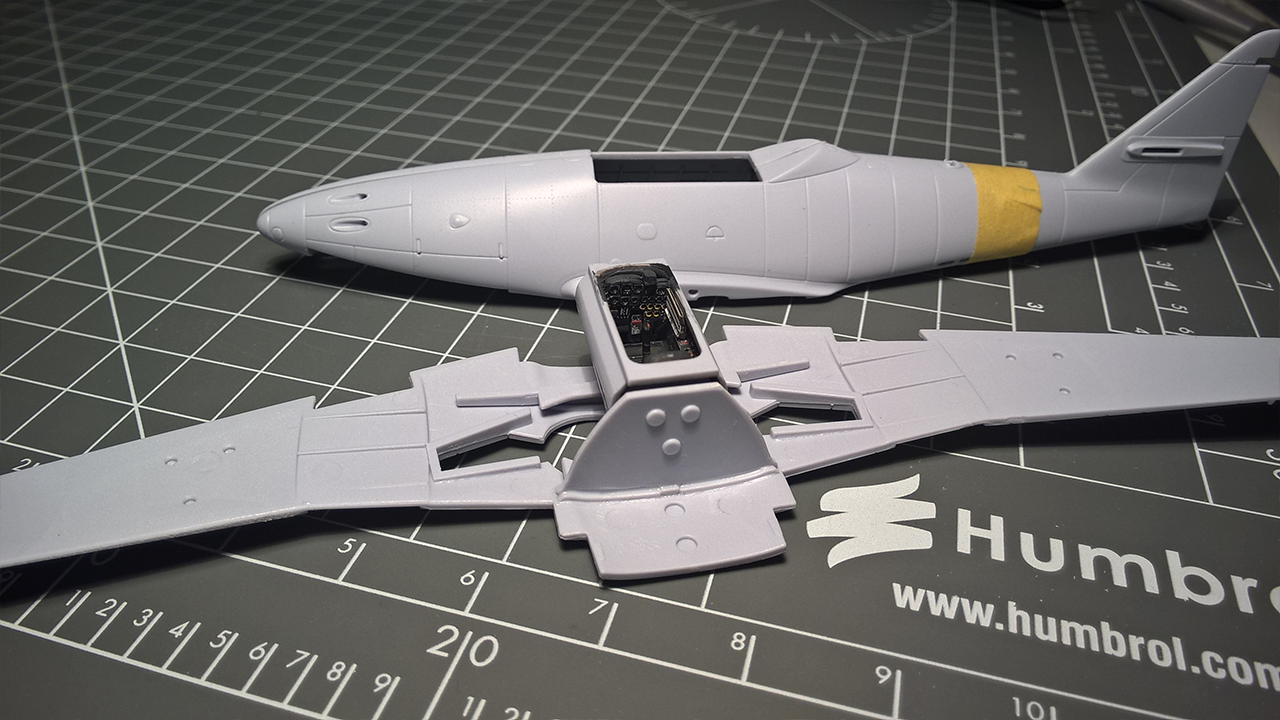
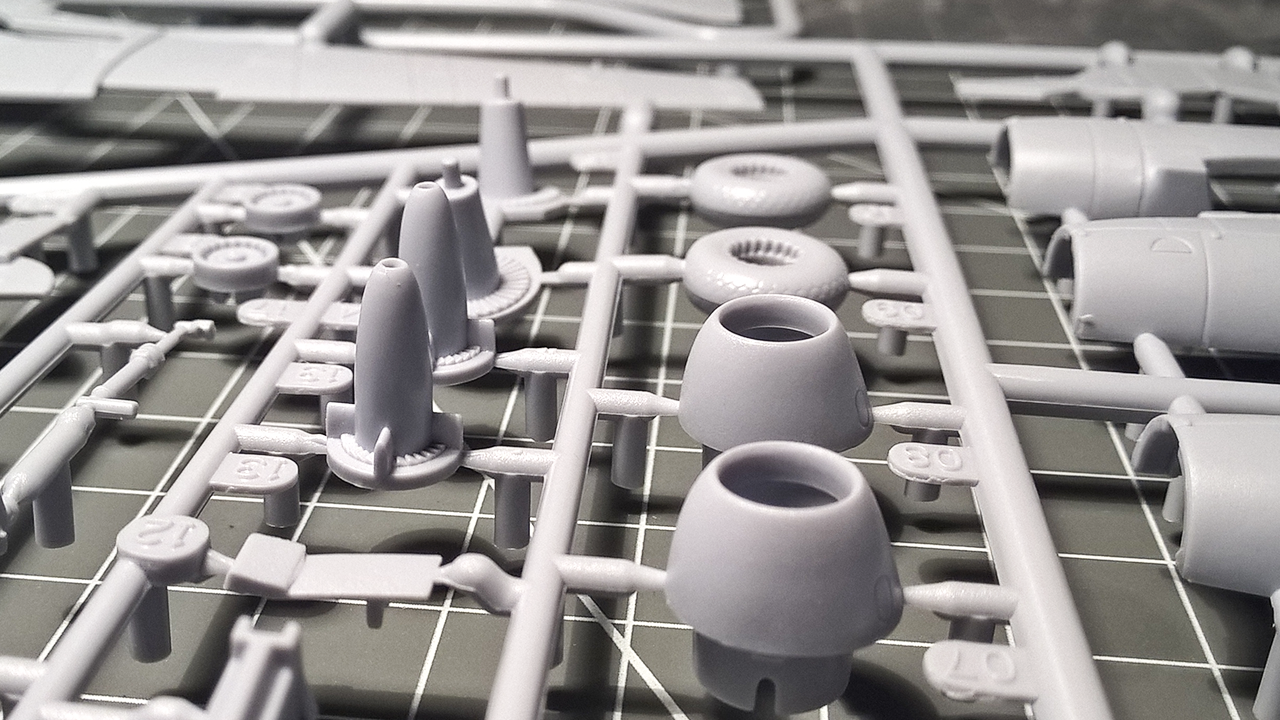
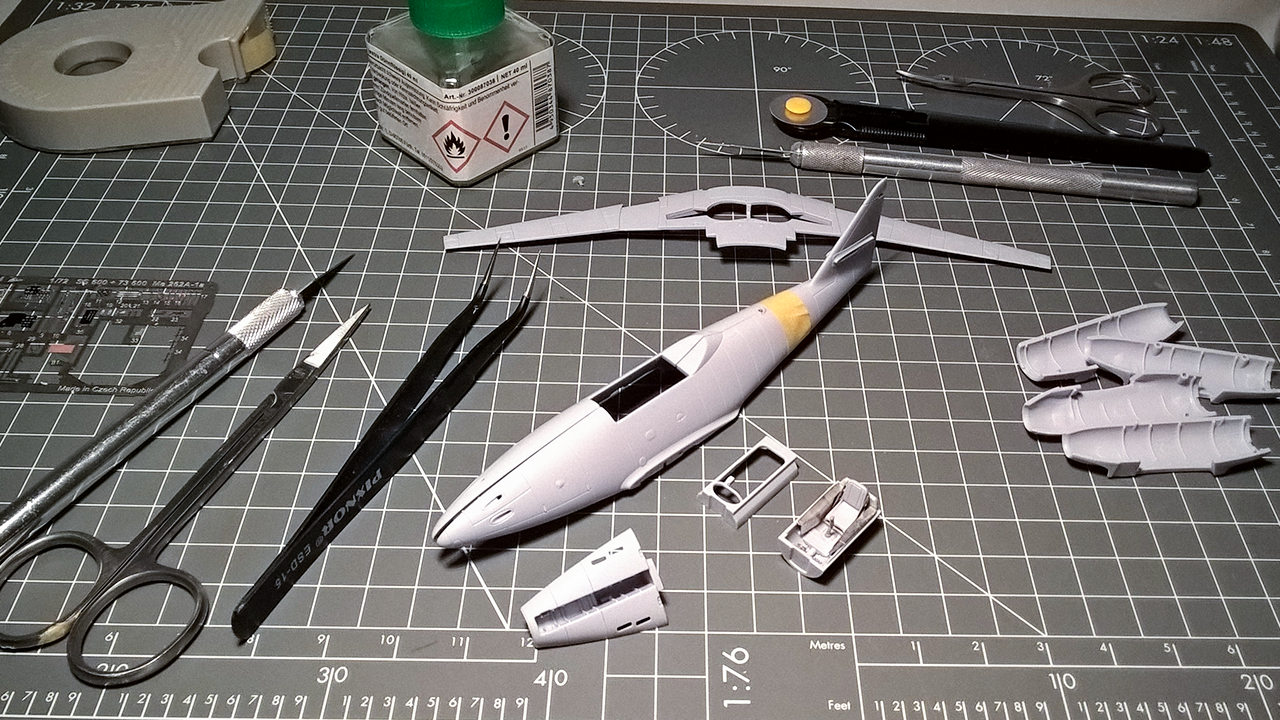
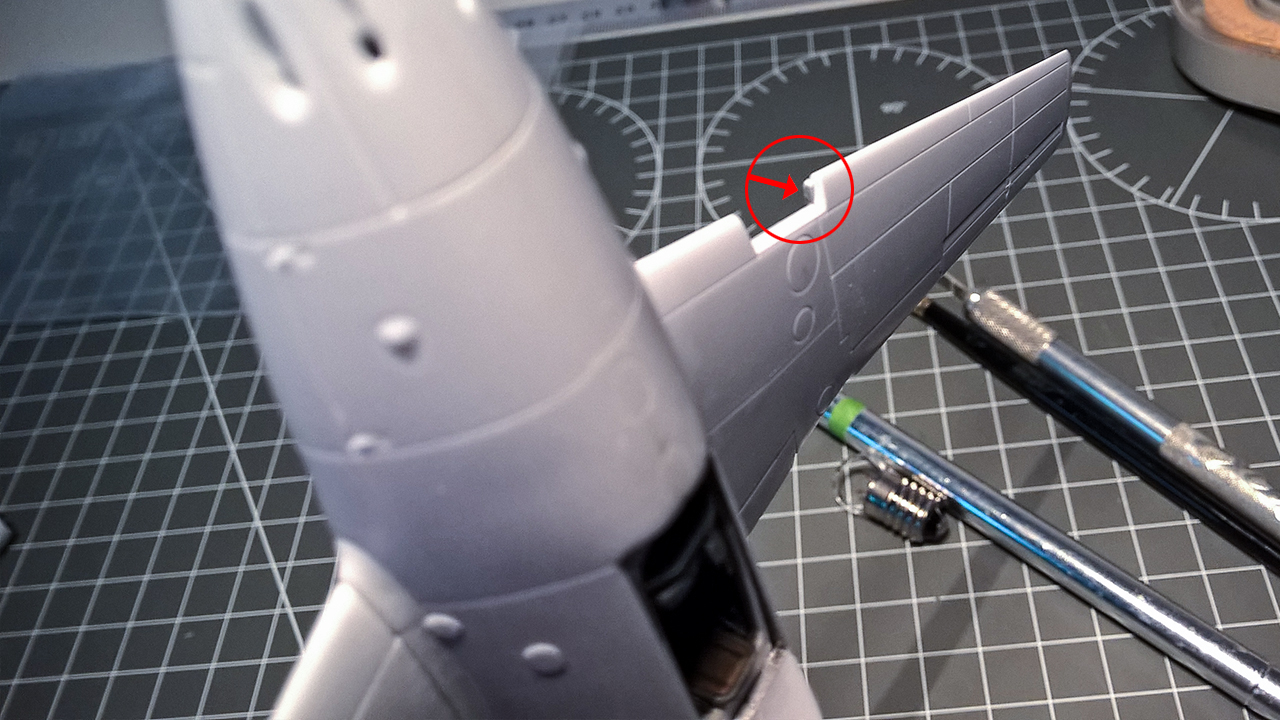
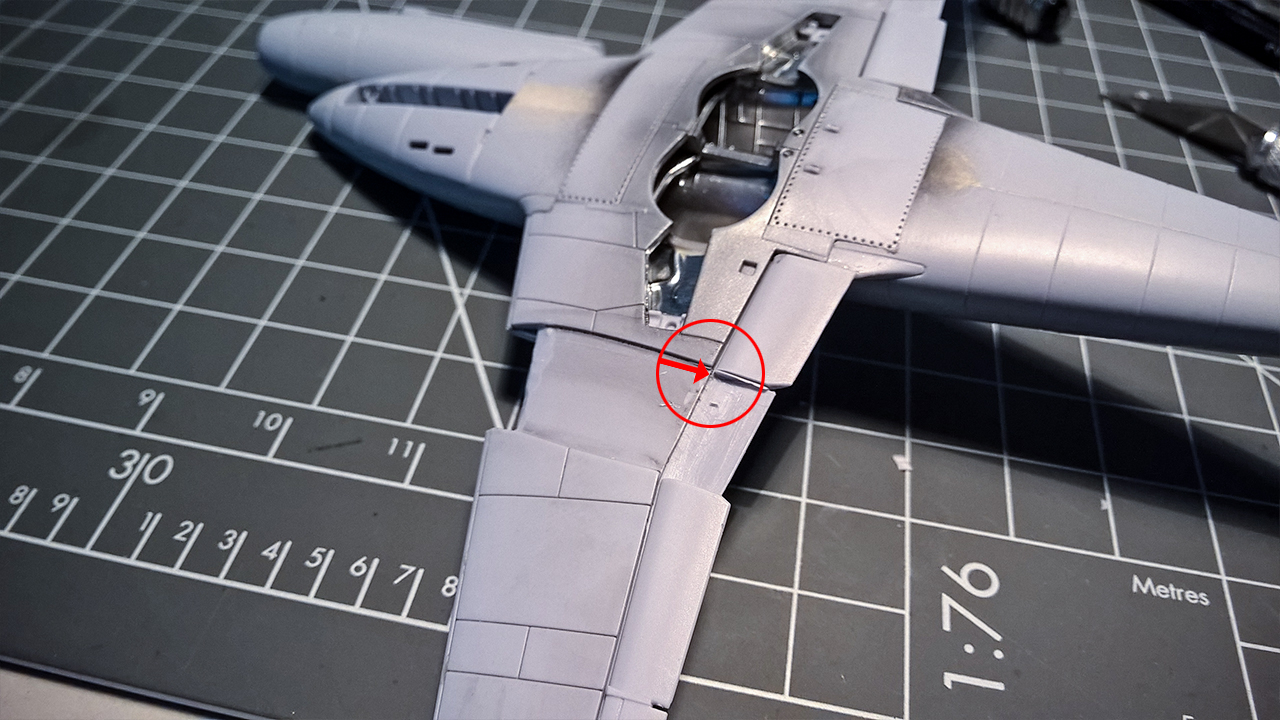
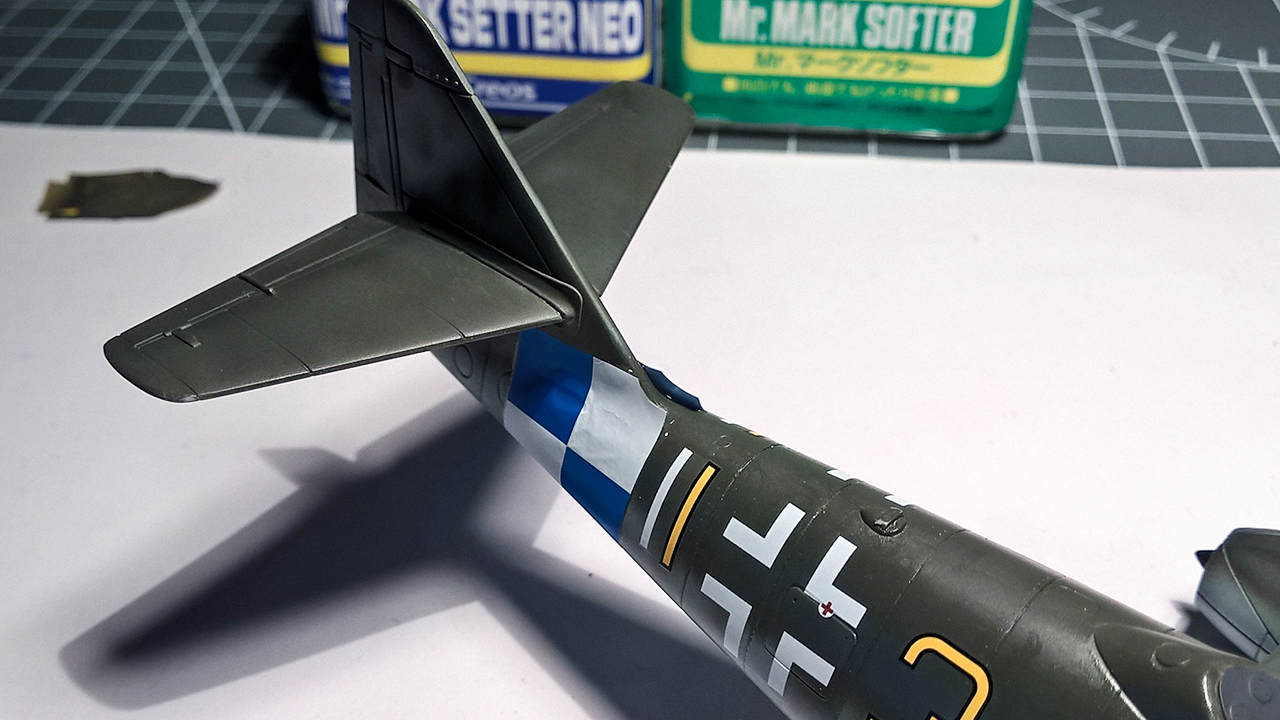
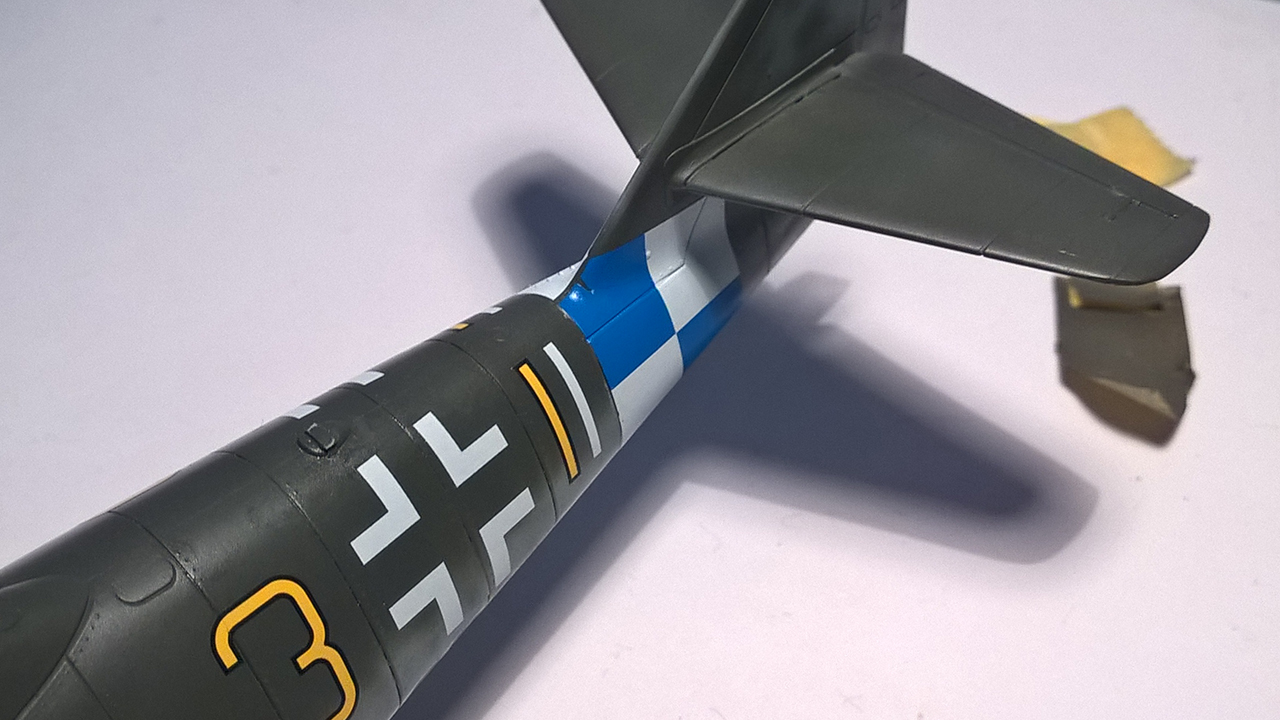
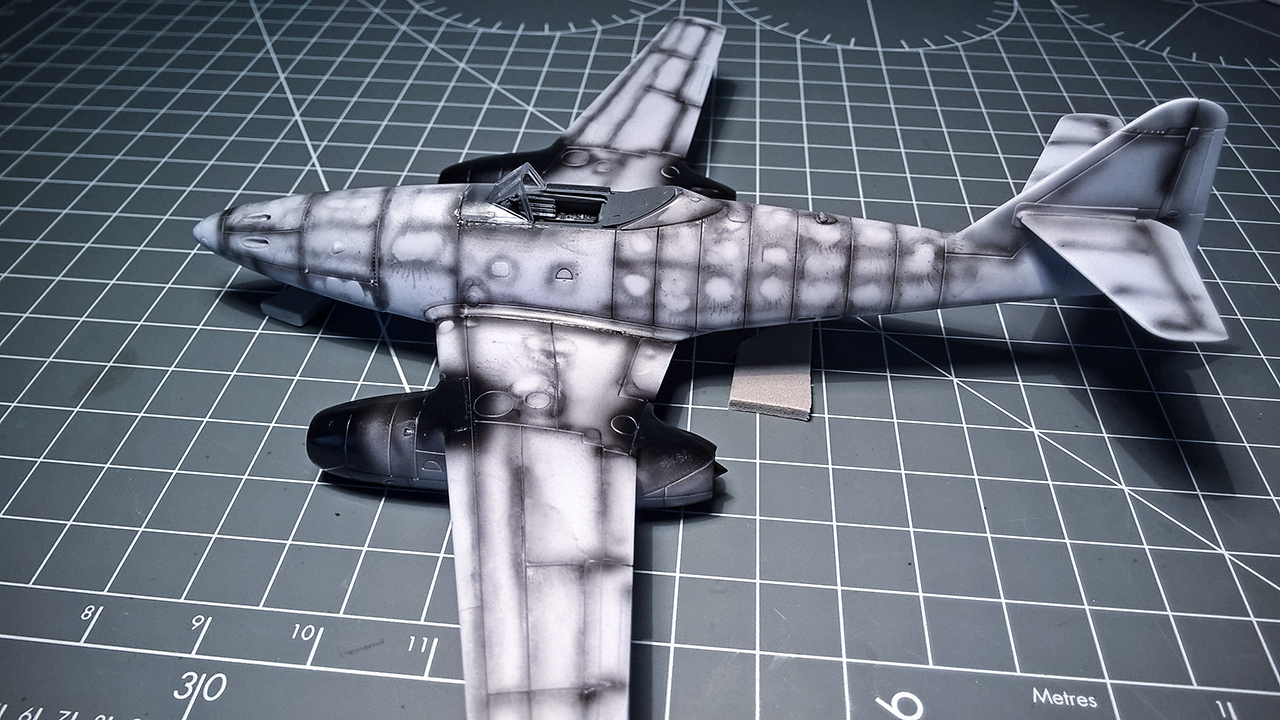
The Airfix "new tool" Me-262 was long awaited. Earlier 1/72 offerings from Academy and Revell had their shortcomings in terms of accuracy and surface detail, and this Airfix release addressed most of them with a thoroughly engineered new tooling, a clear and logical instruction booklet, and well-defined panel lines. Assembly proceeded cleanly until the engine nacelle attachment — the nacelles required careful blade work to fit properly into the wing recesses, and patience was needed to close the seams without distorting the nacelle profile. Mr. Mark Softer and Mr. Mark Setter were essential for the decals, which responded poorly to water alone but settled convincingly with softening solution. The kit rewards a methodical approach: rushing the nacelle join in particular will leave a visible step that resists correction at the painting stage.
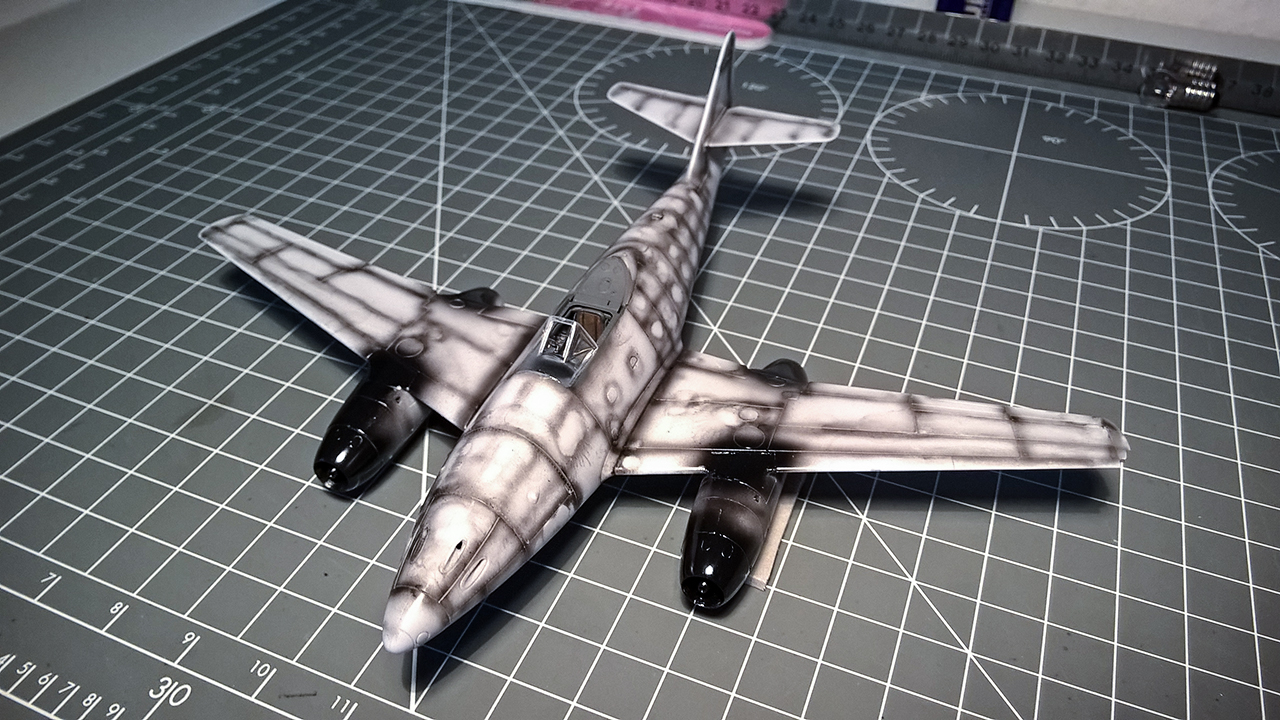
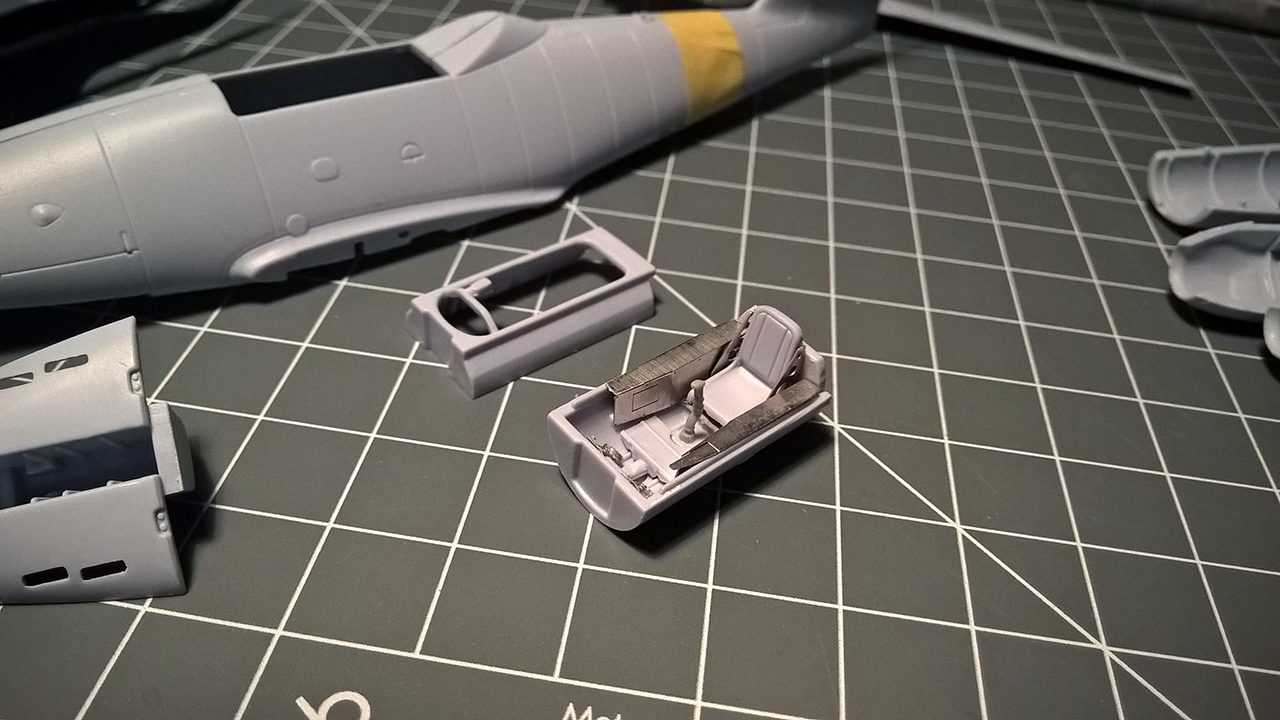
The Eduard photo-etch cockpit set adds meaningful detail at this scale — the instrument panel, side consoles, and harness all read convincingly under any reasonable viewing angle. Quickboost resin wheels replace the slightly flat-spotted kit items and are a straightforward drop-in improvement. The camouflage scheme follows the standard late-war three-tone splinter pattern in RLM 81/82/76, applied with a fine-needle airbrush to replicate the soft-edged demarcation lines characteristic of Luftwaffe field application. Thin coats and patience with the masking of the lower 76 surface paid dividends in a natural-looking tonal boundary. The result is a kit that rewards careful assembly and sits well alongside any Luftwaffe 1/72 collection.
01
02
03
04
05
06
07
08
09
10
11
12
13
14
15
16
17
18
19
20
21
22
23