Build Report
About This Build
The Subject
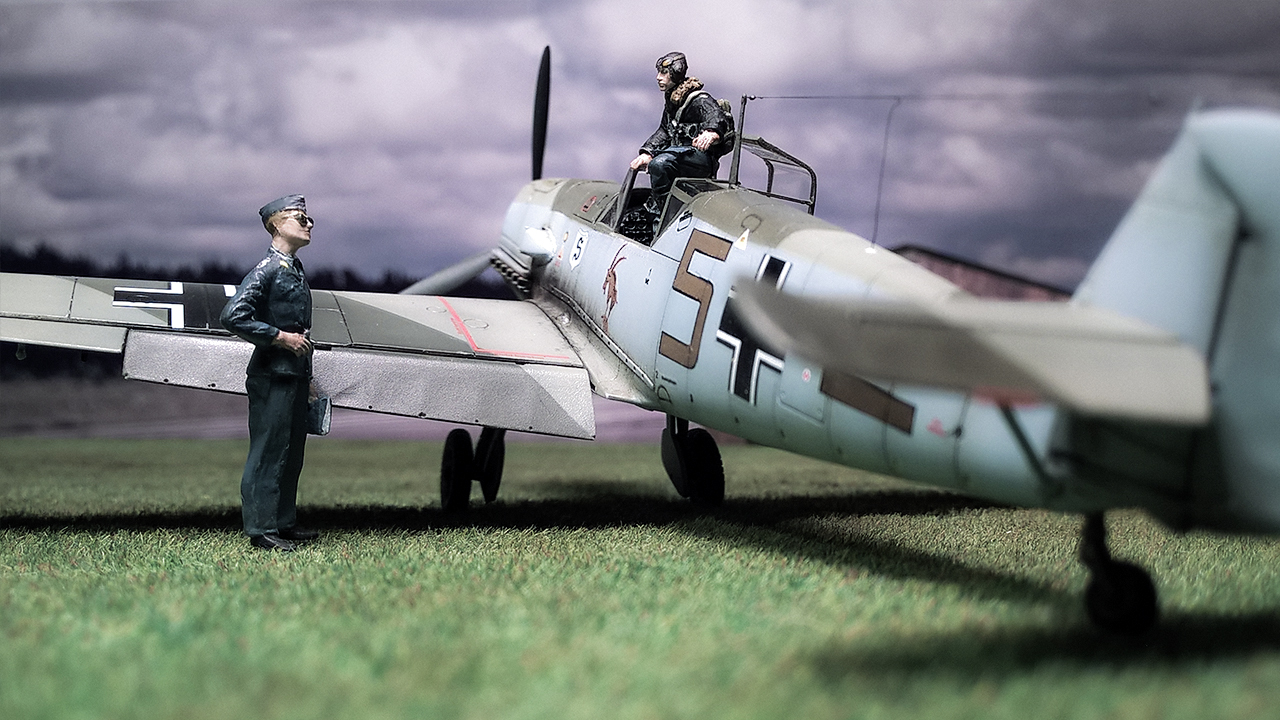
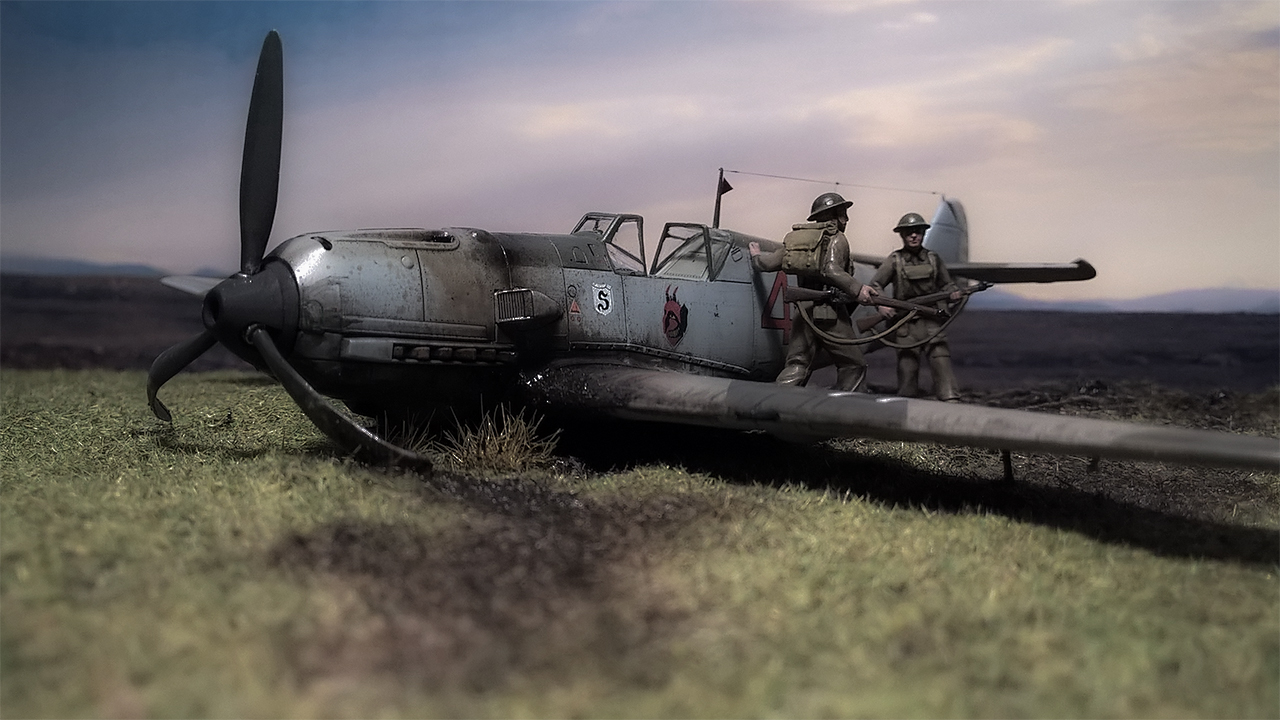
The summer of 1940 placed the Bf-109 E at the outer edge of what its airframe and fuel load could sustain. Flying from airfields in the Pas-de-Calais and the Cherbourg peninsula, pilots of JG 26 "Schlageter" found themselves over southern England with barely twenty minutes of combat time before the fuel gauges demanded a return crossing. When battle was joined — and particularly when the engagement lasted longer than planned, or damage was taken — those margins evaporated entirely. Crash landings in fields across Kent and Sussex became a recurring reality of the campaign: wheels up, engine dead or failing, the pilot guiding a heavily armed machine onto unfamiliar ground and hoping the terrain held no hidden ditches. The scenario captured in this diorama sits squarely within that operational experience, though the specific aircraft and red individual number are not historically documented and are presented as a plausible fictional subject.
The Kit
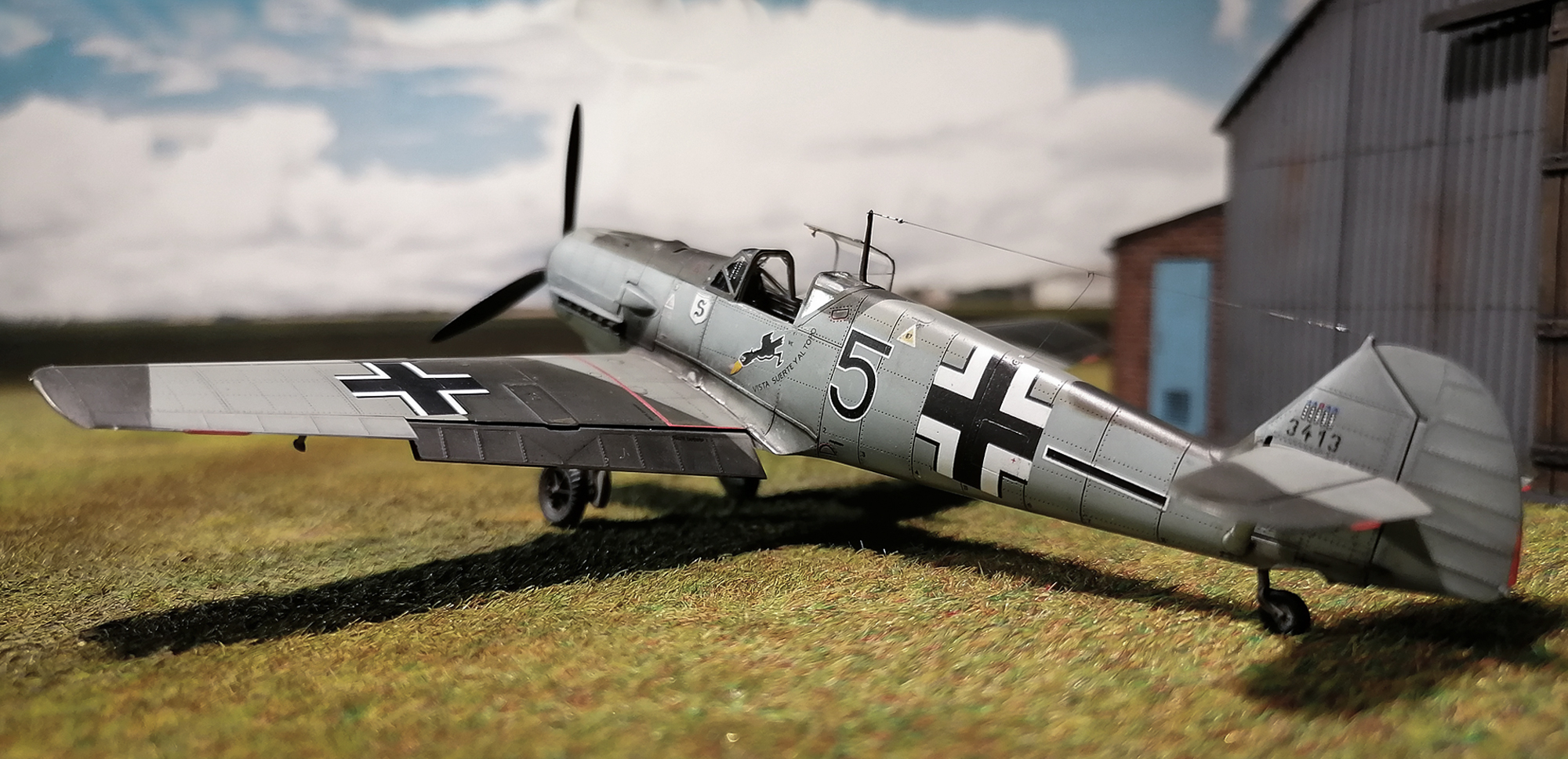
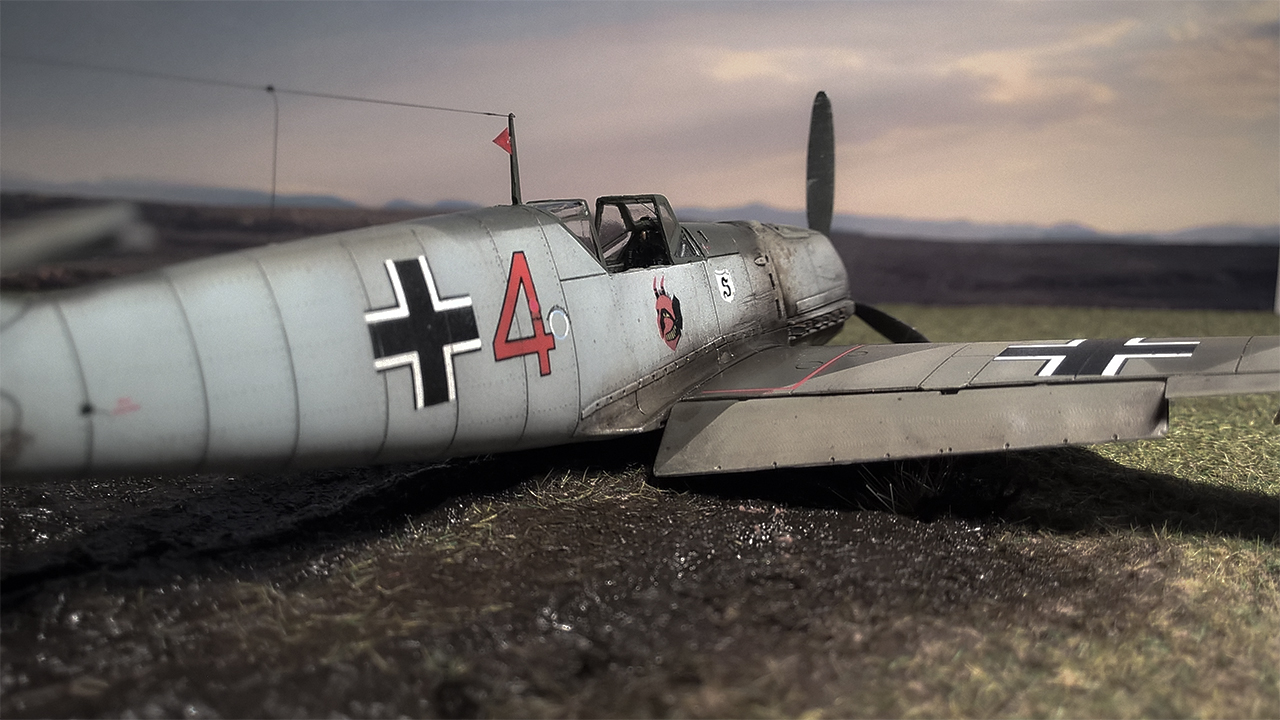
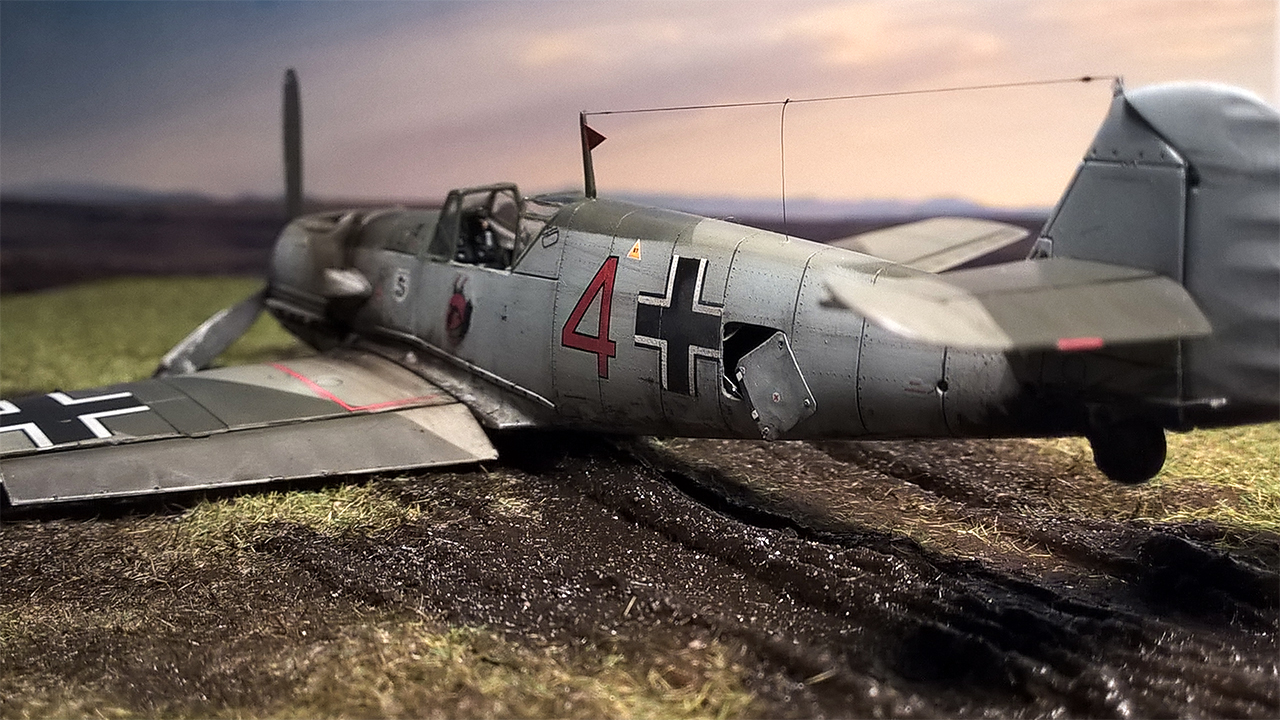
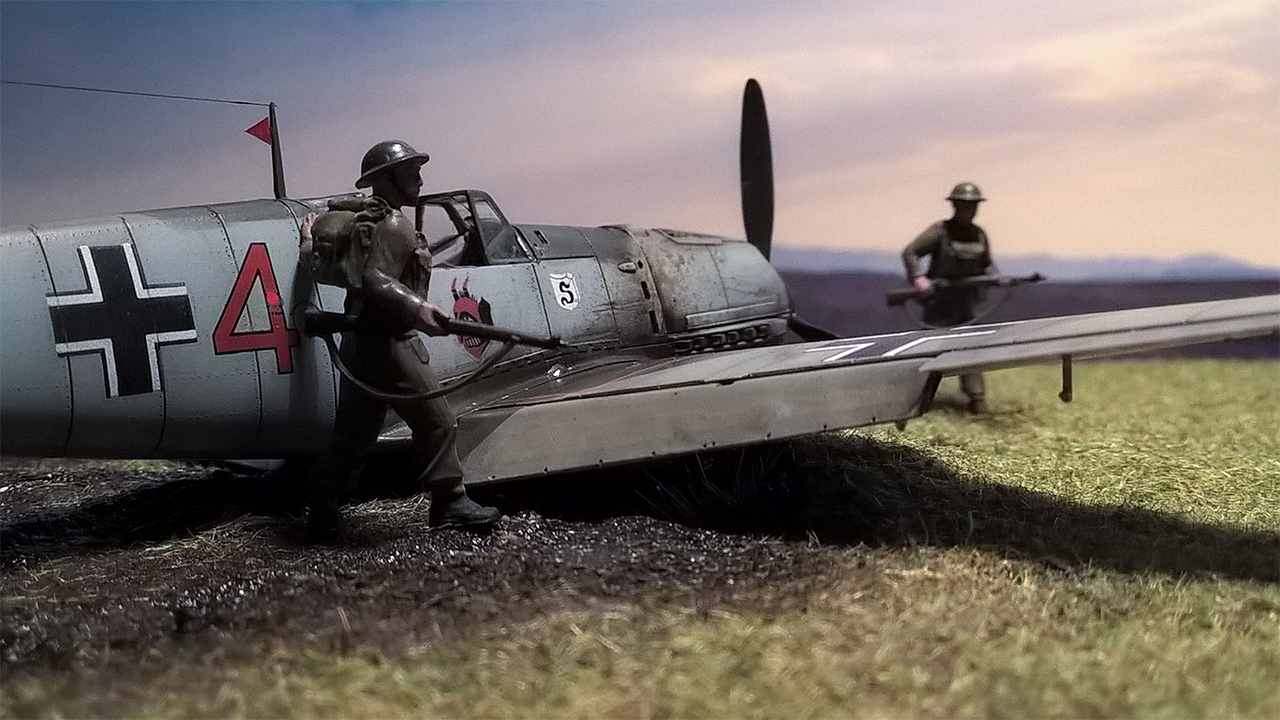
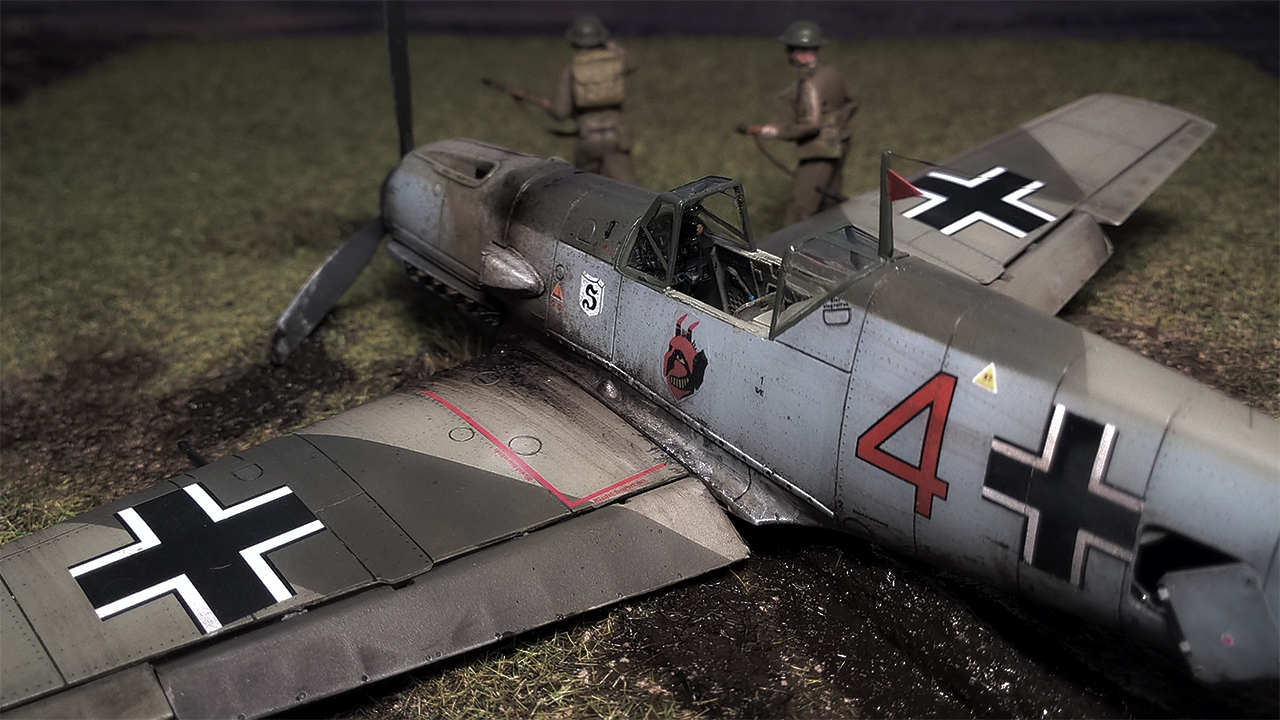
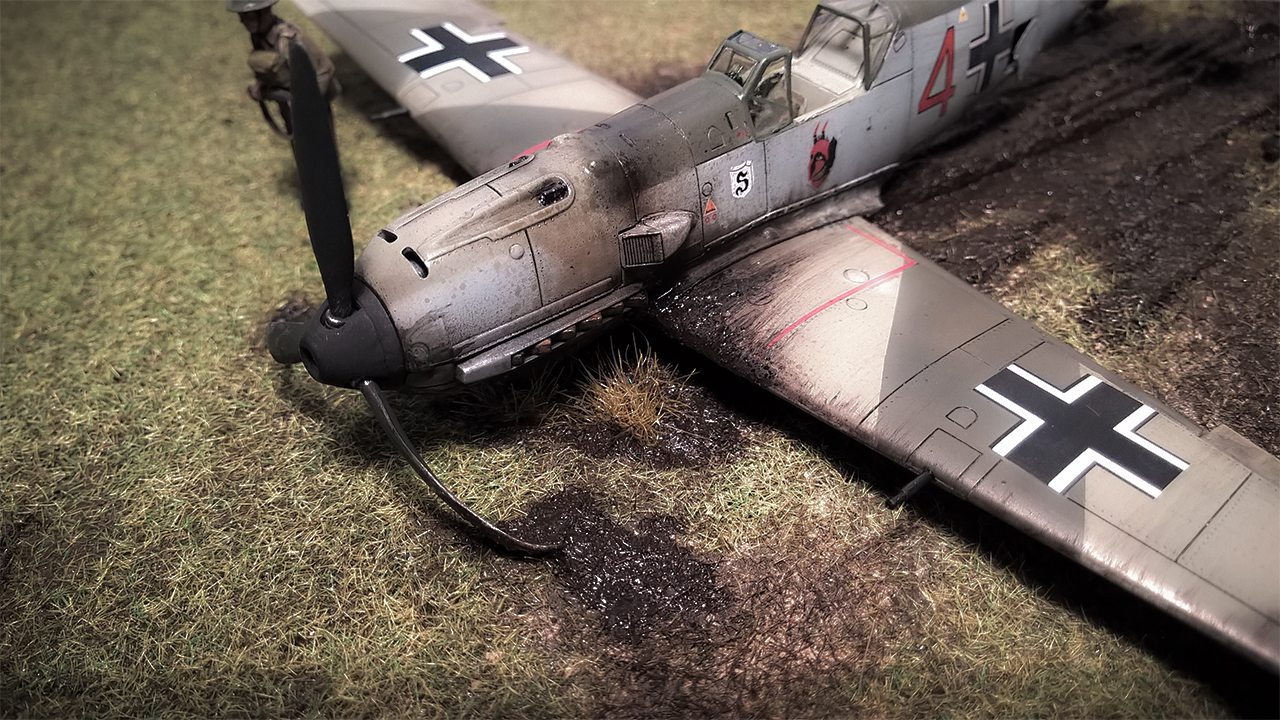
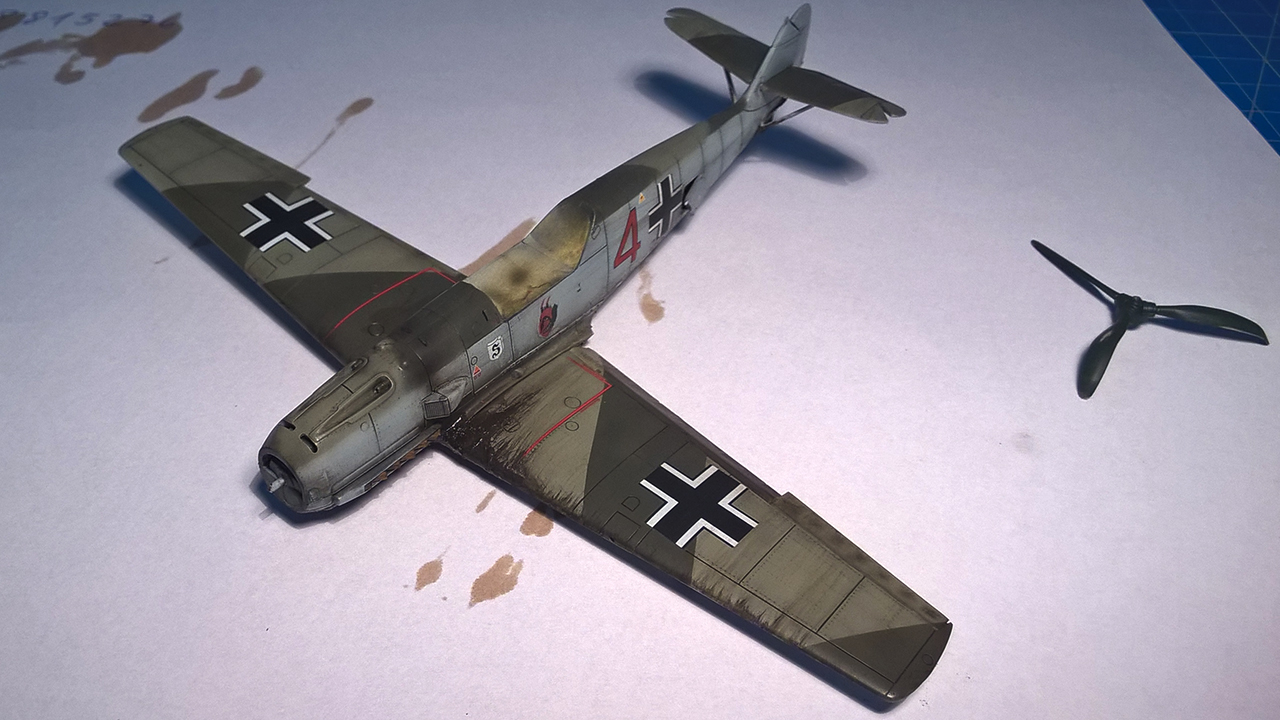
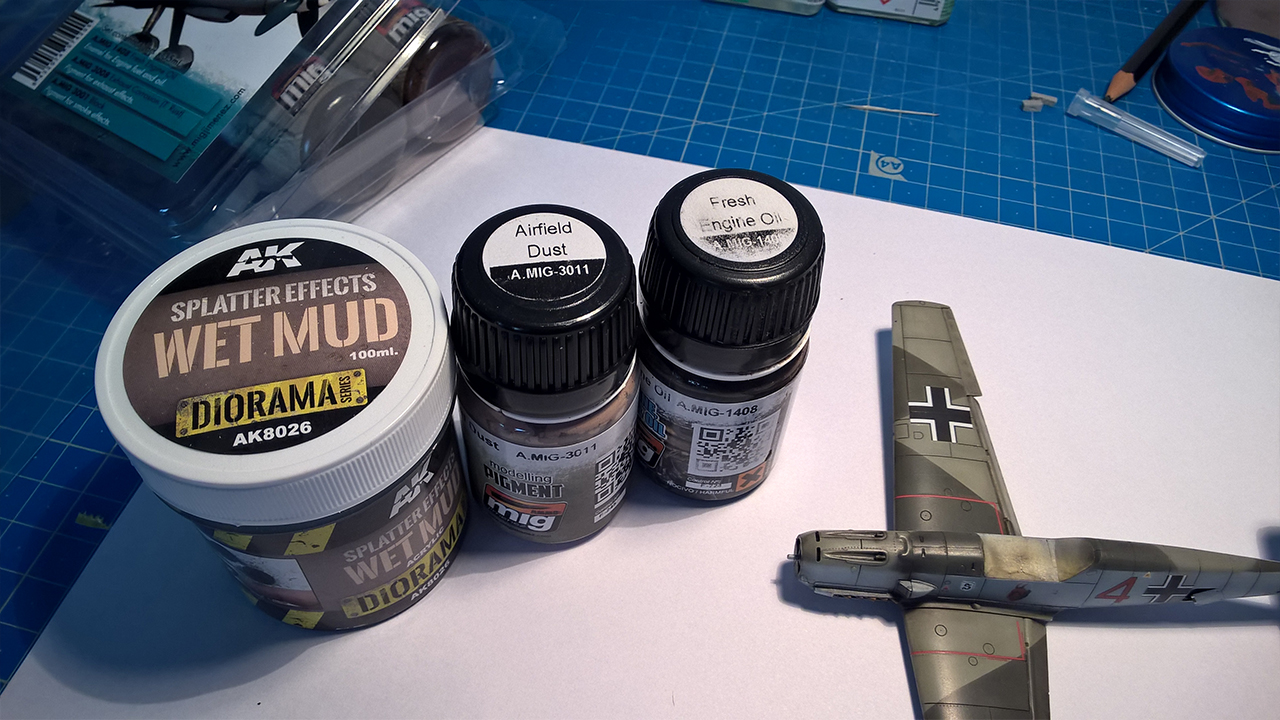
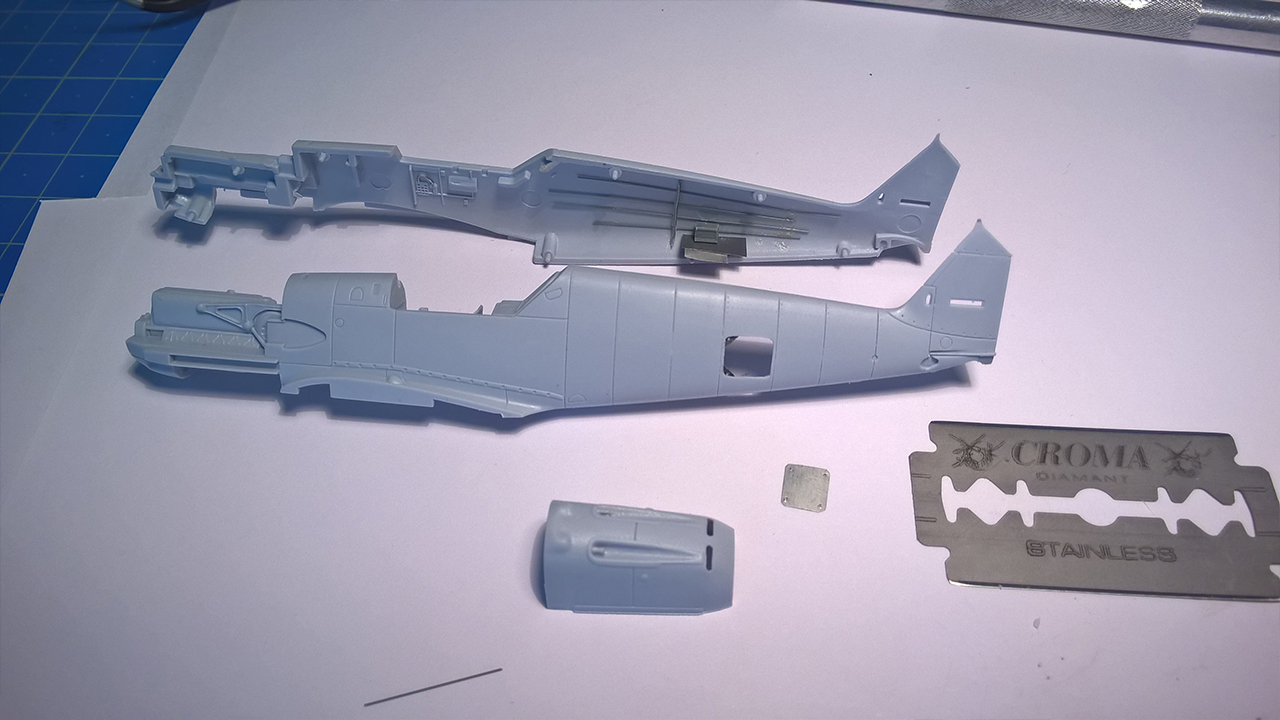
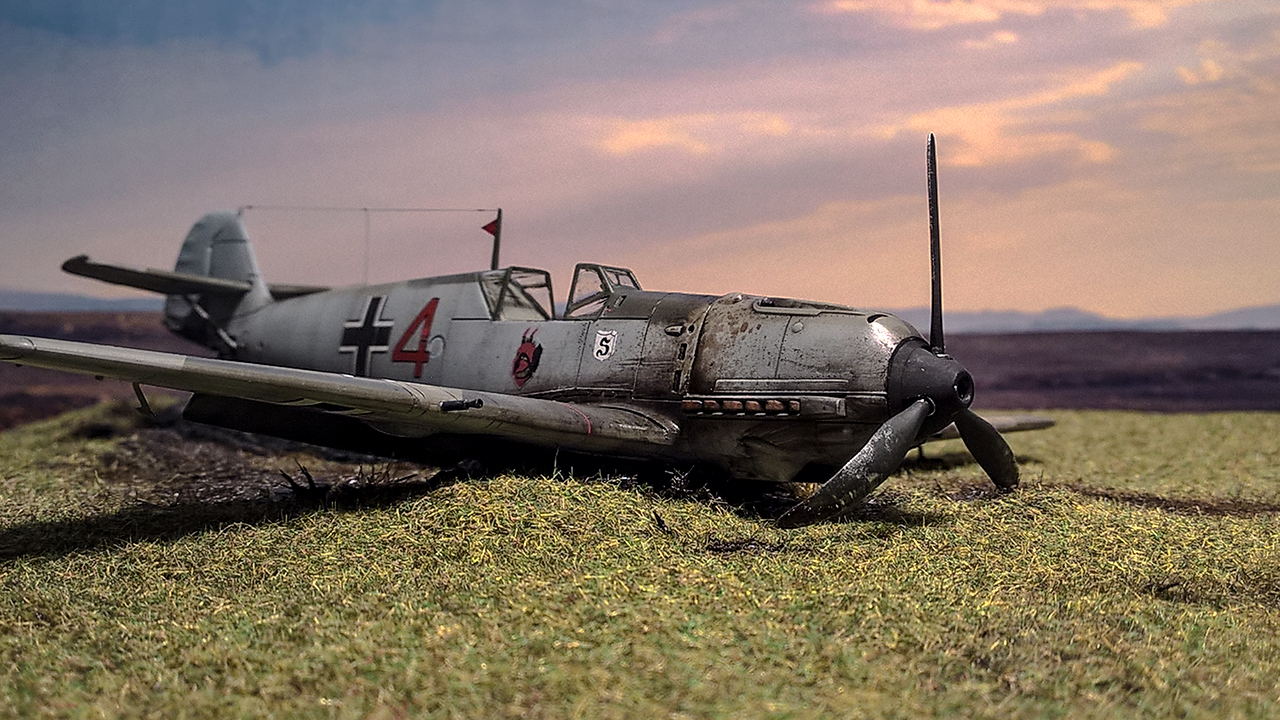
The Airfix 1/72 Bf-109 E is a model with genuine appeal across the skill spectrum — sharply moulded, well-proportioned, and forgiving enough to be a satisfying build for a newcomer while offering plenty of scope for added detail. The cockpit and instrument panel were upgraded with Eduard photo-etched and pre-painted brass parts, giving the cramped 109 interior a depth that the standard kit components cannot match at this scale. All paints are Mr. Hobby Aqueous and Mr. Color, covering the standard Battle of Britain scheme of RLM 02 Graugrün under the wings and RLM 71/02 over the upper surfaces. The red "4" fuselage number is a custom decal, digitally designed and printed, intended to represent a personal marking as documented — with appropriate caveats — in the Kagero publication "JG 26 Schlageter Vol. 1". A small red devil personal emblem, also custom-printed, appears on the cowling. As with the number, its historical basis is decorative rather than verified.
Colours & Markings
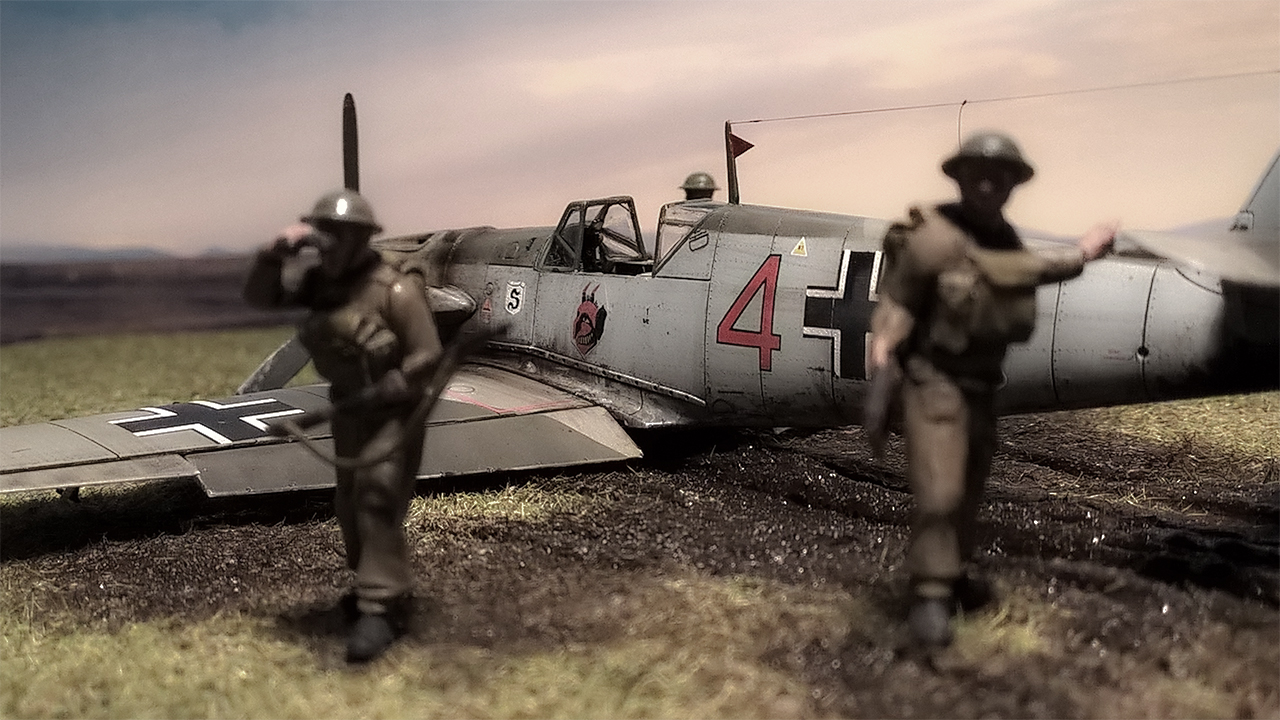
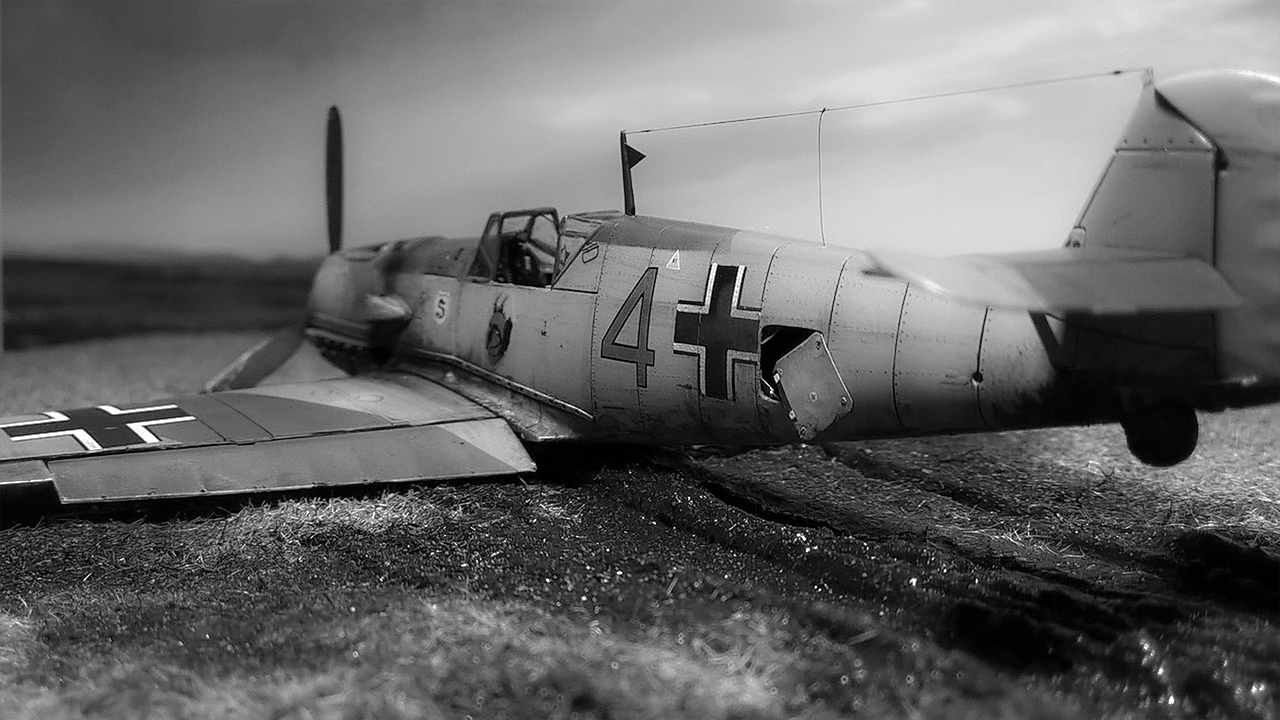
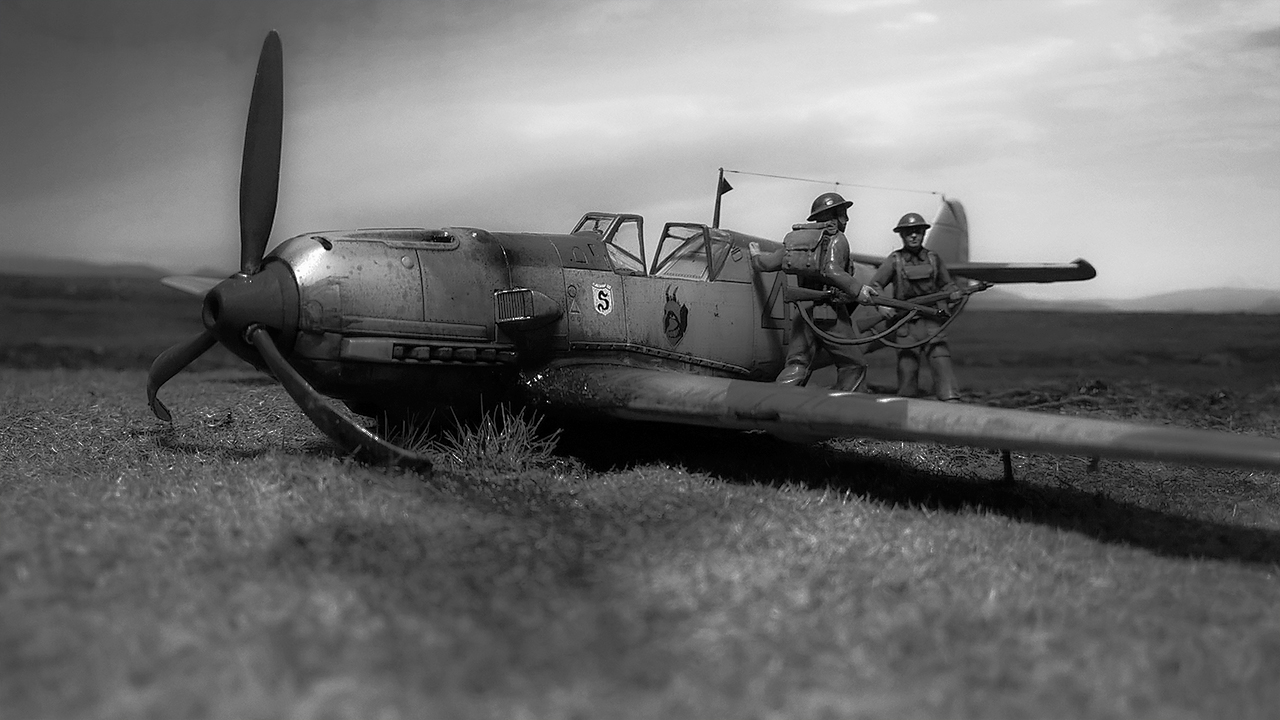
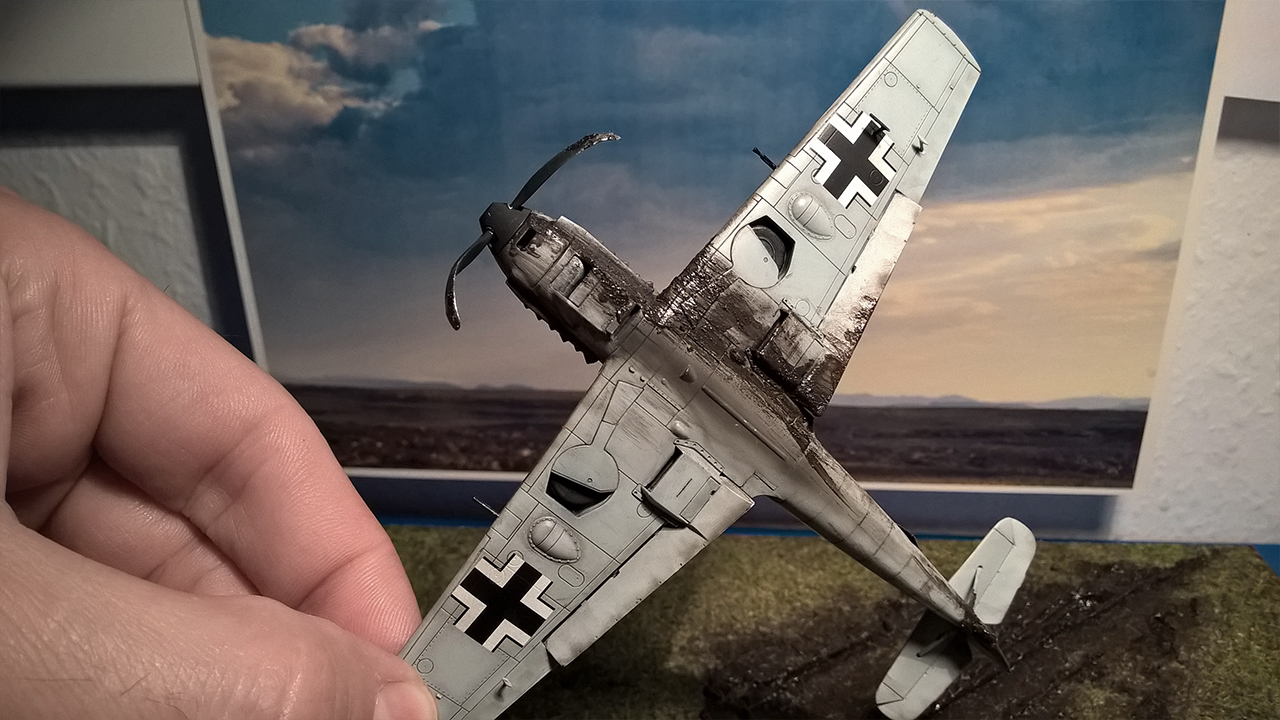
The diorama presents the aircraft as it might have appeared moments after coming to rest on English soil — wheels retracted, propeller blades bent back against the ground, the fuselage settled at a slight angle in the grass. Ground scatter of static grass tufts, dried earth, and tyre furrows sets the scene without overpowering the subject. Two Zvezda "British Recon Team" figures — slightly oversized for 1/72 by Zvezda's typically generous proportions — represent British Army personnel approaching the downed machine, lending the scene narrative weight. The pairing of a crashed Luftwaffe fighter with approaching British figures captures a moment that played out repeatedly across southern England throughout the summer and autumn of 1940: the Battle of Britain measured not only in the air, but in the quiet fields below.
 01
01
 02
02
 03
03
 04
04
 05
05
 06
06
 07
07
 08
08
 09
09
 10
10
 11
11
 12
12
 13
13
 14
14