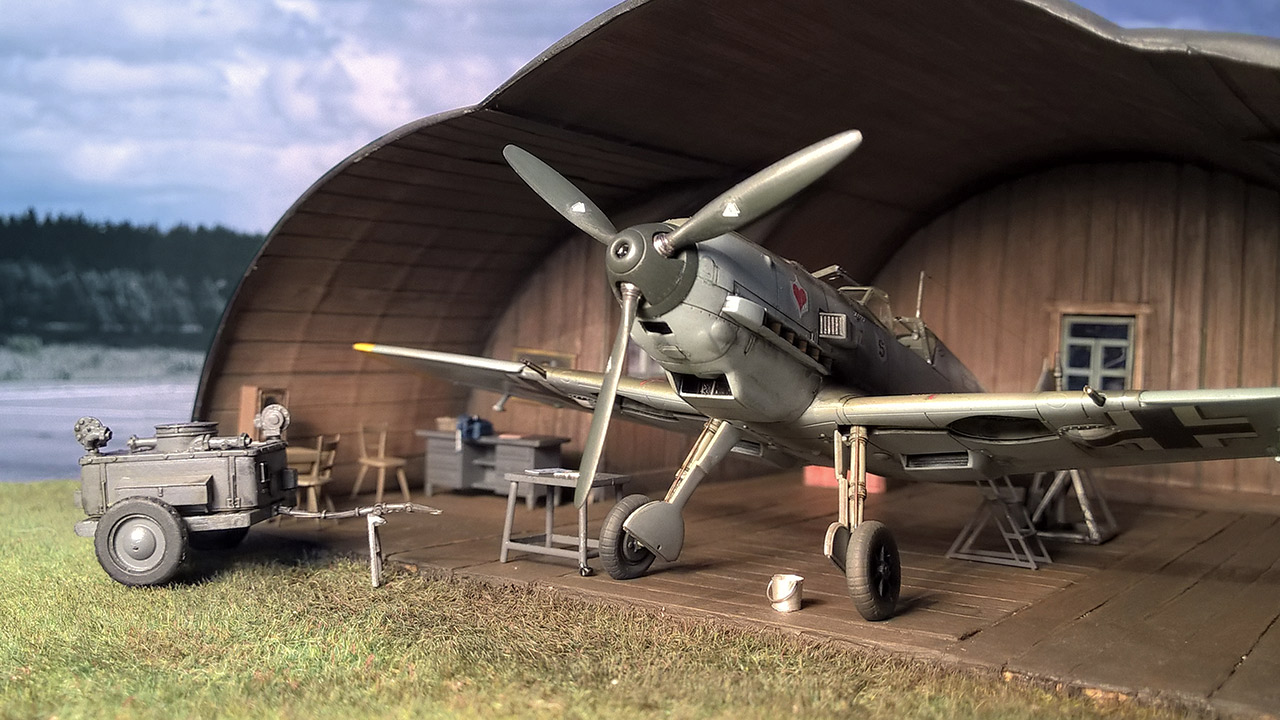
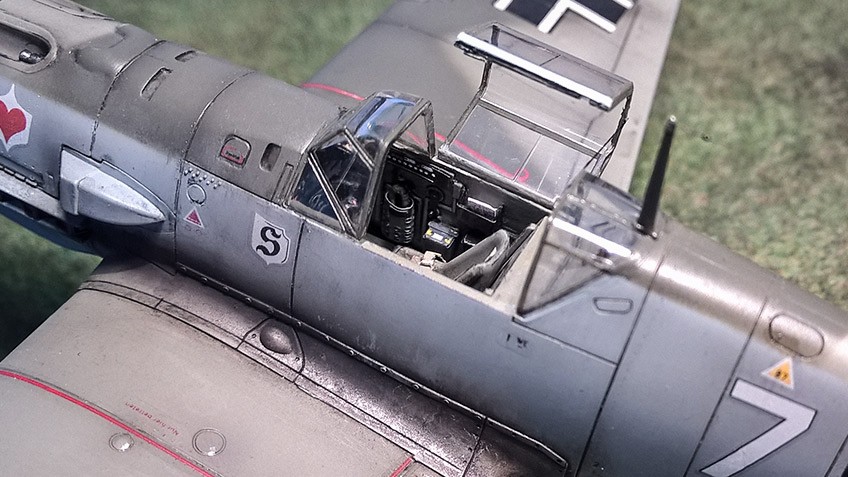
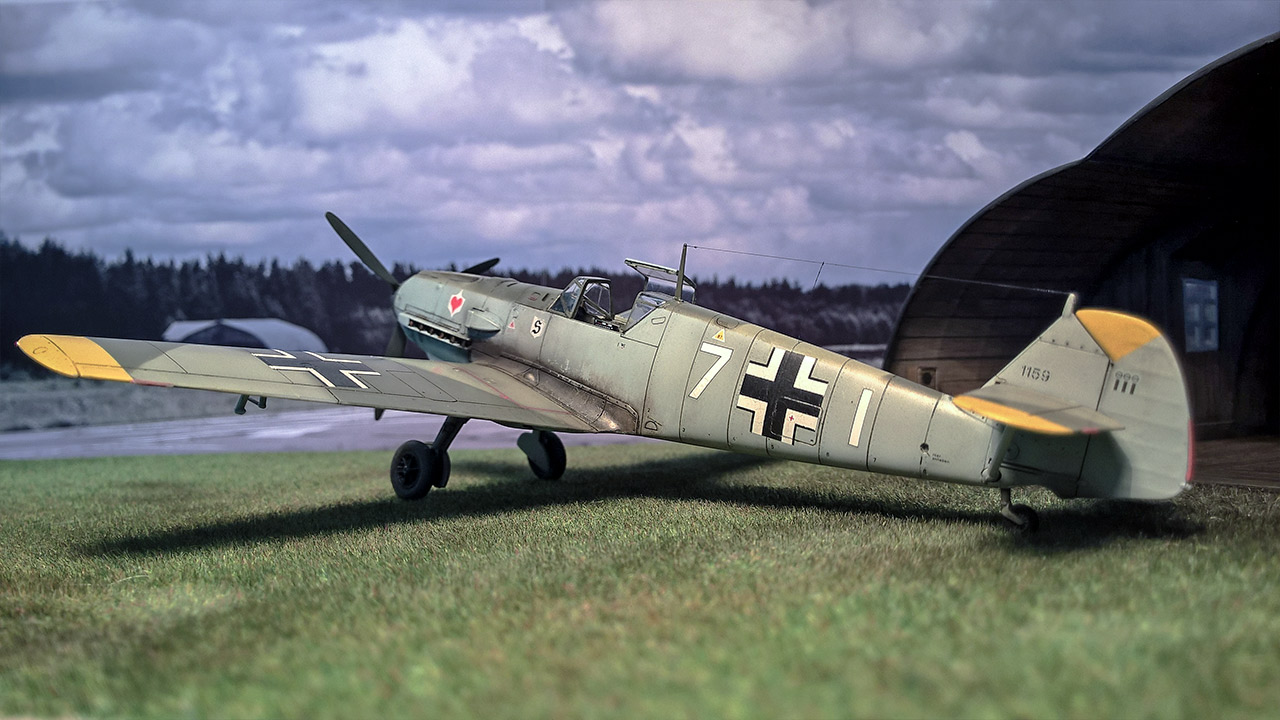
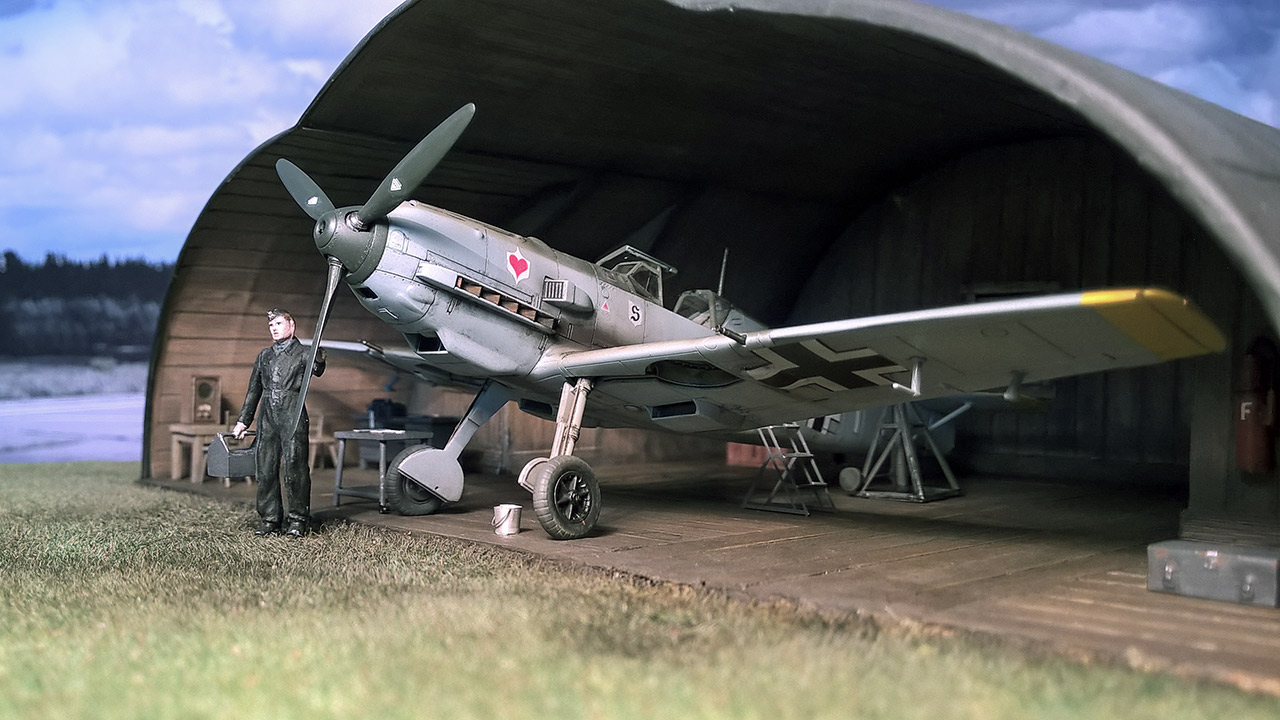
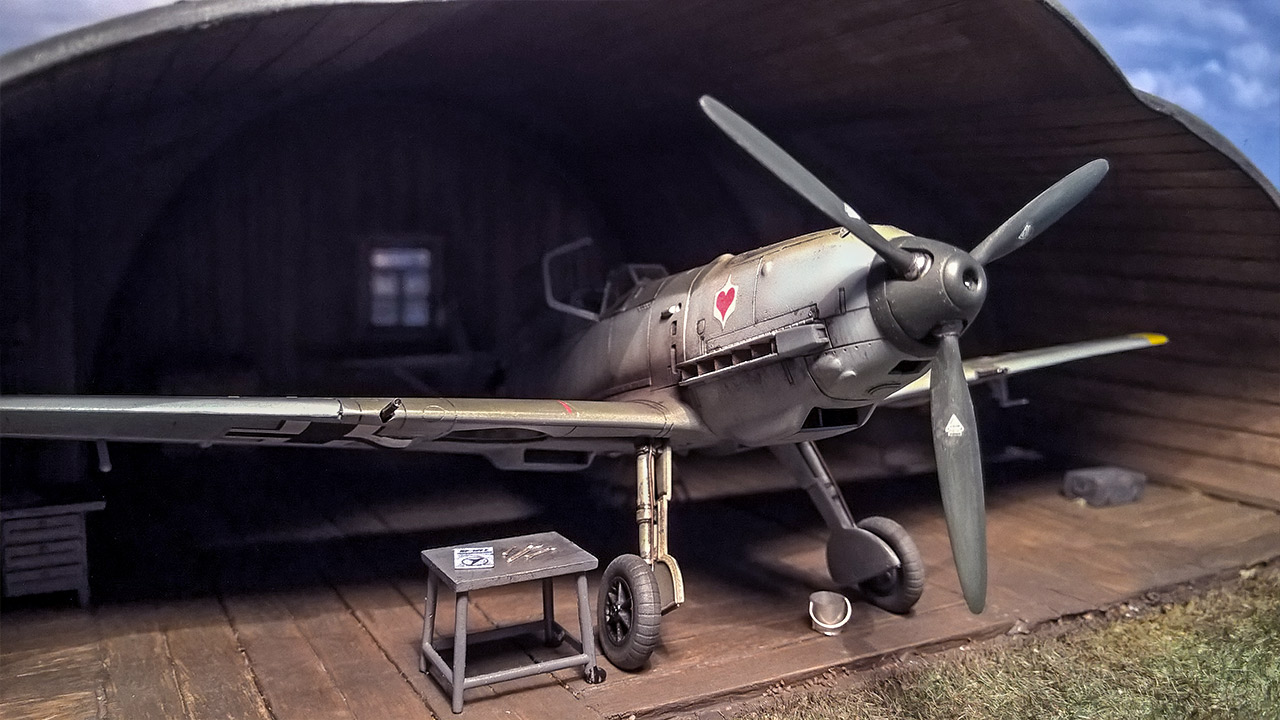
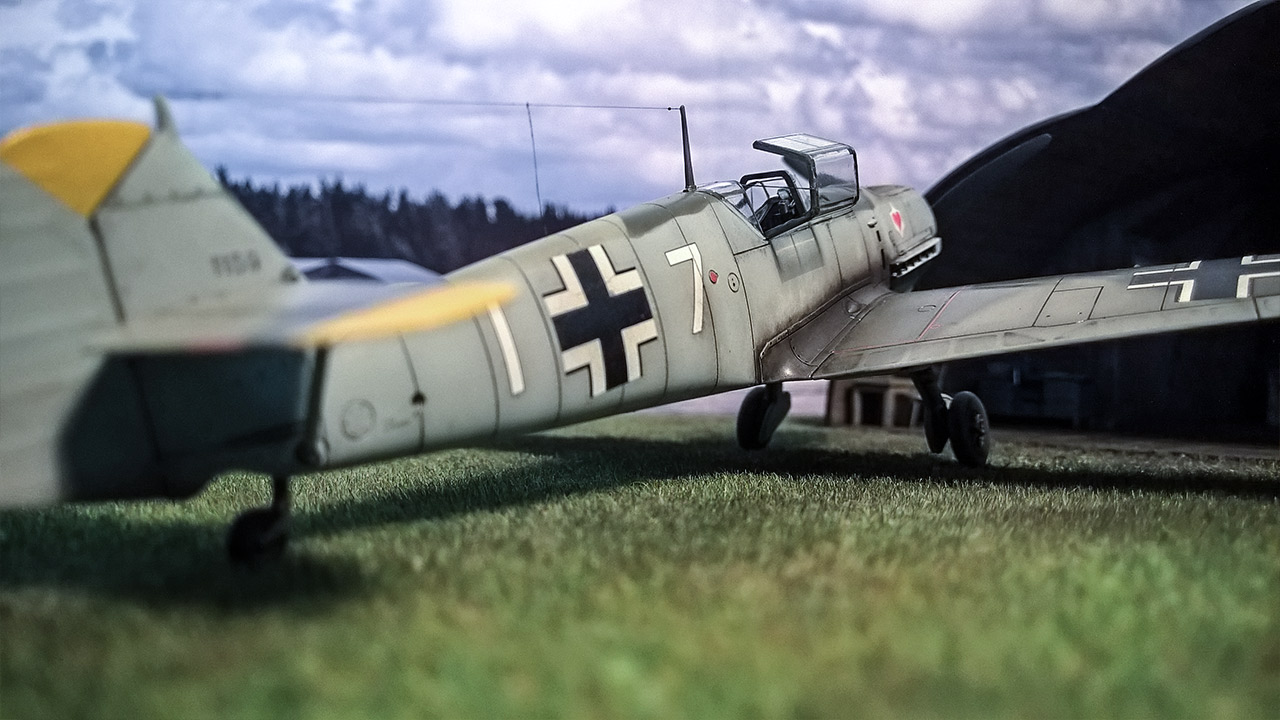
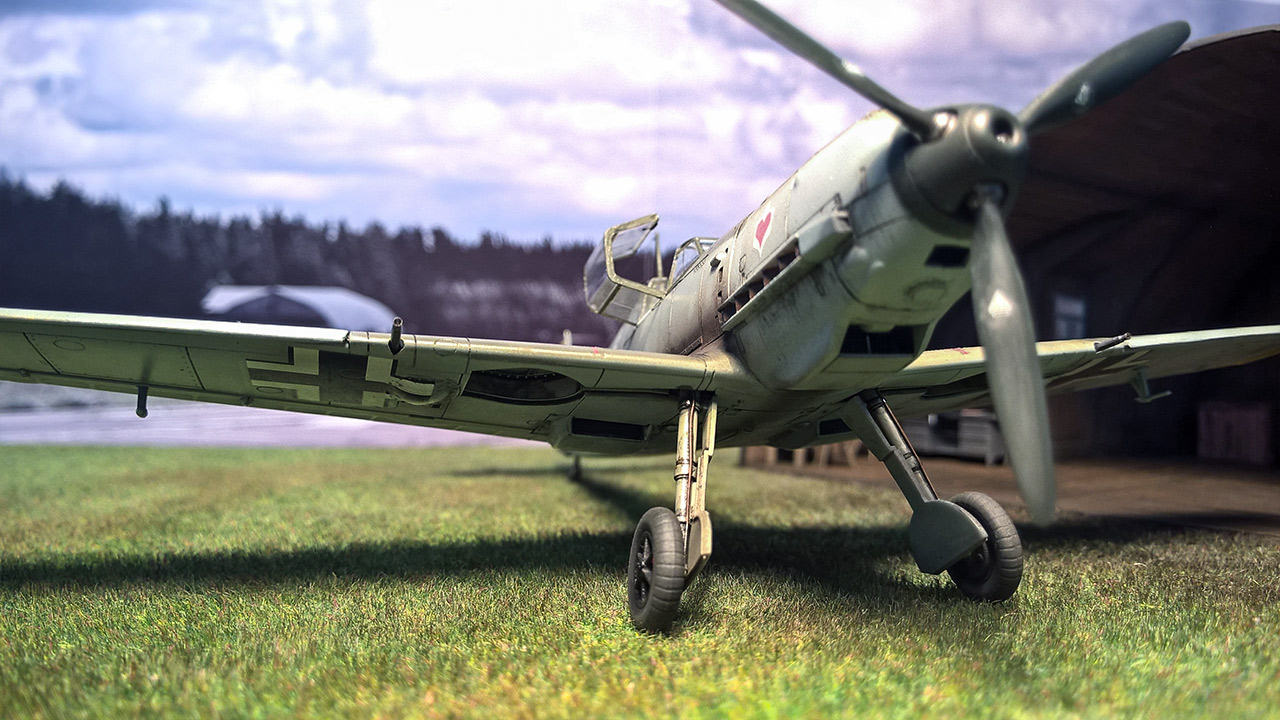
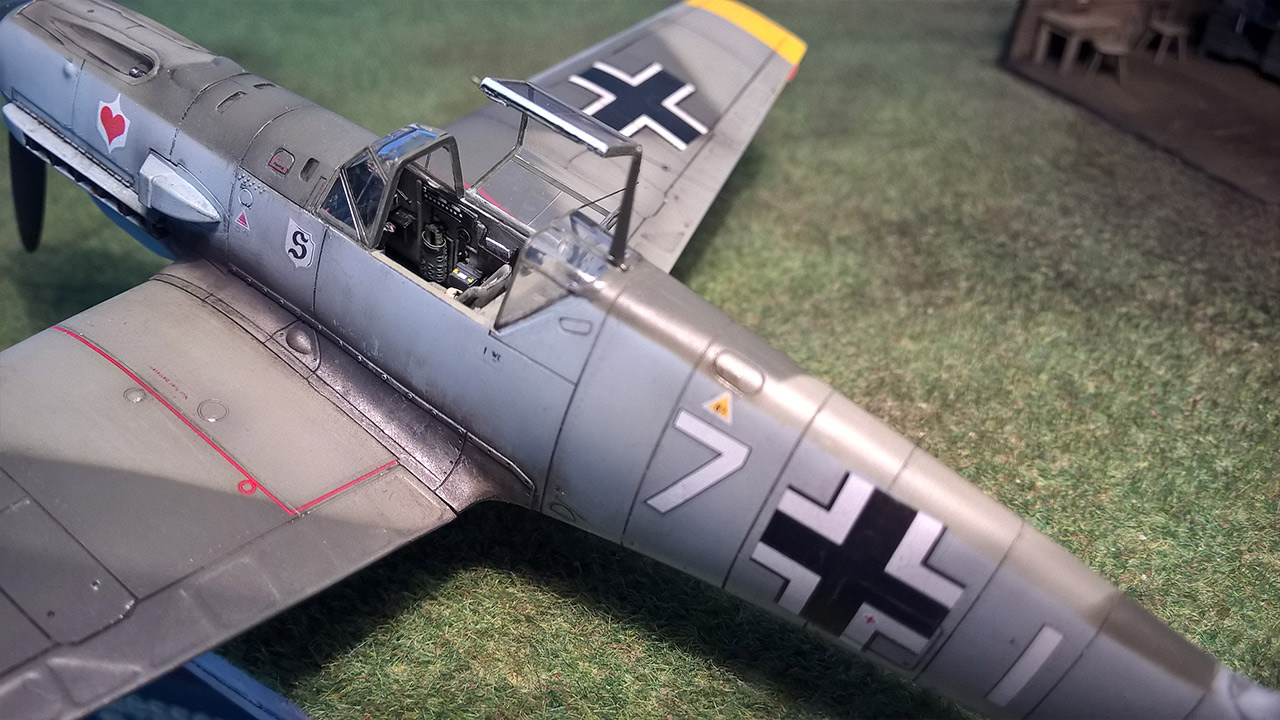
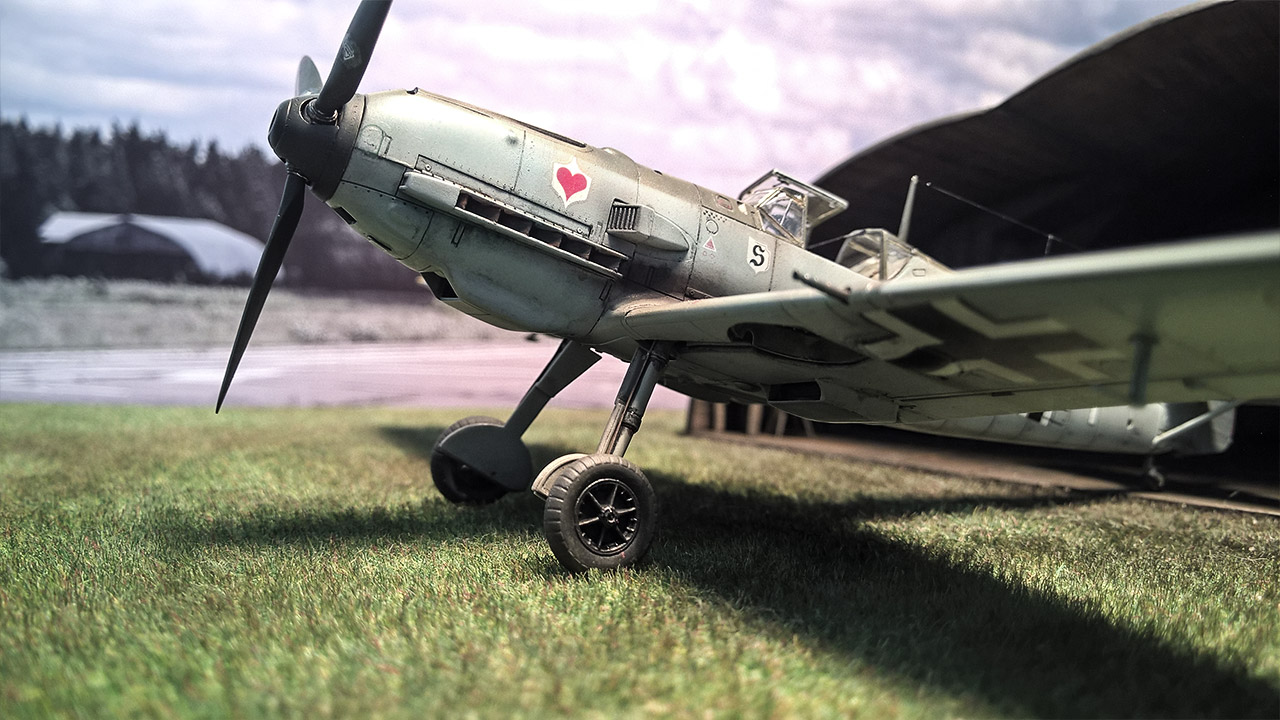
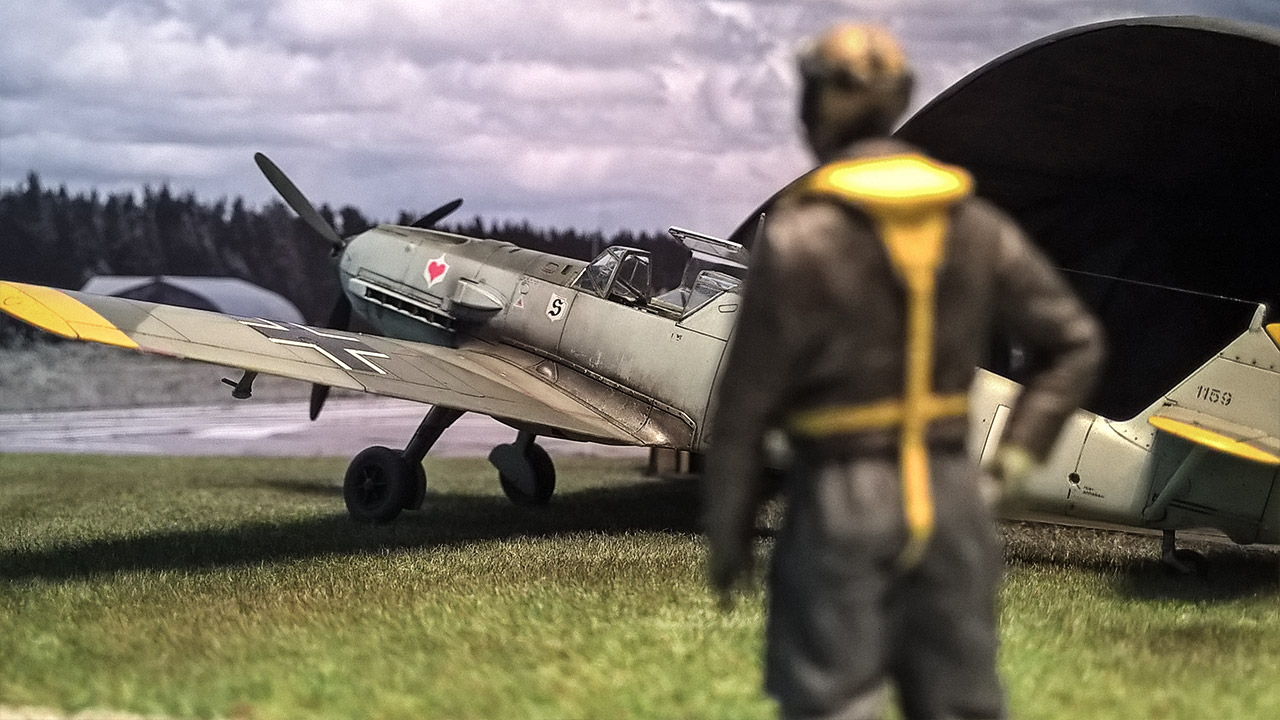
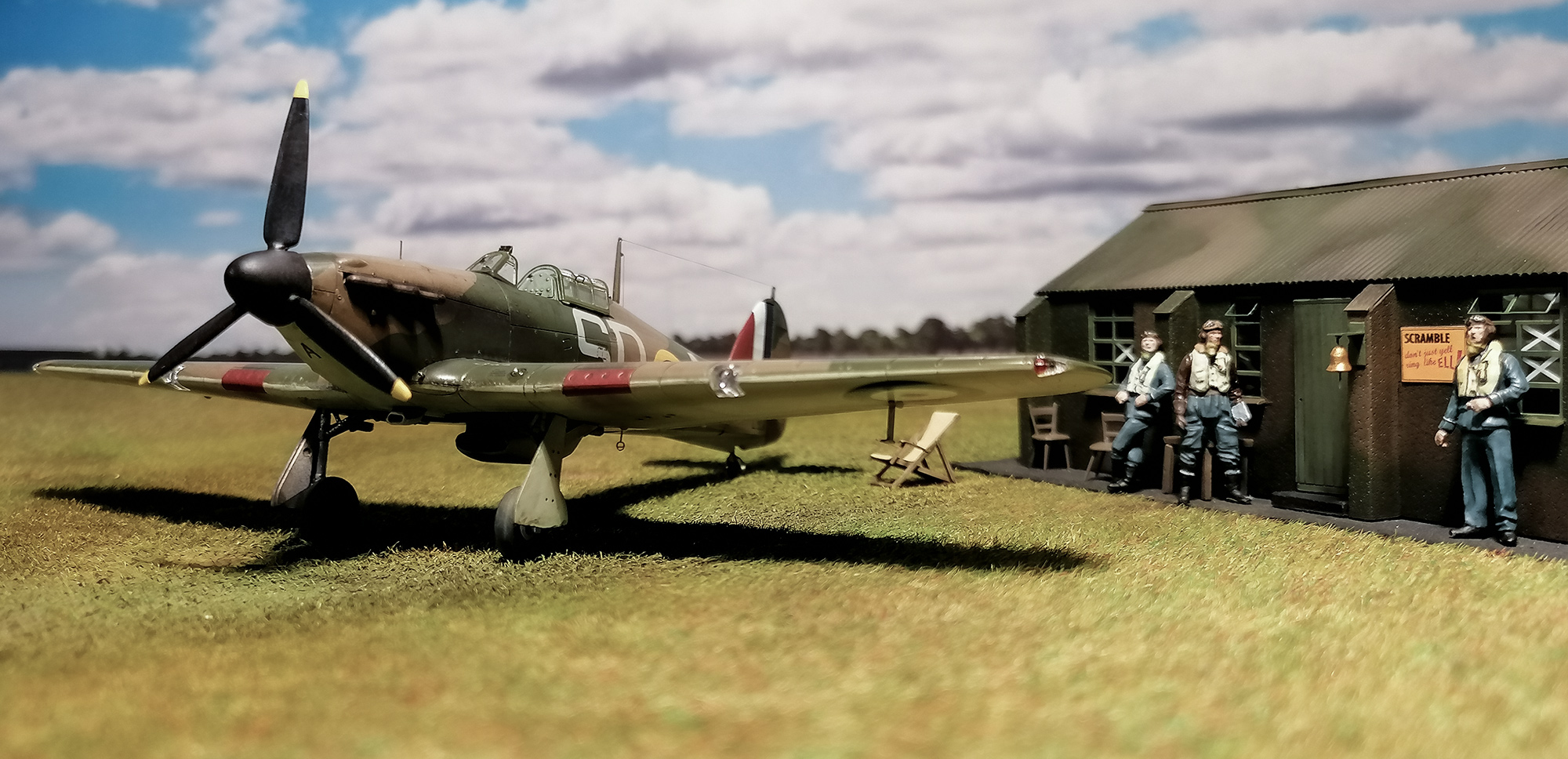
Luftwaffe · 7./JG 26 · Caffiers, France · Aug 1940

Bf-109
E-3 "White 7"

Lt. Josef Bürschgens · Crash Landing Diorama · 1/72 Scale
Luftwaffe 1 / 72 Tamiya Diorama Battle of Britain
Kit
Tamiya 1/72 + Airmodel Hangar
Scale
1 / 72
Nation
Luftwaffe · JG 26
Theatre
Caffiers, France · Aug 1940
Photos
18 Images
Build Report

About This Build


The Subject

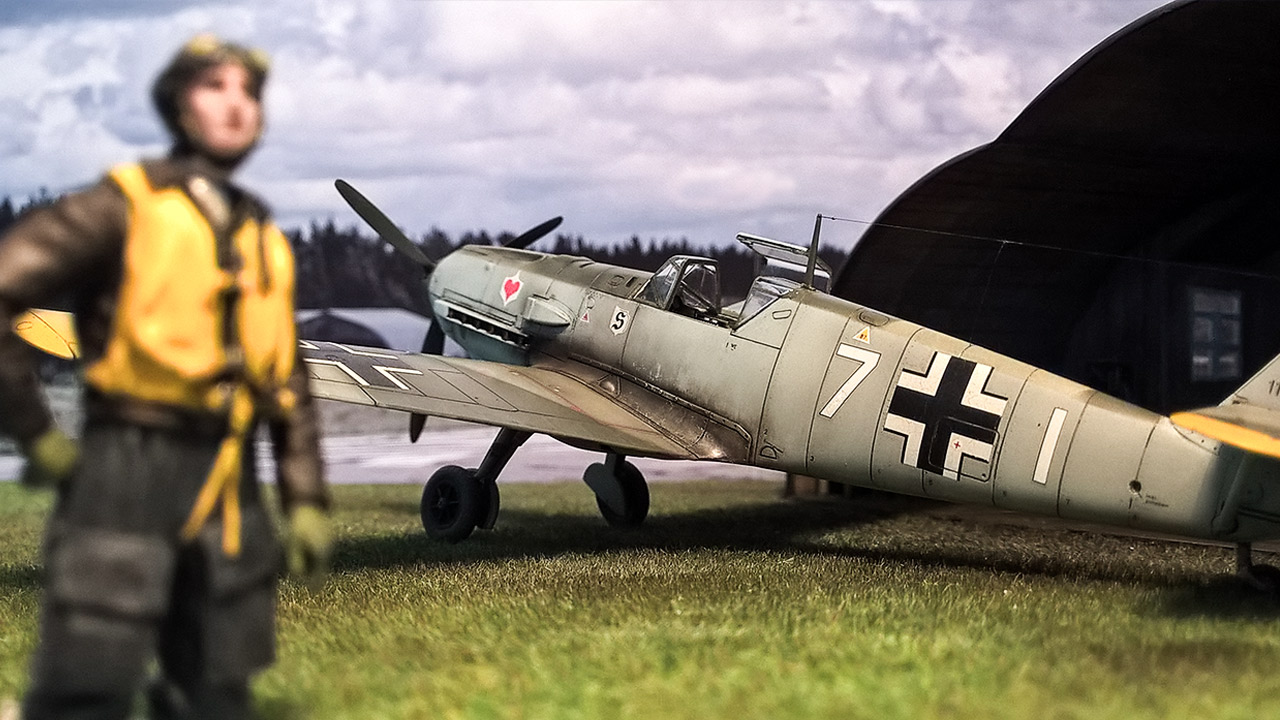
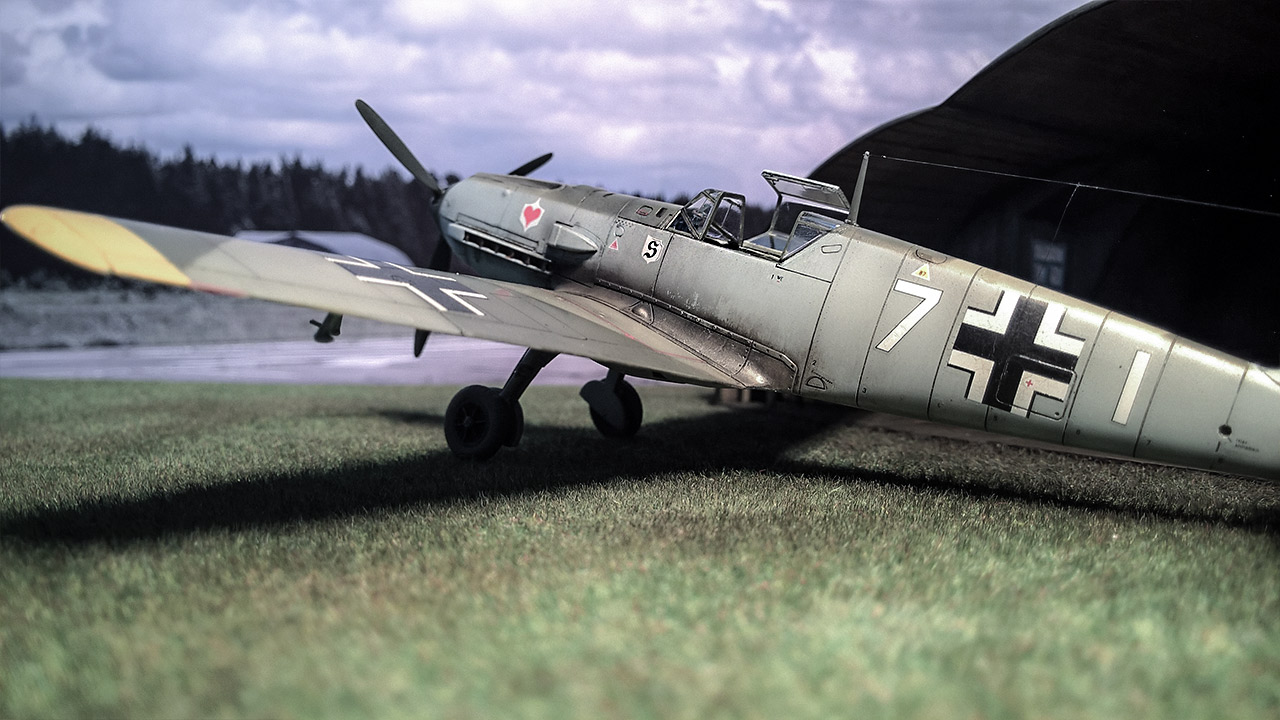
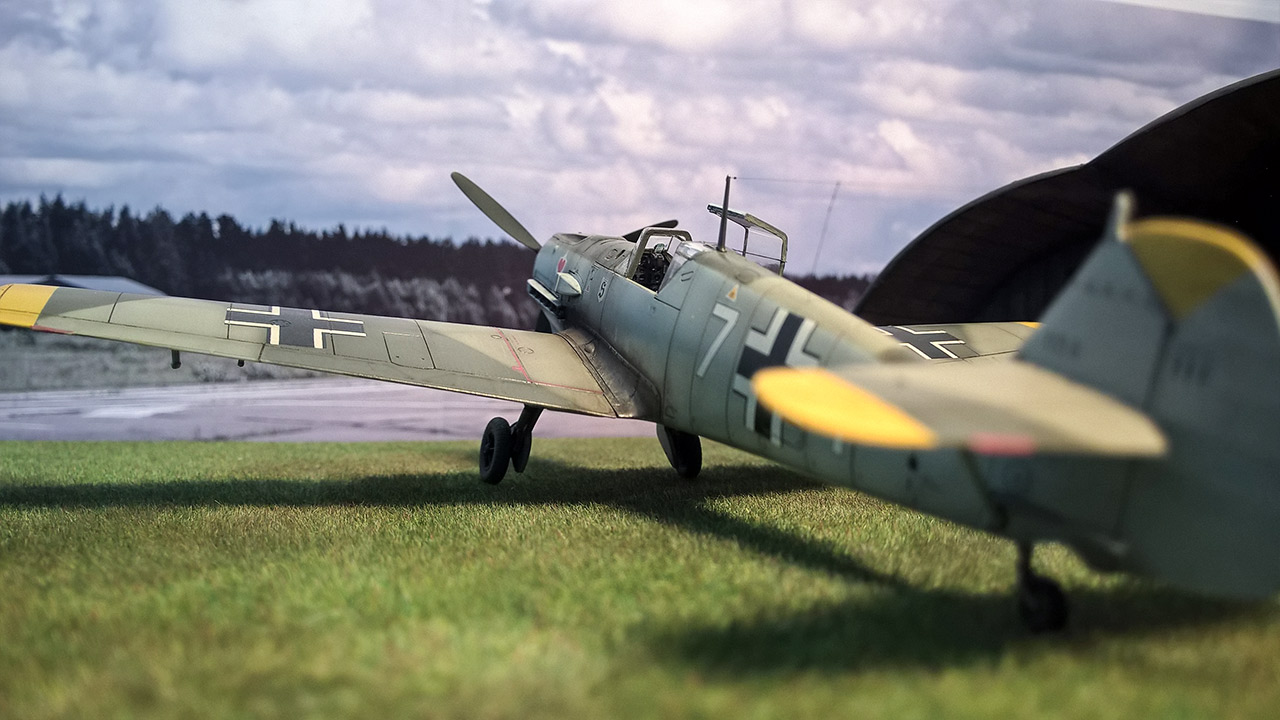
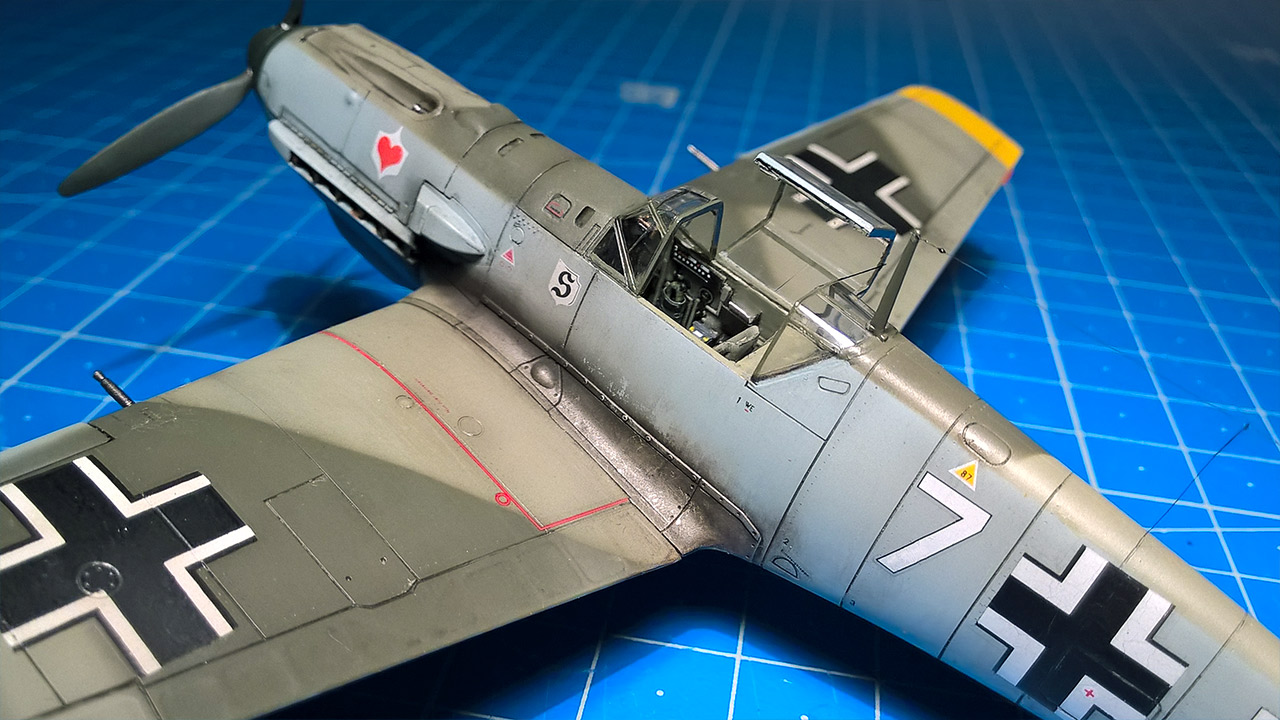
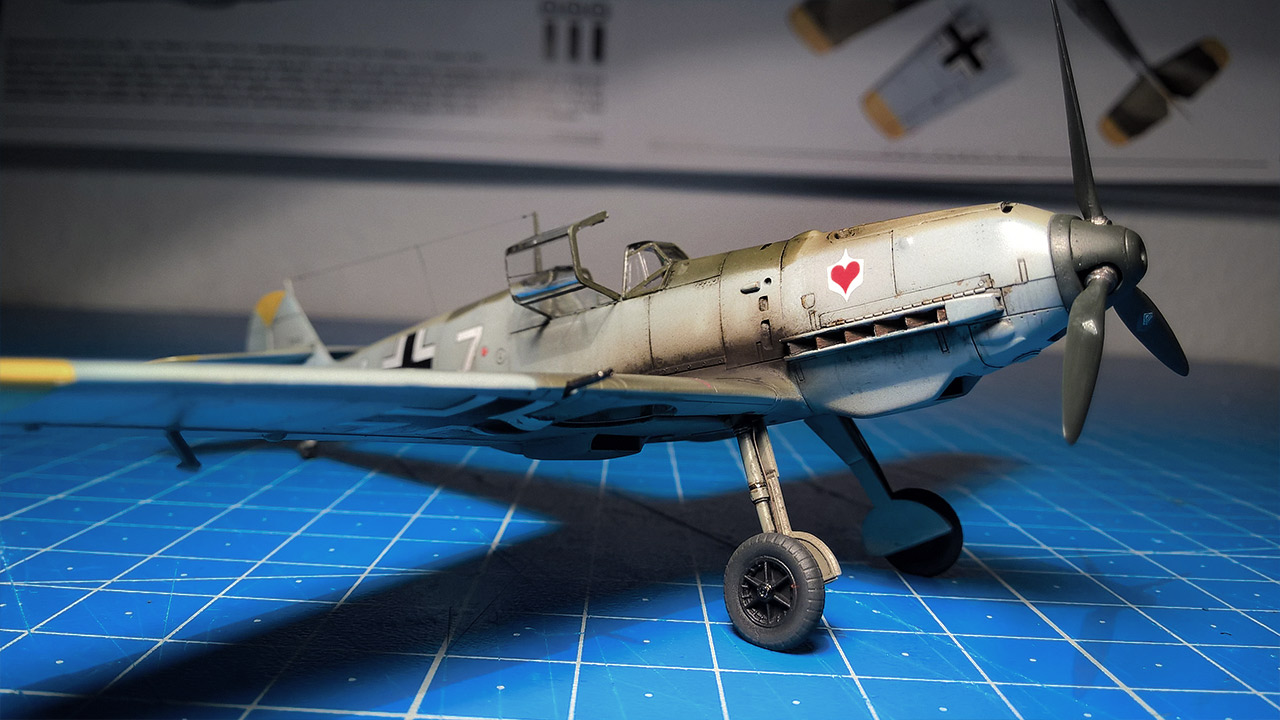
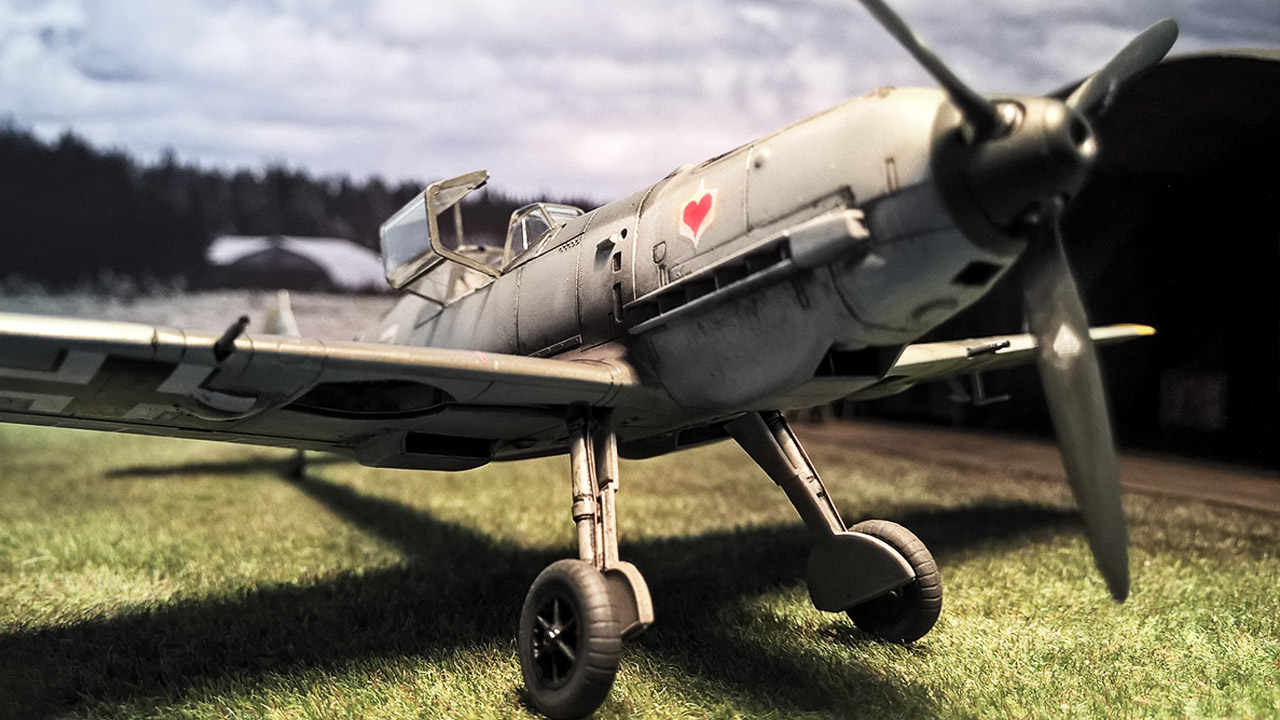
On the afternoon of 11 August 1940, Leutnant Josef Bürschgens of 7./JG 26 returned to Caffiers badly shot up after a running engagement with RAF Spitfires over the Straits of Dover. His Bf-109 E-3 "White 7" had taken cannon and machine-gun fire in the airframe and engine, forcing him to belly-land short of the grass strip. The aircraft was left in front of the unit's improvised wooden hangar while ground crew assessed the damage — a scene that became the inspiration for this diorama.

The Kit

The Messerschmitt Bf 109 E was the backbone of the Jagdwaffe during the Battle of Britain. The E-3 variant, armed with two MG 17s in the cowling and two wing-mounted MG FF cannon, was already at the operational frontier of its range when flying escort missions across the Channel in the summer of 1940. Pilots like Bürschgens — who would go on to score over 12 aerial victories — flew these sorties under constant fuel pressure, arriving over England with just minutes of combat time available before having to turn for home.

Colours & Markings

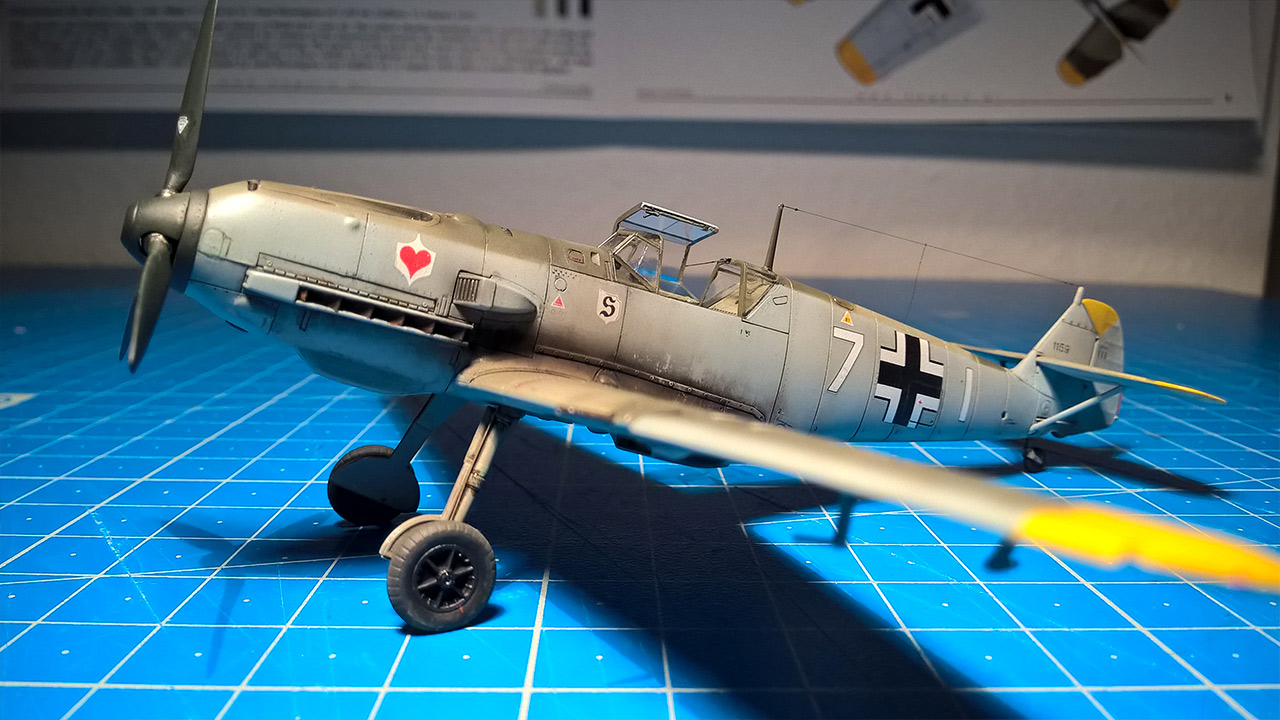
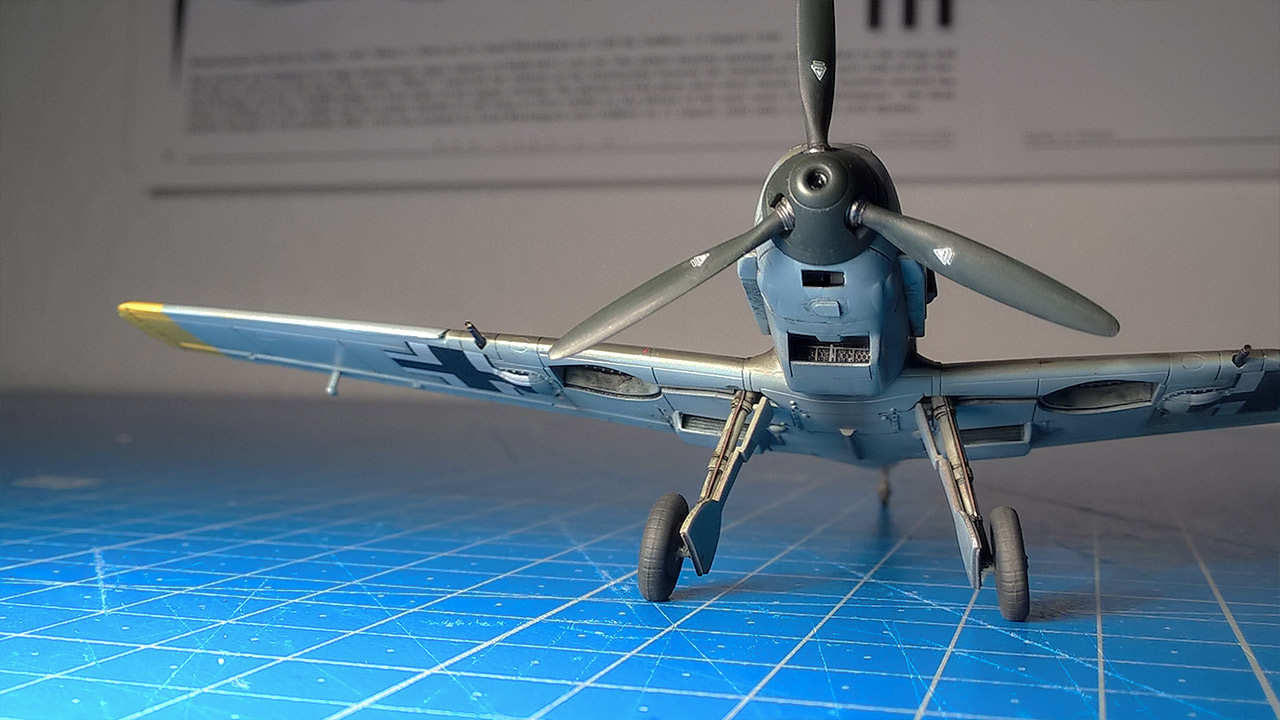
The base kit is the Tamiya 1/72 Bf-109 E-3/E-4, arguably still the benchmark in its scale for panel detail and fit. Aftermarket additions include the Yahu Models photo-etched instrument panel, Eduard photo-etch for cockpit and exterior details, Zvezda replacement wheels with more accurate tyre profile, and Master Model turned-metal barrel inserts for the MG 17s and MG FF cannon. The Kagero Topcolors reference series provided the colour profiles and decals for Bürschgens' specific aircraft. The hangar structure was built from the Airmodel vacu-form sheet kit and dressed with scratch-built timber detailing. All paints are Mr. Hobby / Gunze Sangyo lacquers, with weathering carried out using oil washes and dry pigments to suggest the dusty, hard-used condition of a Channel-front Emil in high summer.