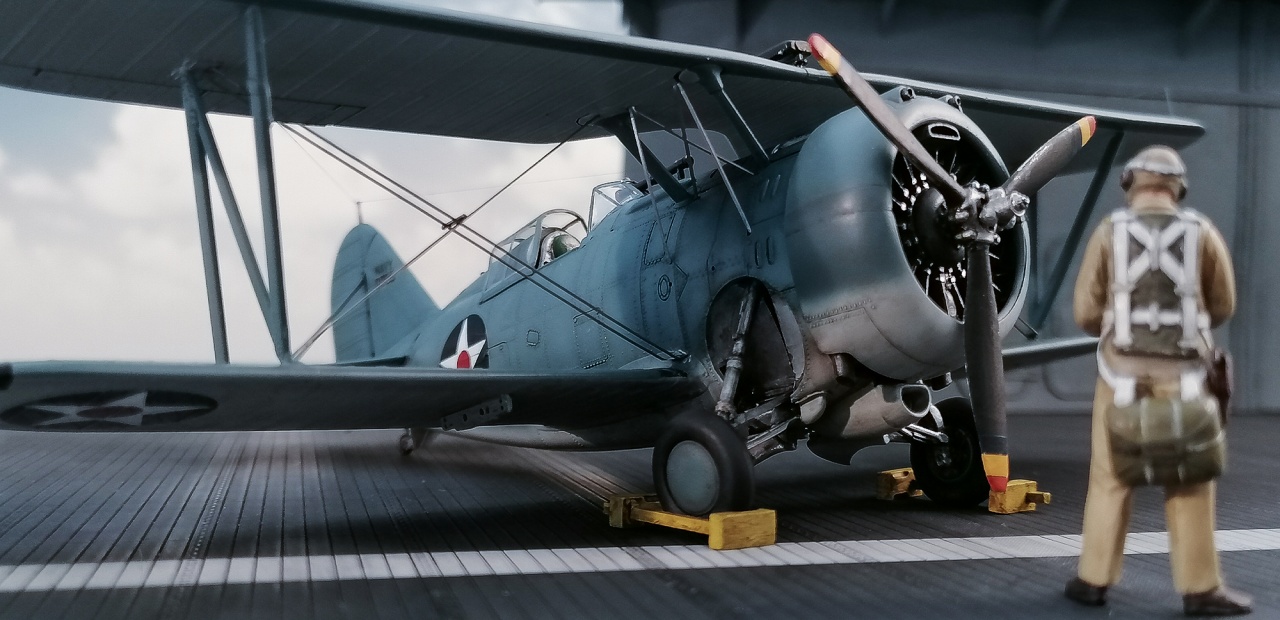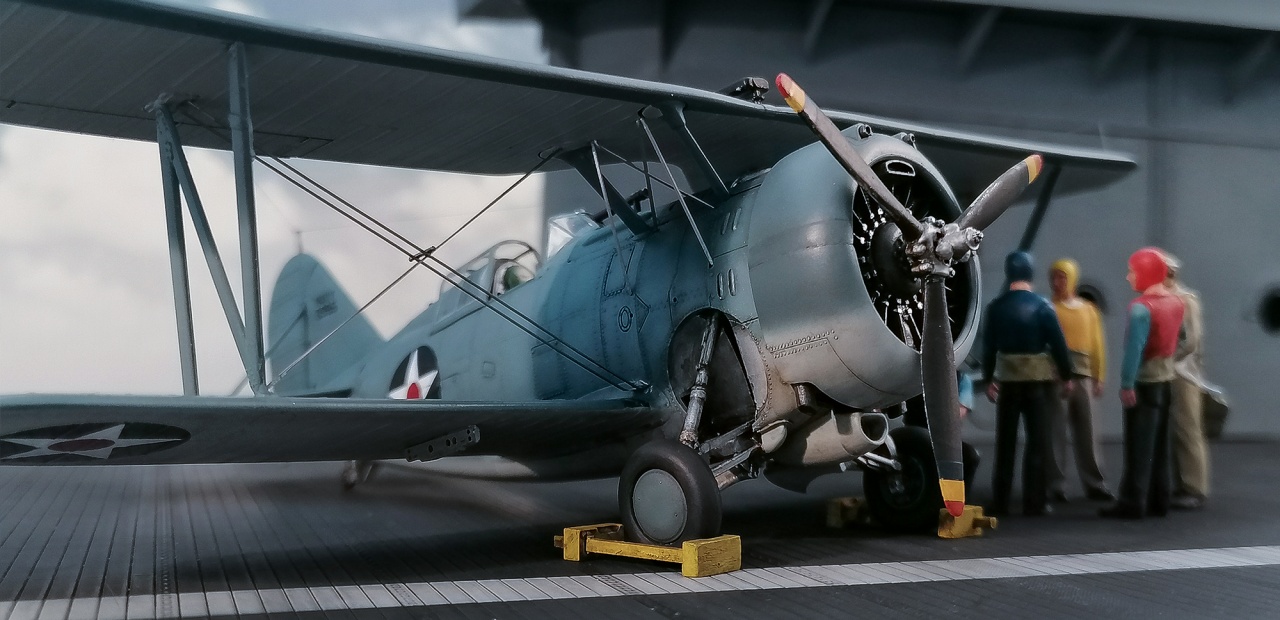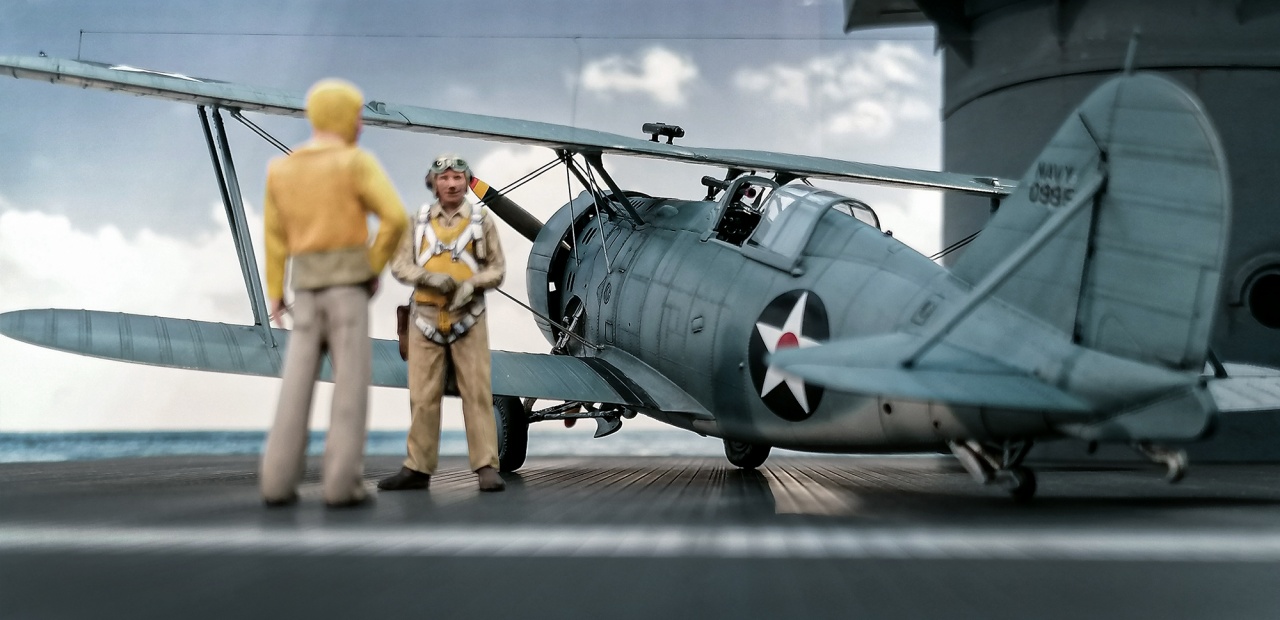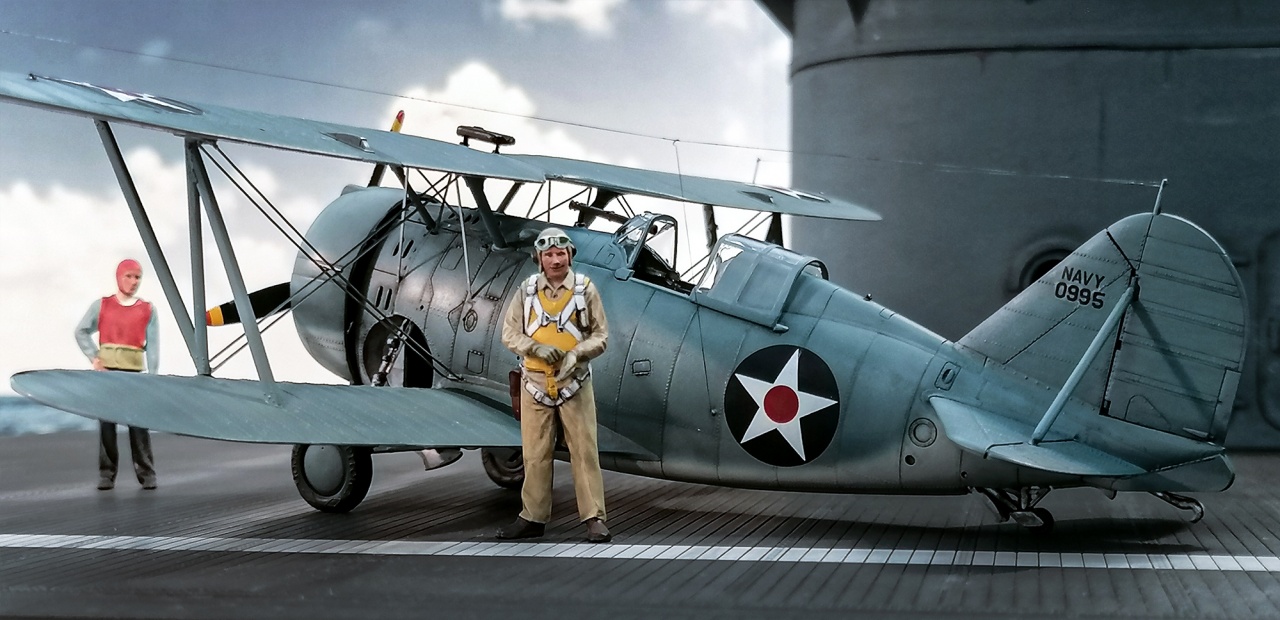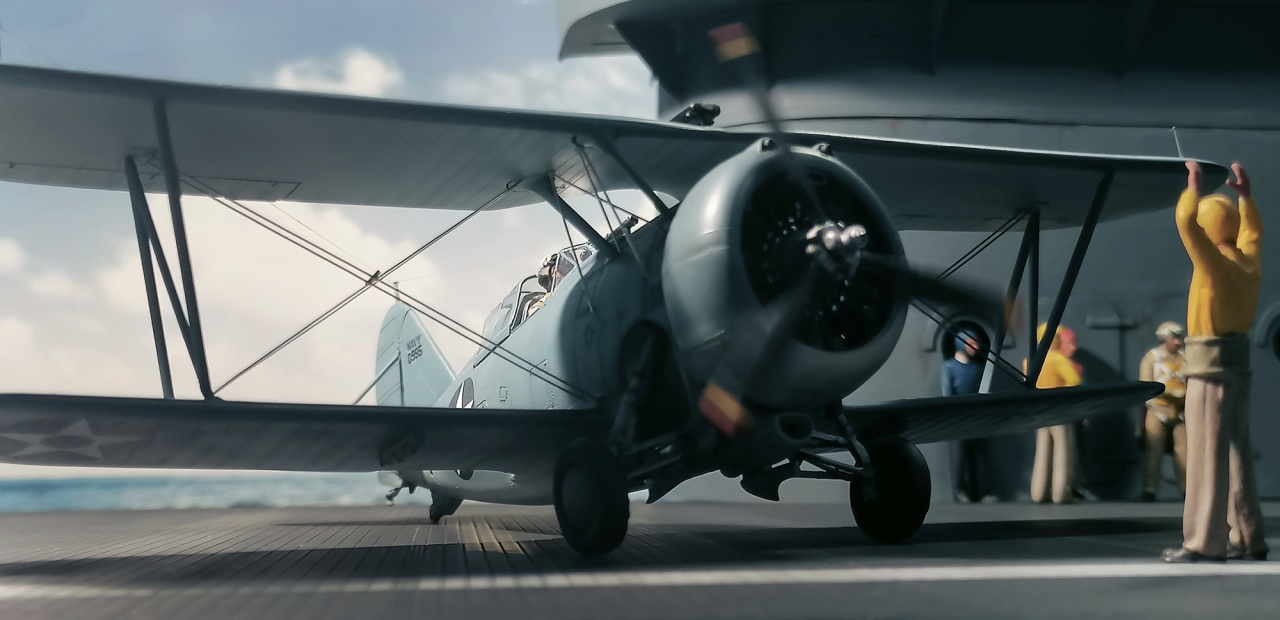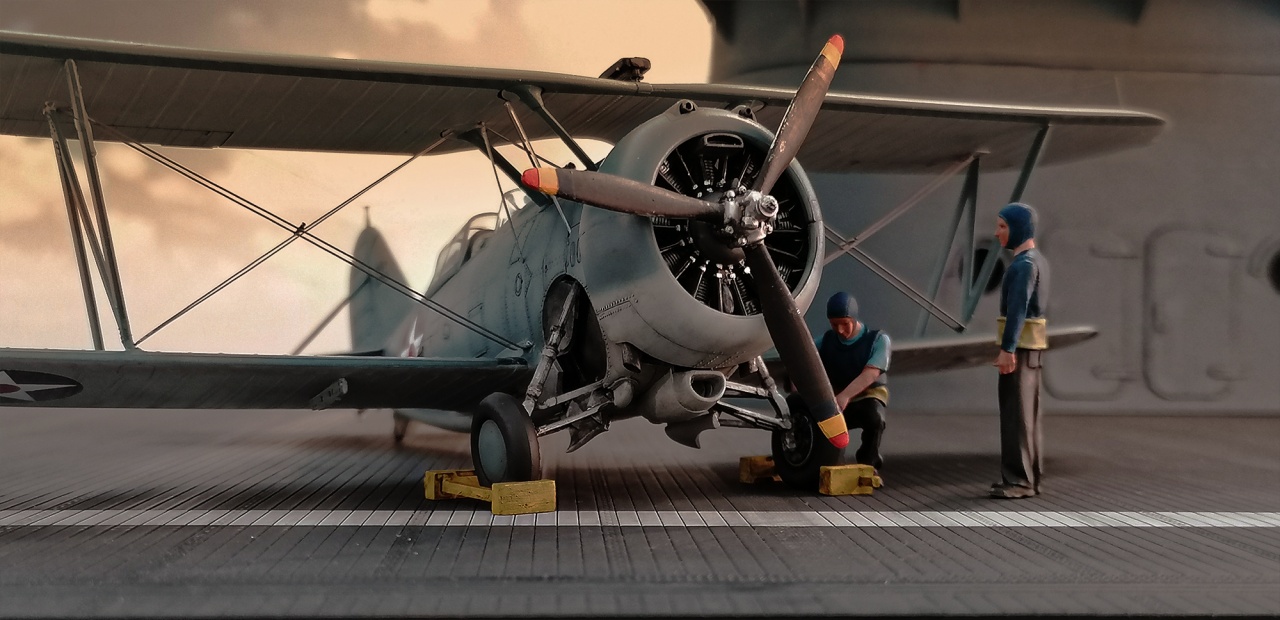


Highly detailed kit with photoetched parts
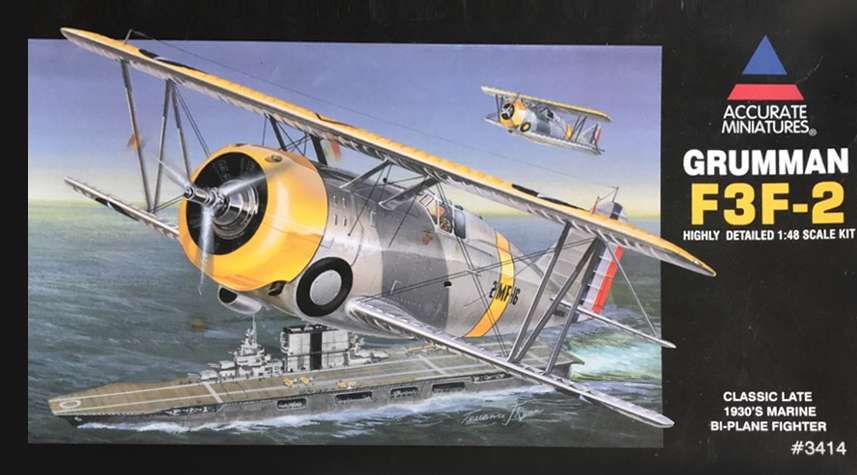
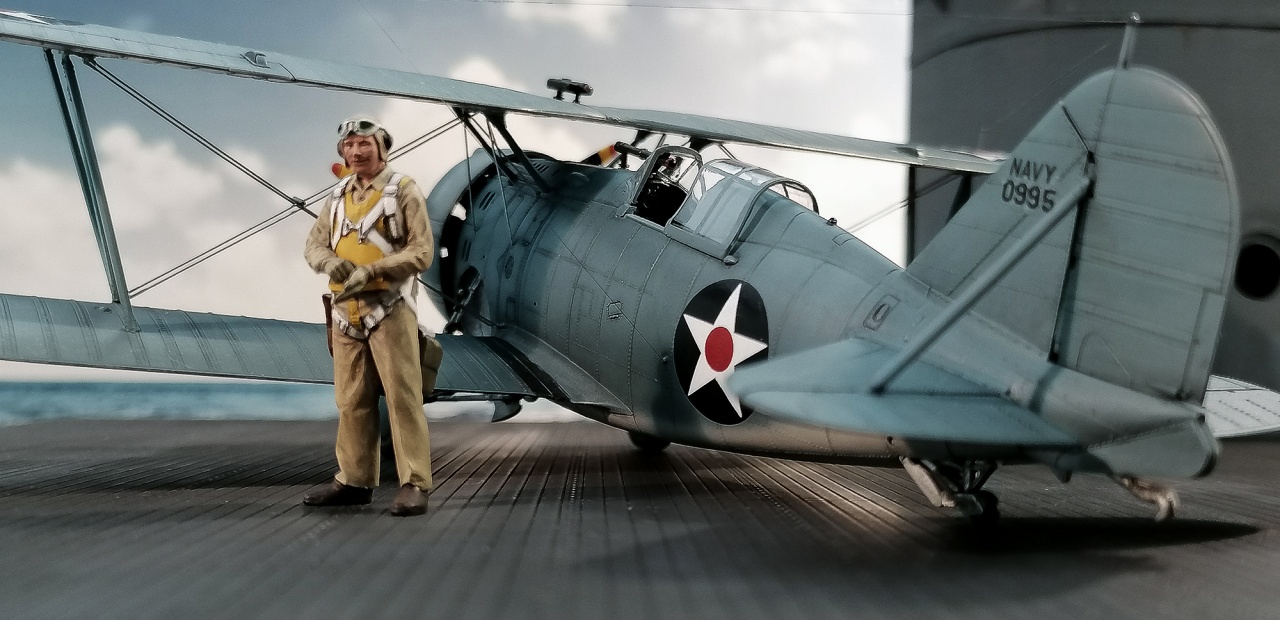
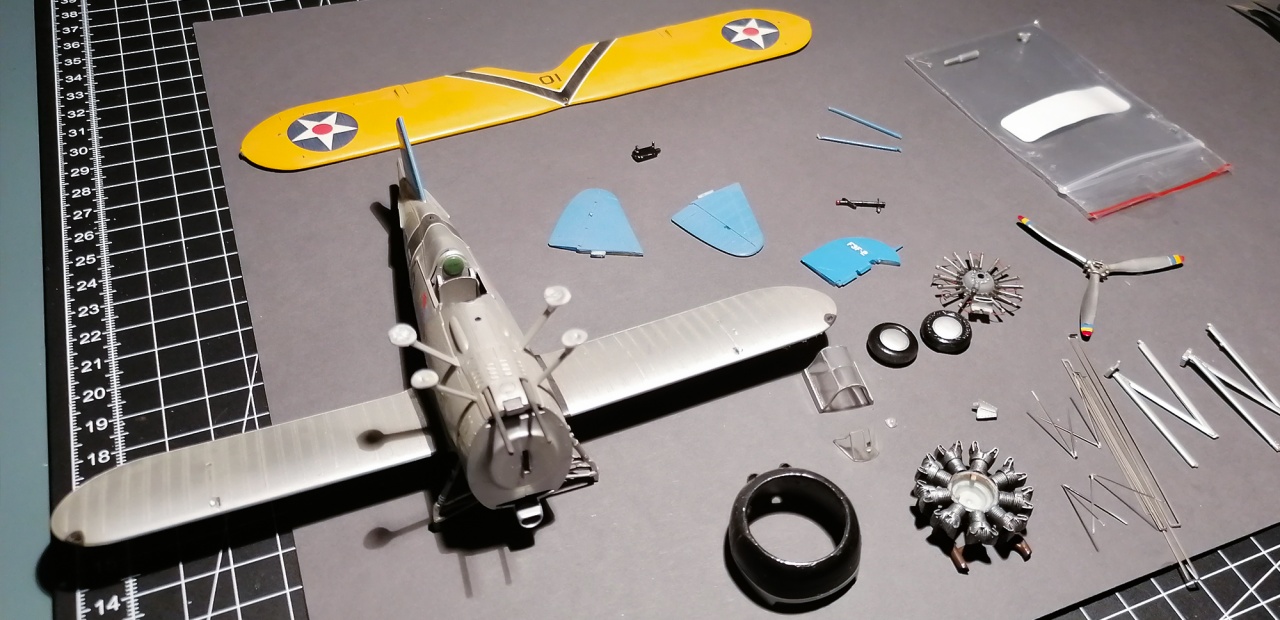
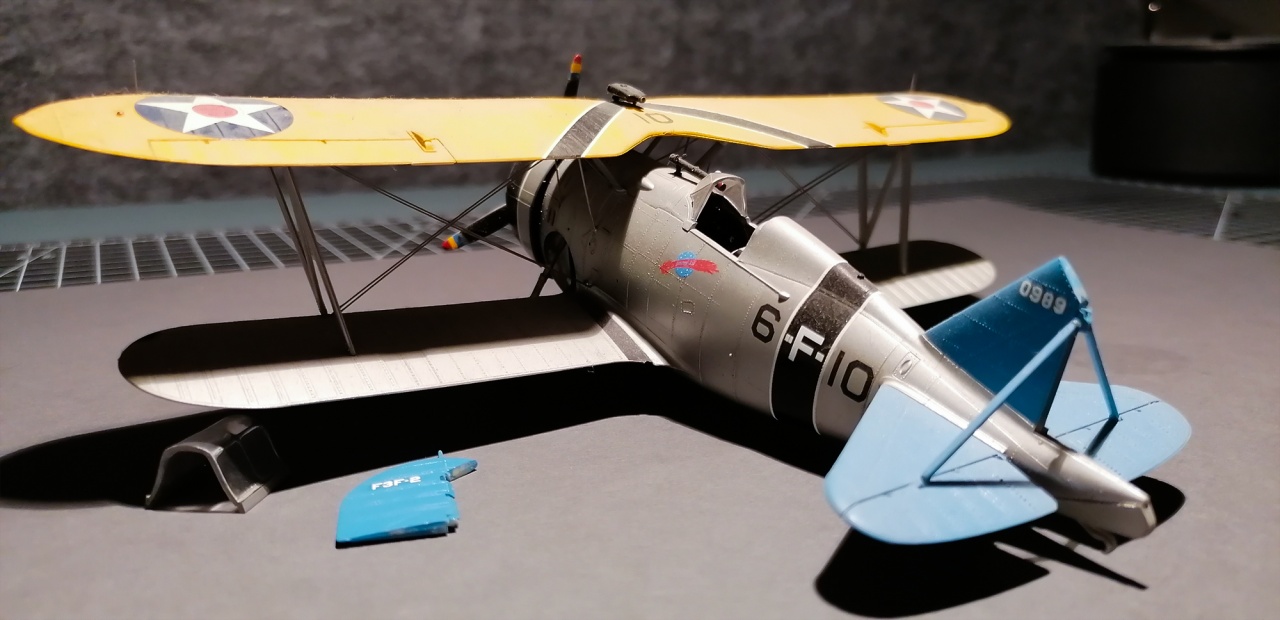
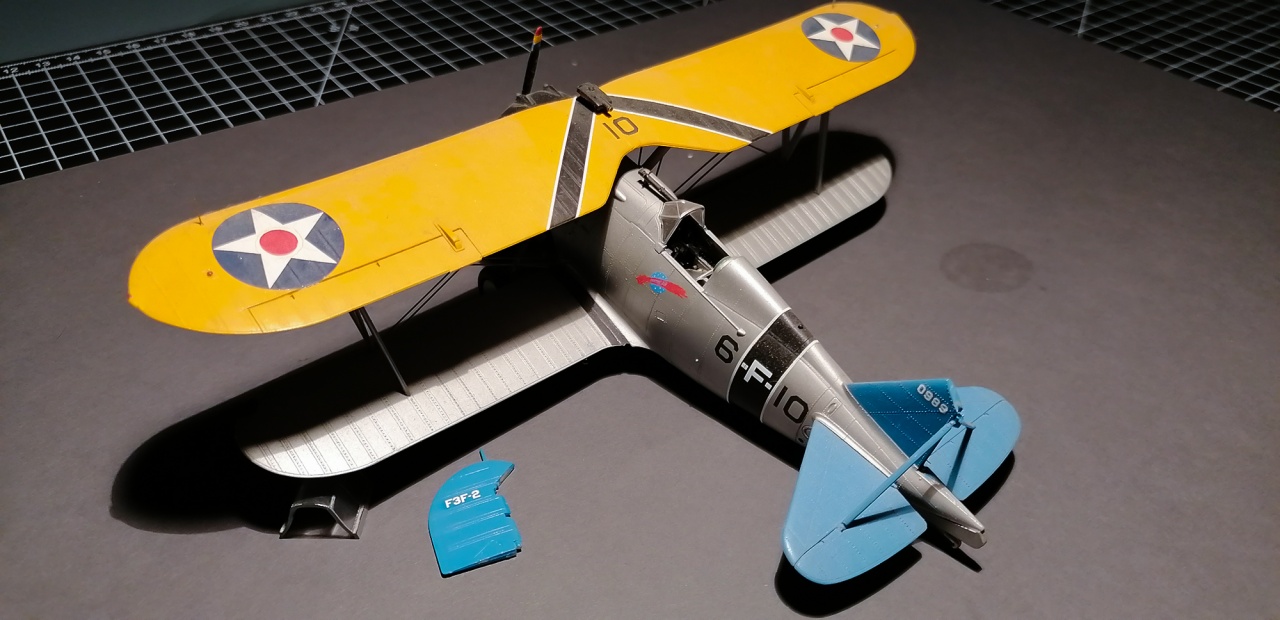
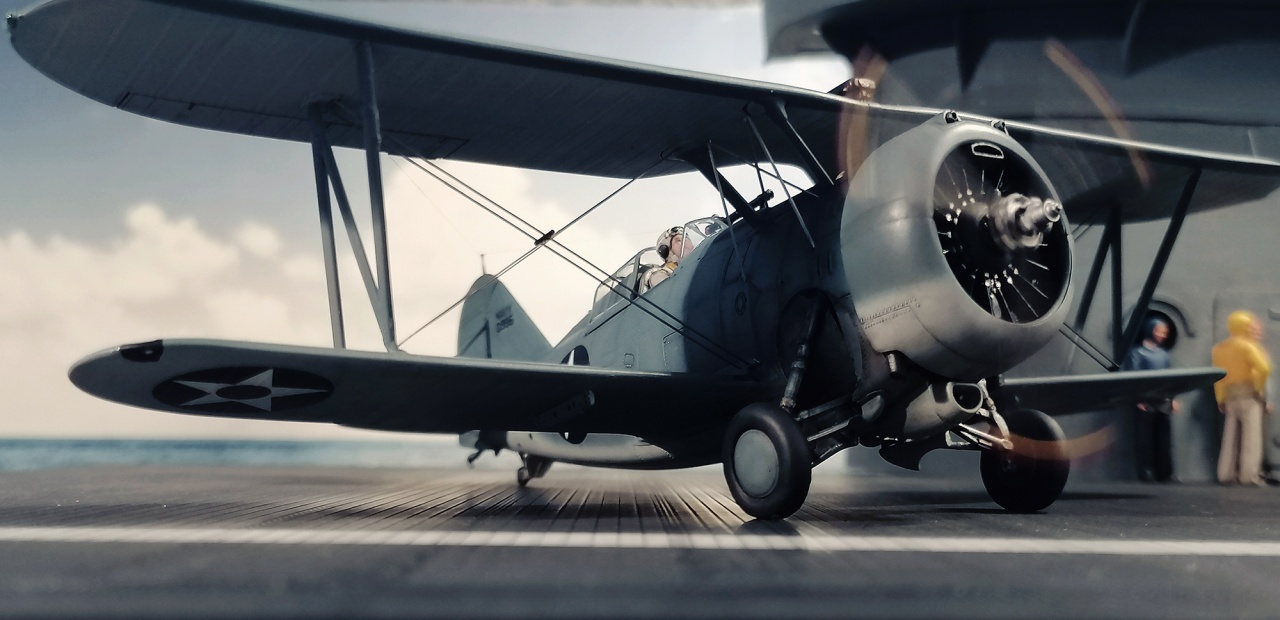
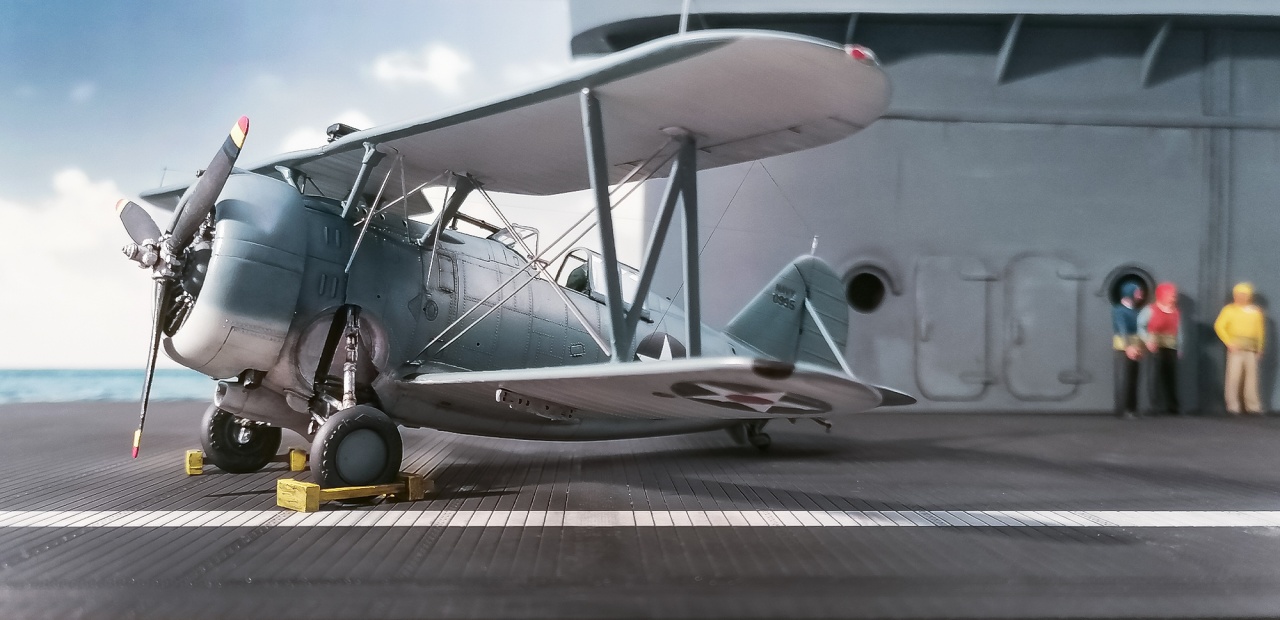
this kit is the Grumman F3F-2 from Accurate Miniatures, with some figures from Tamiya and Tori Factory. I have built the kit about 10 years ago and the model was gathering dust because of lack of space in my showcase.
I wanted to build the F3F-2 again. instead of using a new kit, I figured I’d just disassemble and rebuild the kit. On my research over the internet, I found out that the F3F-2 continued to be used as a trainer even after the introduction of the F4F Wildcat. A lot of Navy and Marine Corps flying aces have flown the F3F.
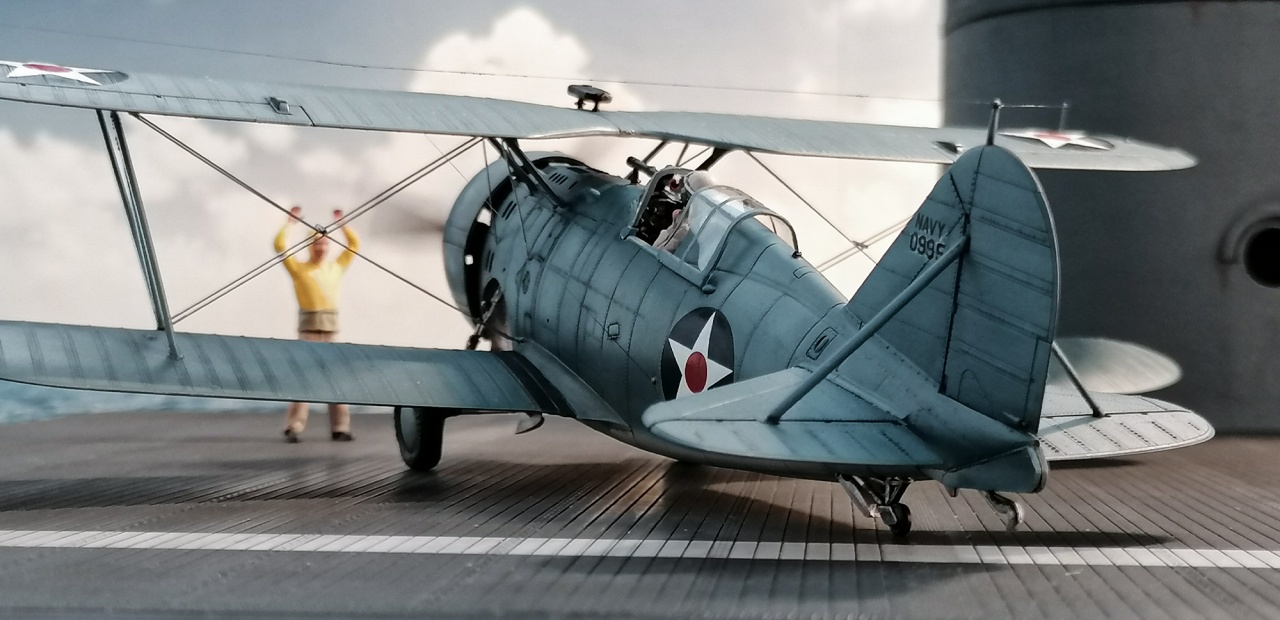
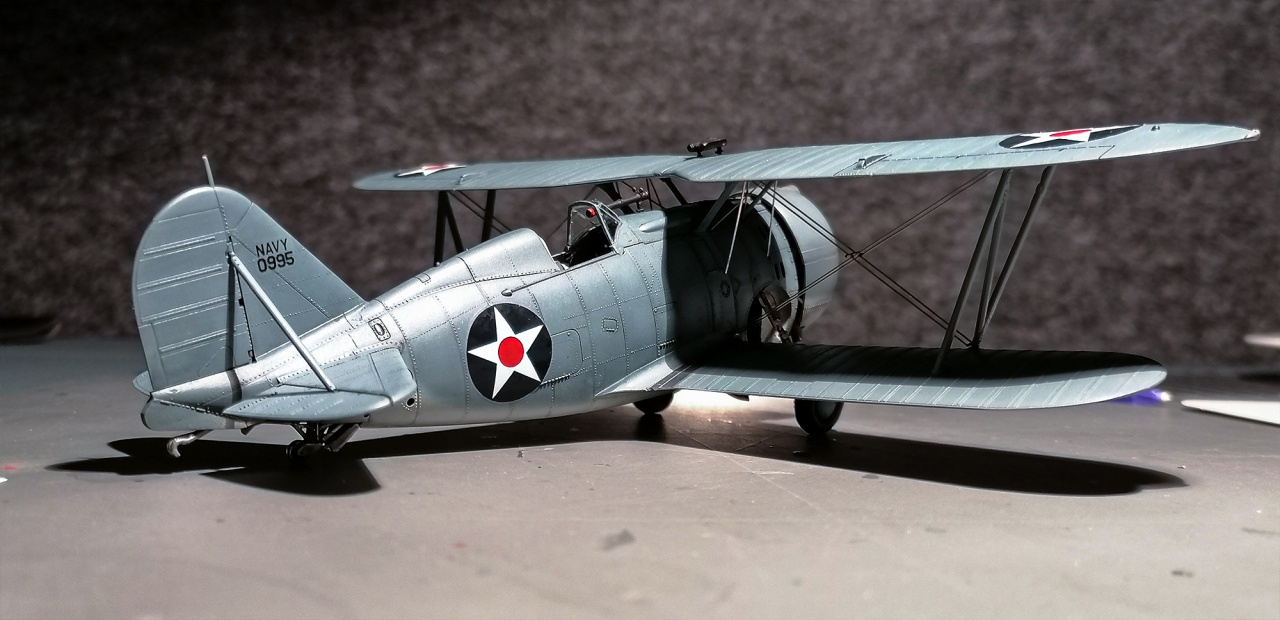
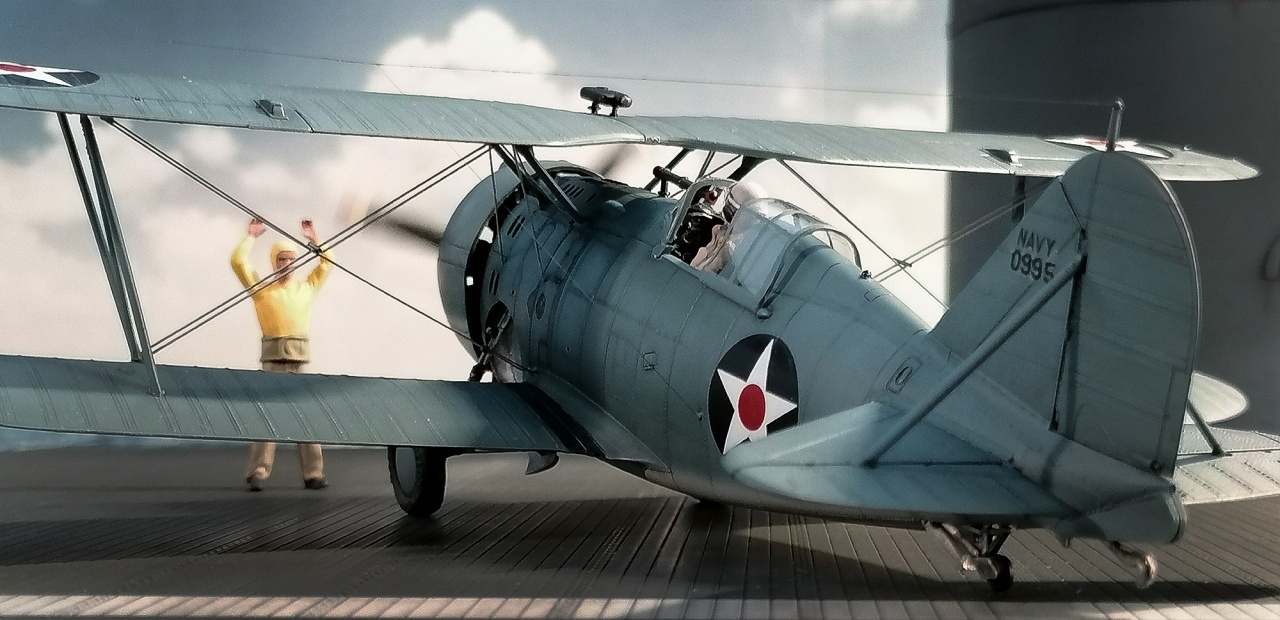
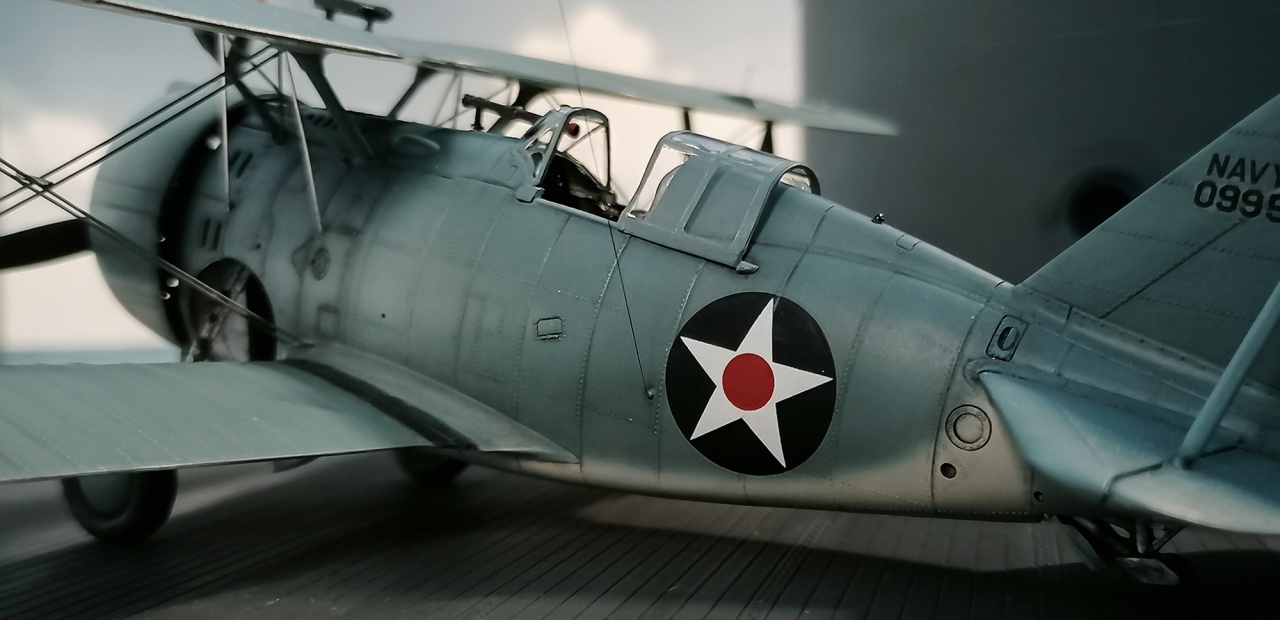
The aircraft shown here (BuNo 0995) was originally the 2-MF-16. The aircraft was damaged (crash) on December 30, 1940, and then repaired and overspayed in gray blue over light gull gray. I’ll do that too, I thought!
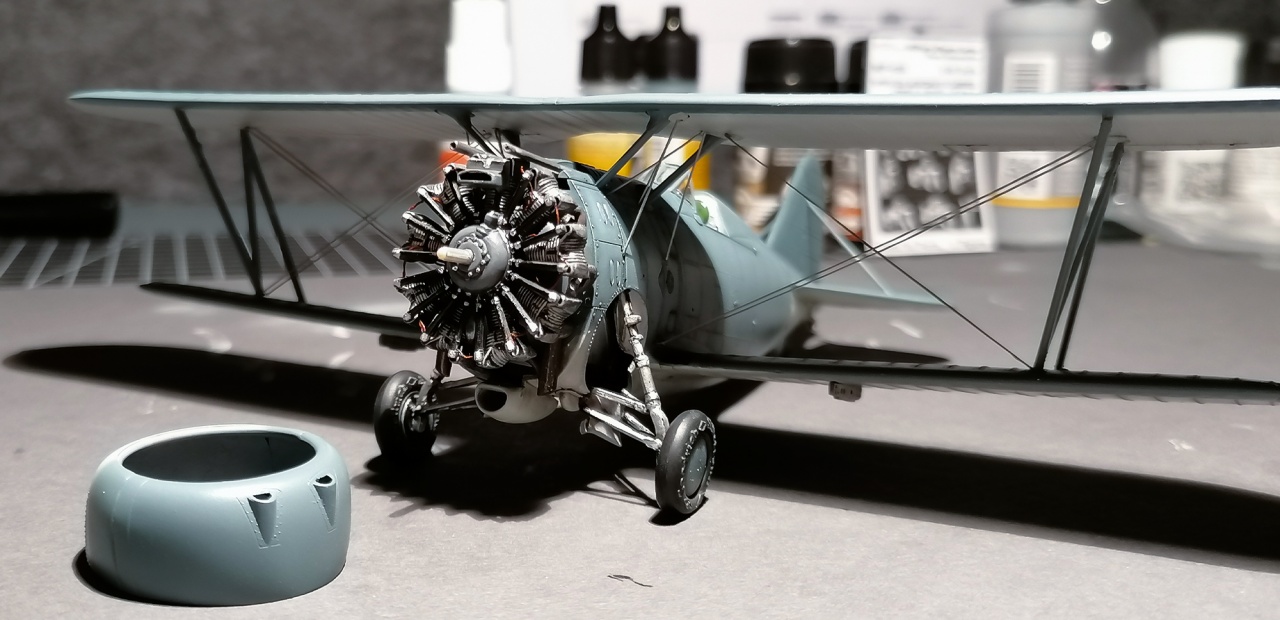
I had no trouble taking the parts apart. After 10 years, the glued parts became a bit brittle and therefore I was able to disassemble everything with little force. I used oven cleaner to remove the paint on the upper wing. I just cleaned, primed and repainted the fuselage and lower wing.
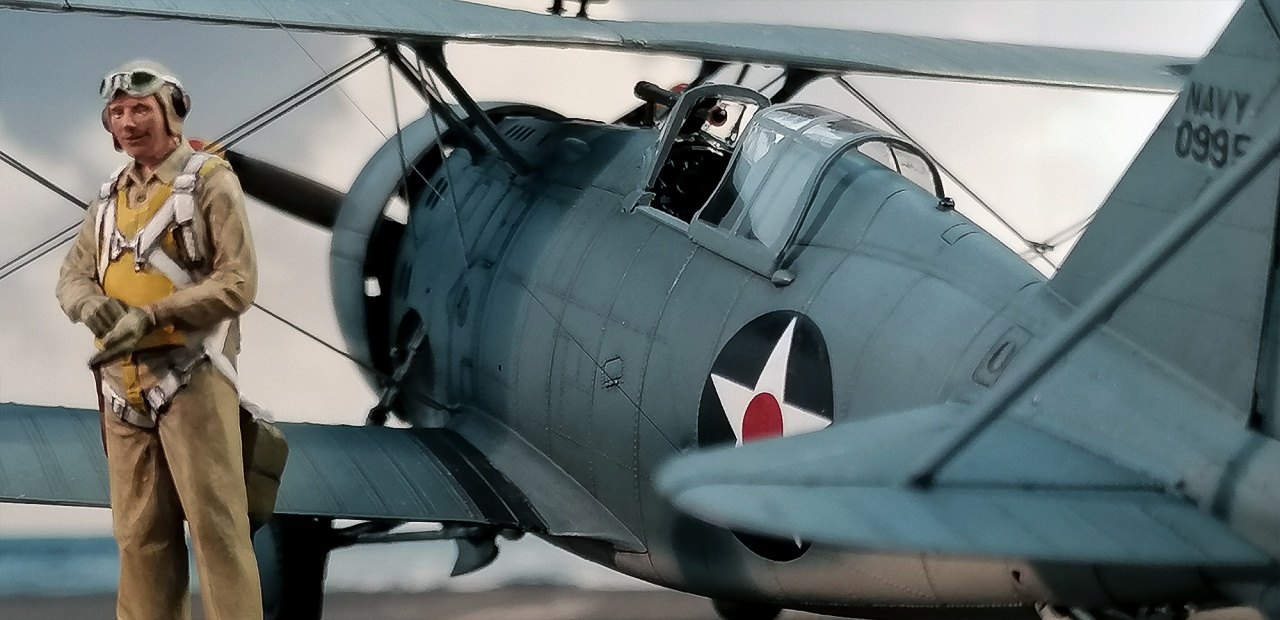
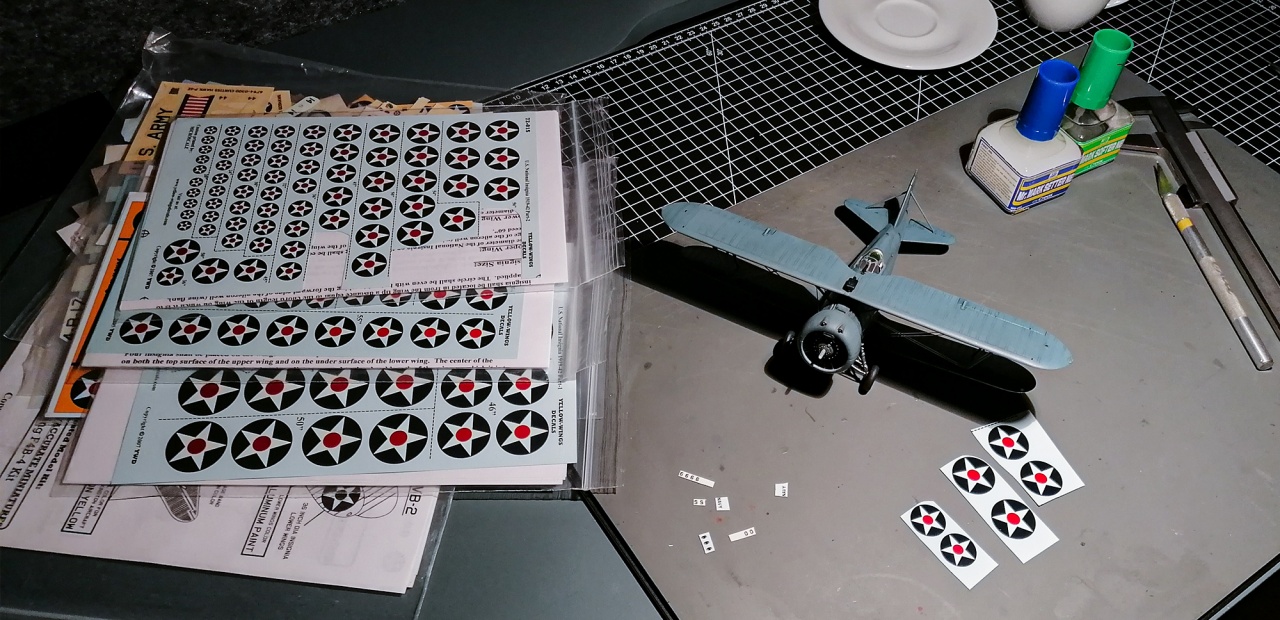
This time I have the color gray blue from the Vallejo series, set number 71157 US NAVY & USMC colors. I really like the darker tone, it’s also a little bluer than AK-Interactive’s. But unfortunately, the paint is not so easy to spray and, above all, difficult to rework, e.g., grinding. Since I didn’t have any more decals for this model, I had to improvise. The stars are from Yellowwings decals and the BuNo is a combination of different decals (silvering a bit).
The subsequent re-attachment of the metal braces was a nightmare for me as the parts are difficult to shape. The metal is extremely stable. The super glue and I had a lot of trouble…
The canopy is selfmade. I always replace them, as I find the ones from the kit too thick to show with the canopy open.